Roof Coating Benefits: A Complete Guide for Southern California Homeowners
Your roof takes a beating from the Southern California sun year after year. Summer after summer, temperatures push past 90 degrees, and your roof absorbs the brunt of that solar radiation. Conventional roofs can reach 150 degrees Fahrenheit or more on a sunny afternoon, baking your home from the top down and driving up your cooling costs.
Roof coating offers a smarter path than a full roof replacement for many homeowners. A high-quality roof coating reflects sunlight, seals small leaks, and extends the life of your existing roof at a fraction of the cost of replacement. For Southern California homeowners, the roof coating benefits go beyond simple protection: they include measurable energy savings, reduced urban heat impact, and years of added service life.
Schedule Your Free Roof Inspection: (888) 766-3800
This guide covers everything you need to know about roof coating benefits for homeowners in Orange County and across Southern California. You will learn about the different coating types, how long they last, when coating beats replacement, and what the application process looks like from start to finish. Cert-A-Roof offers professional roof coating services tailored to Southern California homes and climate conditions.
What Are the Key Roof Coating Benefits for Southern California Homes?
The primary roof coating benefits fall into four categories: energy efficiency, extended roof life, cost savings, and environmental impact. Each one matters for Southern California homeowners dealing with intense sun exposure and high energy costs.
Energy Efficiency and Cool Roof Standards
A cool roof is designed to reflect more sunlight than a conventional roof, absorbing less solar energy and lowering the temperature of the building. According to the U.S. Department of Energy, a reflective roof can stay more than 50 degrees Fahrenheit cooler than a conventional roof under the same conditions. This temperature difference translates directly into lower cooling costs during Orange County’s long summer season.
California’s Title 24 energy standards require certain reflectance and emittance values for roofing materials in climate zones across the state. A professionally applied roof coating helps meet or exceed these standards, making your home more energy compliant and comfortable. The roof coating benefits and cool roof standards work together to reduce your home’s energy footprint.
Lower Energy Bills
The U.S. Environmental Protection Agency reports that in non-air-conditioned residential buildings, cool roofs can lower maximum indoor temperatures by approximately 2.2 to 5.9 degrees Fahrenheit. For homes with air conditioning, this means your HVAC system runs less frequently and with less strain. Homeowners in Orange County often see cooling cost reductions of 10 to 20 percent during peak summer months after applying a reflective roof coating.
Extended Roof Service Life
Temperature fluctuation causes roofing materials to expand and contract, leading to cracks, embrittlement, and eventual failure. By decreasing roof temperature, roof coatings reduce thermal stress and can extend roof service life significantly. The Department of Energy includes extended service life as one of the primary roof coating benefits, particularly in hot climates like Southern California where UV exposure accelerates degradation. A regular roof maintenance program combined with high-performance coatings maximizes the return on your roofing investment.
Environmental and Urban Heat Island Benefits
Southern California’s urban areas experience the heat island effect, where dense concentrations of dark roofs and pavement raise local temperatures by several degrees. Reflective roof coatings lower local outside air temperatures, thereby lessening the urban heat island effect. This environmental benefit compounds across neighborhoods: when more homes use reflective roofing, the entire community stays cooler. Commercial roofing material options increasingly reflect these sustainability priorities.
Silicone vs Acrylic vs Polyurethane: Which Roof Coating Type Is Right for Your Roof?
Not all roof coatings deliver the same roof coating benefits. The three most common types used in Southern California are silicone, acrylic, and polyurethane. Each one has distinct strengths, and the right choice depends on your roof material, slope, climate exposure, and budget.
| Coating Type | Best For | Key Benefit | Typical Lifespan | Relative Cost |
|---|---|---|---|---|
| Silicone | Flat and low-slope roofs, metal roofs, TPO/EPDM | Superior UV resistance and ponding water tolerance | 15-20 years | $$$ |
| Acrylic | Sloped roofs, tile roofs, asphalt shingles | High reflectivity at lower cost | 5-10 years | $ |
| Polyurethane | Commercial roofs, high-traffic roof areas, flat roofs | Excellent durability and impact resistance | 10-15 years | $$ |
Silicone Roof Coatings
Silicone coatings are highly resistant to UV rays and ponding water, making them ideal for flat or low-slope roofs common on many Southern California homes and commercial buildings. Silicone is inorganic, so it maintains its properties through extreme weather conditions. It bonds well to most existing roofing materials including metal, single-ply membranes, and modified bitumen. The primary trade-off is cost: silicone is more expensive than acrylic, but its longer lifespan often makes it more economical over time. For roofs with standing water issues, silicone is the clear choice because it does not re-emulsify when submerged.
Acrylic Roof Coatings
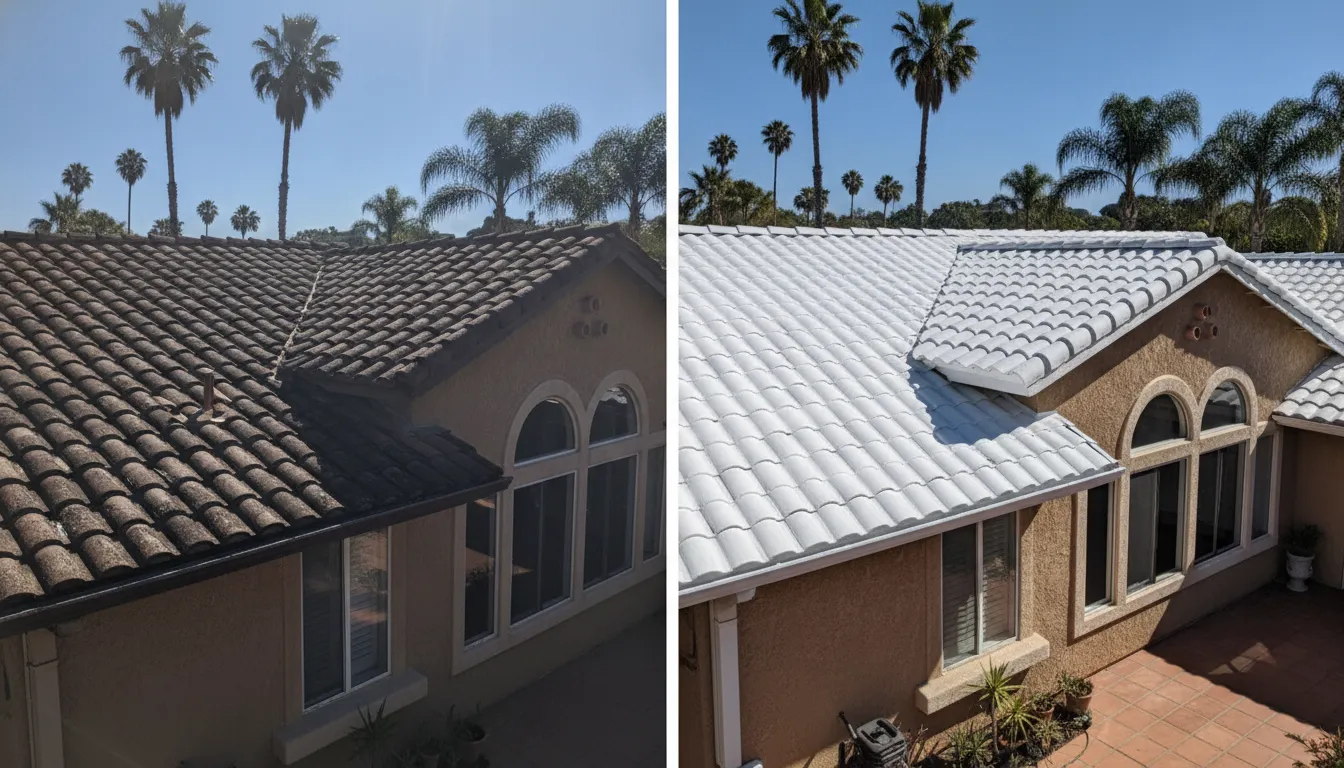
Acrylic coatings are water-based, highly reflective, and cost-effective. They are best suited for sloped surfaces where water drains quickly because acrylic can break down under prolonged ponding. For Southern California homeowners with sloped tile or composition shingle roofs, acrylic delivers excellent solar reflectance at the lowest upfront cost. The trade-off is a shorter lifespan and the need for more frequent recoating compared to silicone. When exploring different roofing material types, understanding how each interacts with coating chemistry is essential for long-term performance.
Polyurethane Roof Coatings
Polyurethane coatings provide the highest durability and impact resistance of the three types. They are ideal for commercial roofs and areas that see regular maintenance foot traffic. Polyurethane forms a tough, flexible membrane that resists physical damage, chemical exposure, and heavy weather. It works well on flat roofs and modified bitumen surfaces. When considering evaluating roof coating options for your material, polyurethane offers the best mechanical protection of any coating type.
How Long Does a Roof Coating Last and What Affects Its Lifespan?
One of the most important roof coating benefits is longevity. A professionally applied coating can add 10 to 20 years to your existing roof, but several factors determine how long the coating itself will last.
Typical Lifespan by Coating Type
Silicone coatings typically last 15 to 20 years. Their inorganic chemistry resists UV degradation, making them the longest-lasting option in Southern California’s intense sun. Acrylic coatings last 5 to 10 years and require more frequent recoating. Polyurethane falls in the middle at 10 to 15 years. These ranges assume proper surface preparation, professional application, and reasonable maintenance. A roof preventative maintenance program helps track coating age and condition so you never miss a recoat window.
Factors That Affect Roof Coating Lifespan
Climate and UV exposure. Southern California’s high UV index accelerates degradation of lower-quality coatings. Silicone and high-grade polyurethane handle UV exposure best. Roof preparation quality. A coating is only as good as the surface it bonds to. Proper cleaning, crack repair, and primer application are essential. Application thickness. Industry standards require specific mil thickness per coating type. Thin applications fail prematurely. Ponding water. Roofs with poor drainage require silicone coatings that resist standing water. Ongoing maintenance. Annual inspections catch small issues before they compromise the coating.
Signs It Is Time to Recoat
Visible chalking or fading, small cracks in the coating surface, minor leaks around flashings and vents. And reduced water beading all indicate that your coating is nearing the end of its service life. Early recoat application before the underlying roof is exposed prevents damage and extends total roof life. For ongoing care, see extending roof lifespan with roof coatings as part of a broader maintenance plan.
Roof Coating vs Roof Replacement: When Does Each Make Sense?
A common question homeowners face is whether to coat an existing roof or replace it entirely. The answer depends on the condition of your roof, its age, and your long-term plans for the property.
When Roof Coating Makes Sense
Roof coating is a maintenance solution, not a cure-all. It works best when your existing roof is structurally sound but showing signs of age such as minor surface cracking, UV damage, small leaks, or reduced energy performance. Coating costs 25 to 50 percent less than a full replacement. Causes minimal disruption to your daily life, and can be completed in a few days rather than weeks. For homeowners planning to sell within five to ten years. Coating can provide the certification and curb appeal needed for a smooth transaction without the expense of a new roof. Roof certification often depends on the roof being in good condition, and coating can help achieve that.
When Roof Replacement Is Necessary
If your roof has severe structural issues, massive decay, significant leaking across multiple areas. Or has reached the end of its expected service life, coating will not restore its integrity. Replacement is required when the decking is rotted, the underlayment is compromised, or when there are multiple failed repairs that cannot be effectively sealed. A professional inspection is essential to determine which path is right for your home. Understanding roof replacement costs helps you compare the economics of coating versus full replacement for your specific situation.
Cost Comparison
A full roof replacement in Southern California typically ranges from $8,000 to $25,000 depending on roof size, material, and slope. Roof coating applications generally run between $3,000 and $8,000 for a comparable residential property. The savings come from avoiding tear-off costs, disposal fees, and new underlayment. The Department of Energy notes that coating an existing roof adds material and labor costs compared to selecting a cool roof during new construction. But versus a full replacement, coating is almost always the more economical choice for an otherwise healthy roof.
The Inspection-First Approach
Cert-A-Roof recommends scheduling a professional roof inspection before making any coating or replacement decision. A certified inspector evaluates the roof structure, identifies hidden damage, and provides a documented assessment. This inspection-led approach ensures you never pay for a coating that cannot deliver results or, conversely, replace a roof that could have been restored. A complete residential roof inspection covers every factor that determines coating suitability. And a roof coating is a full-surface system very different from a flat roof sealant repair targeted fix, which addresses a single problem area. Full-system coating protects the entire roof surface comprehensively.
The Roof Coating Application Process: What Homeowners Should Expect
Understanding the application process helps set realistic expectations for timing, disruption, and results. Professional application is essential to achieving the full roof coating benefits. Scheduling a certified roof inspection is always the first step.
- Schedule a professional roof inspection. Every coating job starts with a thorough inspection. Cert-A-Roof follows NRCIA-certified protocols to evaluate your roof structure, material type, slope, drainage, and overall condition. The inspection identifies repairs needed before coating and confirms that coating is the right choice for your roof.
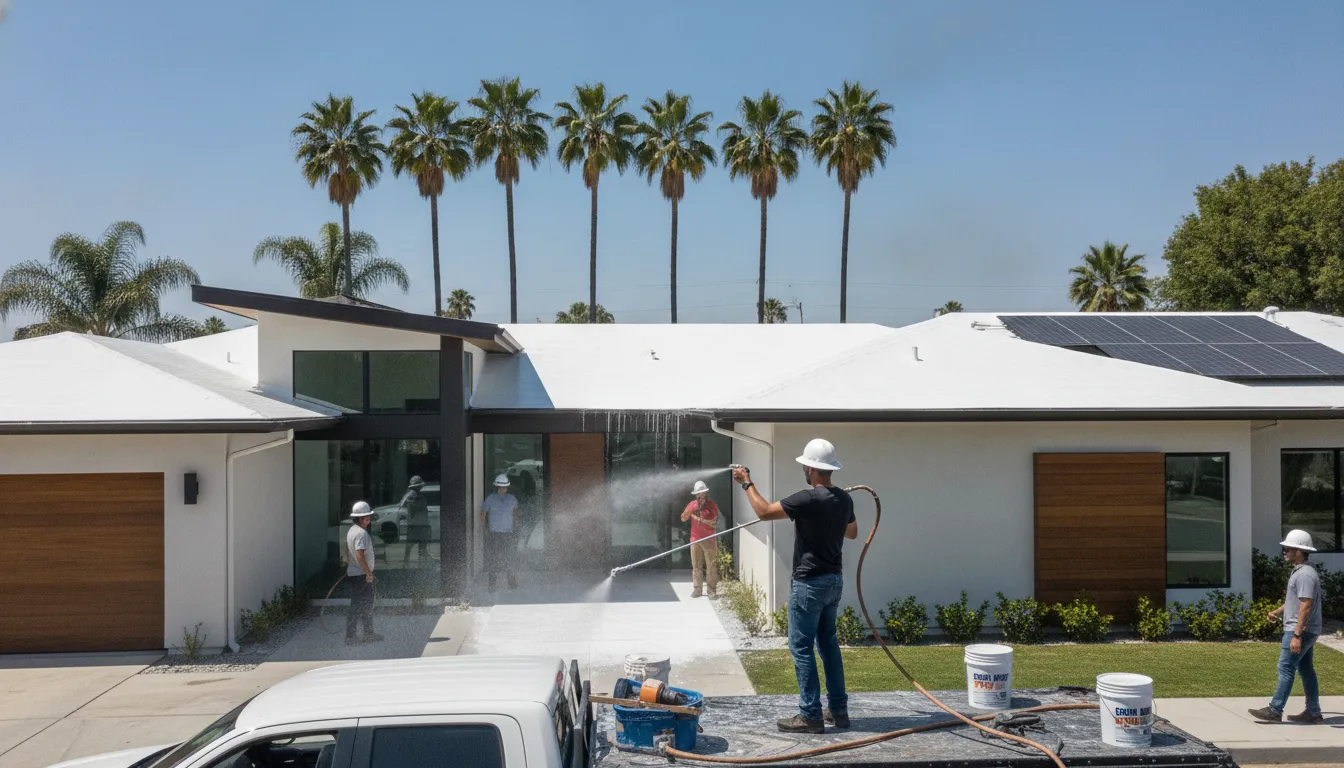
- Clean and prepare the roof surface. The roof must be completely clean for the coating to bond properly. This includes pressure washing to remove dirt, mold, moss, and loose debris. Any previous coatings that are peeling or delaminating must be removed. Repairs to cracks, flashing, fasteners, and vent boots are completed at this stage.
- Apply primer if needed. Some coating systems require a primer layer for optimal adhesion, particularly over metal or aged modified bitumen surfaces. The primer seals the substrate and creates a uniform base for the coating.
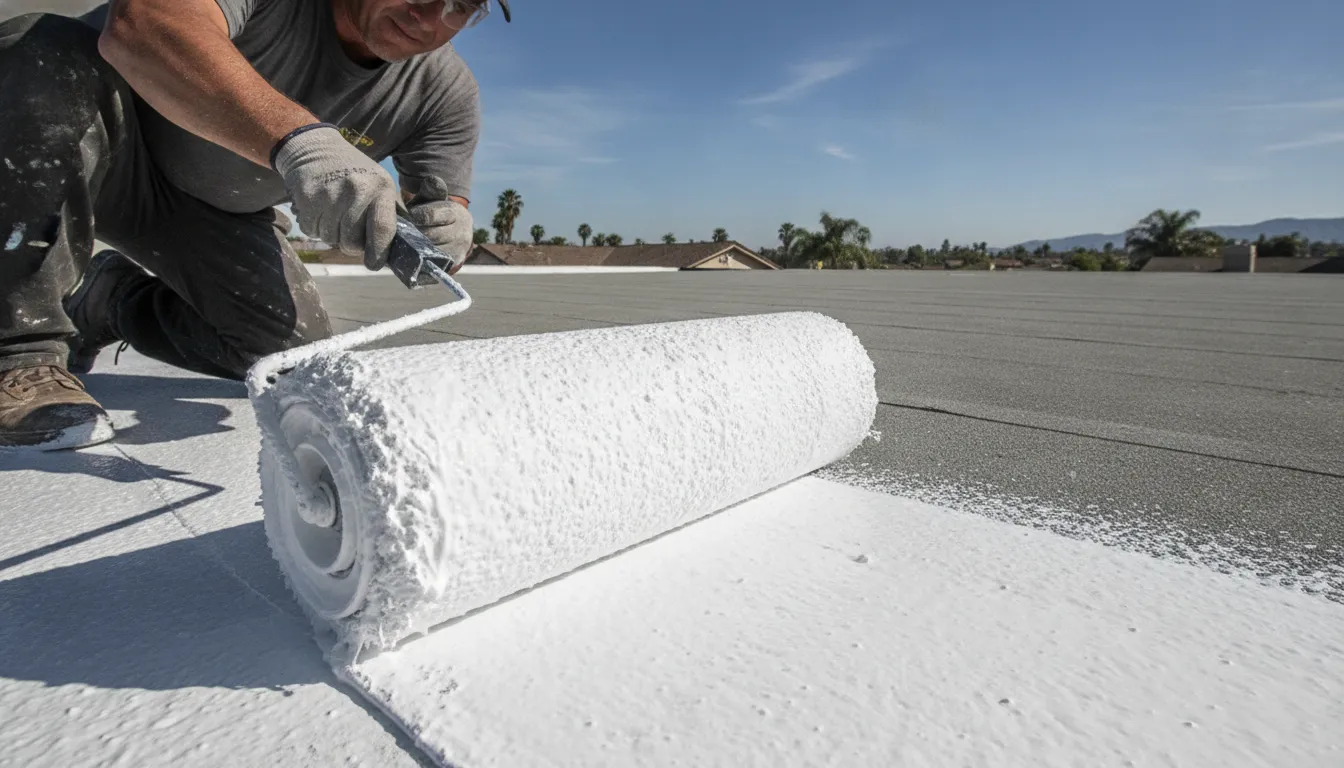
- Apply the roof coating. The coating is applied using spray equipment or heavy-nap rollers in one or two coats. Professional applicators measure wet film thickness to ensure the coating meets the manufacturer’s specifications. Consistent thickness is the single most important factor in coating longevity.
- Cure and inspect. The coating must cure according to manufacturer guidelines, typically 24 to 48 hours depending on temperature and humidity. After curing, a final inspection verifies coverage, thickness, and performance.
Why does professional application matter? A DIY coating job often results in uneven thickness, poor adhesion, and premature failure. Professional applicators have the equipment, training, and experience to apply coatings at the correct thickness and coverage rate. They also identify and address underlying issues that a homeowner would miss. When evaluating waterproofing solutions like roof coatings, professional application is not a luxury, it is a requirement for lasting results.
Talk to a Cert-A-Roof Specialist: (888) 766-3800
Frequently Asked Questions About Roof Coating Benefits
What are the main roof coating benefits for my home?
Roof coatings extend roof life by 10 to 20 years, improve energy efficiency by reflecting solar heat, prevent leaks through waterproofing, reduce maintenance costs, and provide UV protection. They cost significantly less than full roof replacement.
How much does roof coating cost in Southern California?
Residential roof coating in Orange County and surrounding areas typically ranges from $3,000 to $8,000 depending on roof size, material, coating type, and preparation work required. This is 25 to 50 percent less than the cost of a full roof replacement.
How long does a roof coating last?
Silicone coatings last 15 to 20 years, polyurethane lasts 10 to 15 years, and acrylic lasts 5 to 10 years. Lifespan depends on climate conditions, application quality, and ongoing maintenance.
Can roof coating be applied to any type of roof?
Roof coatings work best on metal, single-ply membranes (TPO, EPDM), modified bitumen, and some tile roofs. They are not suitable for severely damaged or structurally compromised roofs. A professional inspection is required to determine suitability.
Is roof coating better than roof replacement?
Roof coating is better when the existing roof is structurally sound but showing wear. It costs less, causes less disruption, and can be completed in days rather than weeks. Replacement is necessary when the underlying structure is compromised or the roof is at the end of its service life.
Does roof coating really reduce energy bills?
Yes. Reflective roof coatings lower roof surface temperatures by 50 degrees Fahrenheit or more, reducing cooling costs by 10 to 20 percent during hot Southern California summers. They help meet California’s Title 24 energy efficiency standards.
How is roof coating applied?
Application involves a professional inspection, thorough roof cleaning, necessary repairs, primer if needed, and spray or roller application of the coating in one or two coats. The process typically takes two to four days for a residential property.
What is the difference between roof coating and roof sealant?
Roof coating is a full-surface system that covers the entire roof, providing comprehensive UV protection, reflectivity, and waterproofing. Roof sealant is a targeted repair product used for spot fixes around flashings, vents, and small cracks. They serve different purposes and are not interchangeable.
Are roof coatings environmentally friendly?
Modern roof coatings are environmentally beneficial. They reduce energy consumption, lower urban heat island effects, extend roof life reducing landfill waste, and many are formulated with low VOCs. Cool-roof coatings support California’s sustainability and Title 24 compliance goals.
Ready to Explore Roof Coating for Your Home?
Roof coating benefits are clear: lower energy bills, extended roof life, cost-effective protection, and environmental advantages. The first step is a professional inspection to assess your roof and determine the best coating strategy for your home. Cert-A-Roof has served Southern California homeowners for over 30 years, completing more than 75,000 inspections.
Comment (0)