Flat Roof Maintenance Guide: Care and Repair Tips for SoCal Homeowners
Flat roofs in Southern California face intense sun, limited slope, and drainage demands that can turn a small maintenance issue into interior damage. A documented inspection helps identify trouble before it becomes an emergency. Schedule a roof inspection with Cert-A-Roof today to establish a clear plan for your property.
Effective flat roof maintenance combines twice-yearly inspections, post-storm checks, clear drains and scuppers, timely repairs, and material-appropriate protection. In Southern California, this routine should account for UV exposure, seasonal debris, ponding water, and the condition of flashing around vents and HVAC equipment.
The right schedule depends on the roof system, age, drainage design, and surrounding environment. Start by understanding why flat roofs require a tailored maintenance plan. Then use that framework to organize seasonal care, recognize common problems, and decide when professional help is warranted.
Why Flat Roofs Need Their Own Maintenance Plan
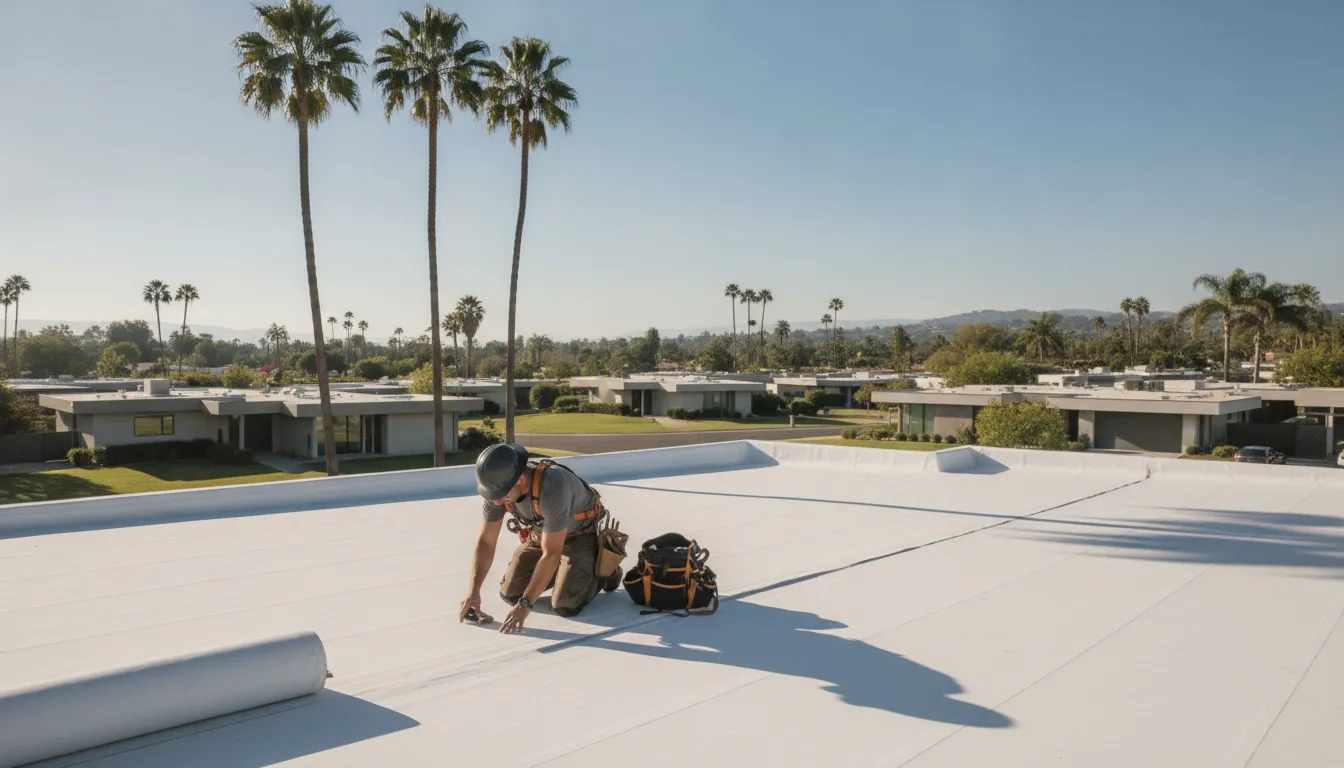
Flat roofs are not truly flat. They are designed with a slight slope, often about 1/4 inch per foot, to direct water toward drains, scuppers, or gutters. That grade is much gentler than the pitch on a conventional sloped roof, so water, dirt, and organic debris can remain on the surface longer. A maintenance plan must therefore focus on drainage and membrane condition, not just a visual check from the ground.
Ponding water creates a different risk profile
After a Southern California rainstorm, small areas of standing water may appear where the roof surface has settled. A drain is obstructed, or the drainage design is no longer working as intended. Water that remains in place adds weight and keeps the membrane wet. Over time, repeated ponding can contribute to membrane deterioration, leaks, and damage around seams or penetrations. A professional inspection should determine whether the water is temporary runoff or evidence of a drainage problem that needs correction.
Sun and heat accelerate surface wear
Orange County, Anaheim, Irvine, Santa Ana, and nearby communities receive long periods of intense sunlight and dry heat. Ultraviolet radiation gradually degrades exposed roofing materials, while daily temperature changes cause the membrane and flashing to expand and contract. This cycle can reveal cracked coatings, open seams, brittle flashing, or small punctures before they become active leaks. Protective coatings may help shield compatible roof systems, but they should be selected and applied based on the membrane’s condition rather than used as a substitute for inspection.
Membranes and penetrations require close attention
Flat roofs commonly rely on a continuous membrane, such as EPDM or another approved system, to keep water out. The membrane can be damaged by foot traffic, falling branches, maintenance equipment, or poorly installed attachments. Vents, HVAC equipment, skylights, and parapets also create more transition points than a simple roof plane. These areas deserve careful review because a small failure can allow water beneath the membrane, where damage may spread unseen.
Regularly documenting drainage, seams, flashing, and surface wear gives property owners a practical way to address minor defects before they become disruptive repairs. If you see recurring ponding, staining, bubbling, or a new leak, arrange an inspection and review the appropriate flat roof repair options before applying a patch or coating.
For additional context on flat-roof design, material life, and coating intervals, see residential flat roof maintenance guidance. The right schedule depends on the roof system, age, exposure, drainage performance, and use of the building.
Common Flat Roof Problems Southern California Homeowners Face
Flat roofs can look intact from the ground while small defects develop around drains, seams, curbs, and rooftop equipment. During a flat roof maintenance inspection, pay particular attention to these five problem areas. Early warning signs are easier to address before moisture reaches insulation, decking, or interior finishes.
| Problem | Cause | Warning Signs | Prevention |
|---|---|---|---|
| Ponding water | Insufficient drainage, clogged drains, settlement, or a low area in the roof surface. | Water remains for 48 hours or longer after rain, or leaves a persistent dirt ring and staining. | Keep drains and strainers clear, remove debris, and have recurring low spots assessed. See these flat roof maintenance solutions to prevent ponding. |
| Flashing failures | Movement, weathering, loose fasteners, corrosion, or cracked sealant around vents, HVAC units, walls, and curbs. | Separated seams, open joints, rust, missing fasteners, cracked sealant, or leaks near rooftop equipment. | Inspect penetrations and flashing details closely. Flashings cover a small area, but the majority of leaks can originate when their seals fail. Building-science guidance recommends careful integrity checks. |
| Membrane tears and blisters | Foot traffic, impact, trapped moisture, weak seams, or adhesion problems within the membrane system. | Raised bubbles, splits, exposed reinforcement, loose patches, or soft areas underfoot. | Limit unnecessary roof traffic, keep service work controlled, and repair small defects before water can enter the assembly. |
| UV degradation | Southern California’s intense, repeated sun exposure can dry and age membranes, coatings, and sealants. | Fading, chalking, brittle surfaces, hairline cracks, or sealants showing weathering and age. | Maintain compatible protective coatings and inspect exposed details regularly. Replace deteriorated sealant rather than covering a failing joint. |
| Clogged drains | Leaves, dirt, windblown debris, and organic buildup obstructing drain baskets or outlets. | Slow drainage, standing water after a storm, overflowing scuppers, or debris packed around strainers. | Clean drain baskets and remove organic debris during routine inspections. Never assume a drain is clear because the roof surface looks clean. |
Active leaks, blocked primary drains, or displaced edge metal deserve prompt attention. Small blisters, worn sealant, and minor wear should still be documented and scheduled for repair rather than ignored. If you find damage but cannot identify its source, a certified inspection can distinguish a localized repair from a broader drainage or membrane problem.
Your Seasonal Flat Roof Maintenance Checklist for Southern California
Southern California weather is mild, but intense sun, seasonal debris, and short periods of heavy rain can still stress a flat roofing system. Use this quarterly routine as a practical supplement to your seasonal flat roof maintenance plan, and document changes with dated photos.
-
Spring: inspect for winter damage. After the wet season, look for new stains, soft areas, membrane blisters, splits, or exposed seams. Clear branches and other debris without dragging sharp objects across the membrane. Check flashings around vents, skylights, walls, and equipment curbs. Look for corrosion, missing fasteners, and cracked or weathered sealants, which are specific warning signs identified in a university roof maintenance plan. Confirm that edge metal remains secure and that drainage paths are open.
-
Summer: reduce heat and UV exposure. Inspect the membrane for cracking, surface wear, or areas where the protective surface has deteriorated. Southern California sun can accelerate sealant aging, so address small failures before they allow water beneath the membrane. If the roof system is suitable, ask a professional whether a UV-protective coating is appropriate. Trim overhanging branches to reduce shade-related moisture, falling debris, and abrasion. Do not walk on the roof more than necessary, especially when the surface is hot or fragile.
-
Fall: prepare drains for rain. Remove leaves, dirt, and organic debris before they become wet, compacted material. Clean roof drain baskets and confirm that gutters, scuppers, and downspouts can carry water freely. Inspect seams, flashings, and penetrations again, because small defects are easier to correct before the first major storm. This is also the right time to schedule a professional inspection if spring findings were deferred.
-
Winter: monitor the roof after storms. From a safe location, check for visible ponding, blocked drains, new stains, or active leaks after significant rainfall. Water that remains for 48 hours or longer needs attention, even if the ceiling below looks dry. Remove accessible debris only when conditions are safe, and never enter standing water near electrical equipment. Record the location and duration of ponding so an inspector can evaluate drainage and membrane conditions.
At least once a year, have a qualified roofing professional perform a documented inspection. A certified inspection can identify concealed deterioration and prioritize repairs before a seasonal issue becomes interior water damage.
How Much Does Flat Roof Maintenance and Repair Cost in Southern California?
Flat roof maintenance costs vary widely because a routine inspection is a different service from membrane repair or drainage correction. As a planning range, professional inspections commonly cost $200 to $300. Angi’s competitor data also places professional cleaning around $300 to $600, depending on debris, access, and roof size. These services are preventive expenses that can reveal small problems before water reaches insulation, ceilings, or interior finishes.
Typical repair ranges are broader:
- Minor repairs: $300 to $1,500. This may cover a small puncture, isolated blistering, or a localized seam failure.
- Mid-range repairs: $1,500 to $4,500. Larger membrane patches or flashing work around an HVAC curb can require more labor and materials.
- Major repairs: $5,000 to $8,000 or more. Extensive membrane deterioration and drainage corrections can push a project into this range.
These figures are regional planning ranges, not a quote. A certified inspection is needed to identify the failure and determine whether repair, coating, or replacement is appropriate. You can review options for flat roof repair after the roof’s condition has been documented.
What changes the price?
Roof size affects material quantities and crew time, while access affects setup, safety requirements, and how efficiently workers can move materials. The membrane type also matters. TPO, EPDM, and modified bitumen systems have different repair methods, compatible materials, and installation requirements. Labor rates can vary between Orange County, Los Angeles, San Diego, and nearby Southern California markets.
Drainage problems, rooftop equipment, penetrations, edge metal, and hard-to-reach sections can add complexity. A protective coating application may be a practical maintenance option when the membrane is suitable and the underlying roof is sound. The right coating system and preparation requirements should be evaluated during an inspection, rather than treated as a universal fix. See this guide to flat roof maintenance and coatings.
Preventive maintenance versus emergency repair
Preventive inspections, cleaning, seam and flashing checks, and appropriate coating work generally cost less than responding after a leak has damaged insulation or interior finishes. Angi reports that water-leak repairs account for nearly half of flat roof repairs. Delaying attention can turn a localized defect into a larger membrane or drainage project, especially after a storm. A planned inspection helps prioritize the work and gives the property owner a clearer basis for budgeting.
When to DIY Flat Roof Maintenance vs Call a Professional
Some flat roof maintenance is reasonable for a property owner, but the boundary between routine care and risky roof work matters. Begin with a ground-level inspection or a carefully planned visual check from a safe access point. Look for leaves, branches, blocked drains, standing water, damaged edge metal, and visible changes around vents or HVAC equipment. A visual inspection is also a useful time to photograph conditions and note when they appeared.
Tasks you can handle safely
On a dry, calm day, homeowners may clear loose debris, clean accessible gutter areas. And trim branches that rub against the roof or drop organic material onto the membrane. Keep tools soft and lightweight, and never drag equipment across the roof surface. Organic debris can retain moisture, so keeping the membrane and drain baskets clear is a basic but meaningful part of flat roof maintenance.
Do not climb onto a roof that is wet, icy, visibly damaged, or difficult to access. Avoid walking on areas that feel soft or springy, and stay away from skylights, roof edges, and unprotected openings. If safe access is uncertain, the correct DIY decision is to remain on the ground and arrange an inspection.
Work that belongs to a professional
Call a qualified roofing professional for a detailed inspection, leak tracing, flashing repair, membrane repairs, protective coating applications, or any suspected structural problem. Flashings and seals cover a small portion of the roof, yet the majority of leaks can originate when they fail, according to the National Research Council of Canada. Inspectors should examine penetrations, wall and curb flashings, edge metal, seams, drainage, and the condition of the substrate, not simply apply sealant where water is visible. Read more about professional roof inspections before attempting a complex repair.
Professional evaluation is especially important for commercial buildings, multifamily properties, and roofs with mechanical equipment. Cert-A-Roof serves property owners who need flat roof maintenance for commercial properties, documented findings, and a clear path from inspection to recommended work. An NRCIA-certified inspection can provide detailed documentation for lenders, insurers, warranty records, or future property transactions. Cert-A-Roof’s inspection-led model assesses the roof first, then develops repair or replacement recommendations from the findings. That approach helps distinguish a maintenance issue from a problem requiring immediate, technically appropriate intervention.
How Protective Coatings Extend the Life of Your Flat Roof
Protective coatings add a continuous layer over a compatible roof membrane, helping shield the surface from ultraviolet radiation, weathering, and everyday exposure. That extra barrier is especially useful in Southern California, where intense sun can accelerate the aging of roofing materials and cause sealants to crack, weather, or lose resilience. Coatings are not a substitute for repairing leaks or damaged membranes first, but they can be an important part of a broader flat roof maintenance and coatings plan.
Choosing the right coating for the roof system
The coating must match the existing membrane, its condition, and the roof’s drainage and flashing details. Acrylic coatings are commonly selected for their reflective finish and ease of application. Silicone coatings can provide strong water resistance and may be considered where occasional ponding is a concern. Polyurethane coatings are useful when added toughness and resistance to impact or foot traffic are priorities. These materials are not interchangeable, so a professional should confirm compatibility before application.
A coating project should begin with cleaning, preparation, and an inspection of seams, penetrations, drains, and edge details. Applying product over trapped moisture, active leaks, or loose membrane can conceal defects rather than solve them. A certified inspection helps determine whether the roof is a good candidate for restoration or needs protective roof coatings after repairs.
Reflective surfaces and Southern California heat
Light-colored or reflective coatings send more of the sun’s energy away from the roof surface instead of allowing it to become absorbed heat. In a hot Southern California summer, that can reduce heat transfer into the building and may help lower cooling demand. Actual energy savings vary with insulation, building use, roof color, weather, and HVAC efficiency. So coating should be viewed as one part of a complete energy strategy rather than a guaranteed utility reduction.
How often should a coating be renewed?
Many flat-roof maintenance recommendations call for evaluating protective coatings every two to four years, with renewal based on wear, exposure, product type, and the roof’s condition. Inspect the surface sooner if you notice cracking, blistering, peeling, ponding, or exposed membrane. Timely re-coating can help preserve UV protection before deterioration reaches the underlying roof system.
Frequently Asked Questions
How often should a flat roof be inspected?
Arrange a professional inspection twice a year, usually in spring and fall, and schedule another inspection after a major storm. A roof inspection can identify blocked drains, membrane damage, failing flashing, and early signs of ponding before they become interior leaks.
Can homeowners safely perform flat roof maintenance themselves?
Homeowners can remove loose debris from an accessible roof edge and check interior ceilings for water stains. But walking on a flat roof can damage the membrane or create a fall hazard. Avoid electrical equipment, HVAC areas, wet surfaces, and suspected structural damage. Use a qualified professional for close inspection or repairs.
How do I know whether ponding water is a serious problem?
Water that remains on a flat roof for more than 48 hours needs attention because it can add weight, accelerate membrane deterioration, and expose drainage problems. Do not puncture the membrane or sweep water toward an edge. Have a professional evaluate the slope, drains, scuppers, and underlying structure.
What does a professional flat roof inspection cost?
A professional inspection commonly costs about $200 to $300, according to Angi, although the final price depends on roof size, access, location, and the level of documentation required. The inspection report can help distinguish routine maintenance from repairs that require immediate attention.
When should a flat roof be repaired instead of replaced?
Repair may make sense when damage is localized and the membrane and underlying structure remain sound. Replacement becomes more practical when leaks are widespread, the roof is near the end of its service life, or repeated repairs no longer restore reliable performance. A certified inspection should guide that decision.
Ready to Schedule a Roof Inspection?
A careful inspection can identify drainage, flashing, membrane, or surface concerns before they require more extensive work. For a clear assessment of your flat roof and practical next steps, schedule a roof inspection with Cert-A-Roof. The inspection-led process helps you understand your roof’s condition and prioritize maintenance based on what is actually present.
Comment (0)