Types of Roofing Materials: Homeowner Guide
Types of Roofing Materials: A Complete Guide for Homeowners
Choosing between the most common types of roofing materials is not just a style decision. It affects how long your roof lasts, what repairs cost, how your home handles Southern California heat and wildfire exposure, and what a professional inspector needs to examine before you buy, sell, repair, or replace a roof.
Need a material-specific roof inspection before you repair or replace your roof? Request an appointment with Cert-A-Roof or call 888-766-3800.
Cert-A-Roof has inspected and certified more than 75,000 roofs across Southern California and beyond. That experience matters because asphalt shingles, clay tile, concrete tile, metal, slate, wood shake, and flat roof systems all fail in different ways. A roof can look fine from the ground while hiding cracked tiles, lifted flashing, brittle underlayment, ponding water, deteriorated sealant, or ventilation problems that shorten its service life.
This guide compares the major roofing materials homeowners ask about most often, with practical notes on cost, lifespan, inspection concerns, and which options tend to make sense in Orange County, Los Angeles, San Diego, Riverside, San Bernardino, and similar climates.
Quick Comparison of Common Roofing Materials
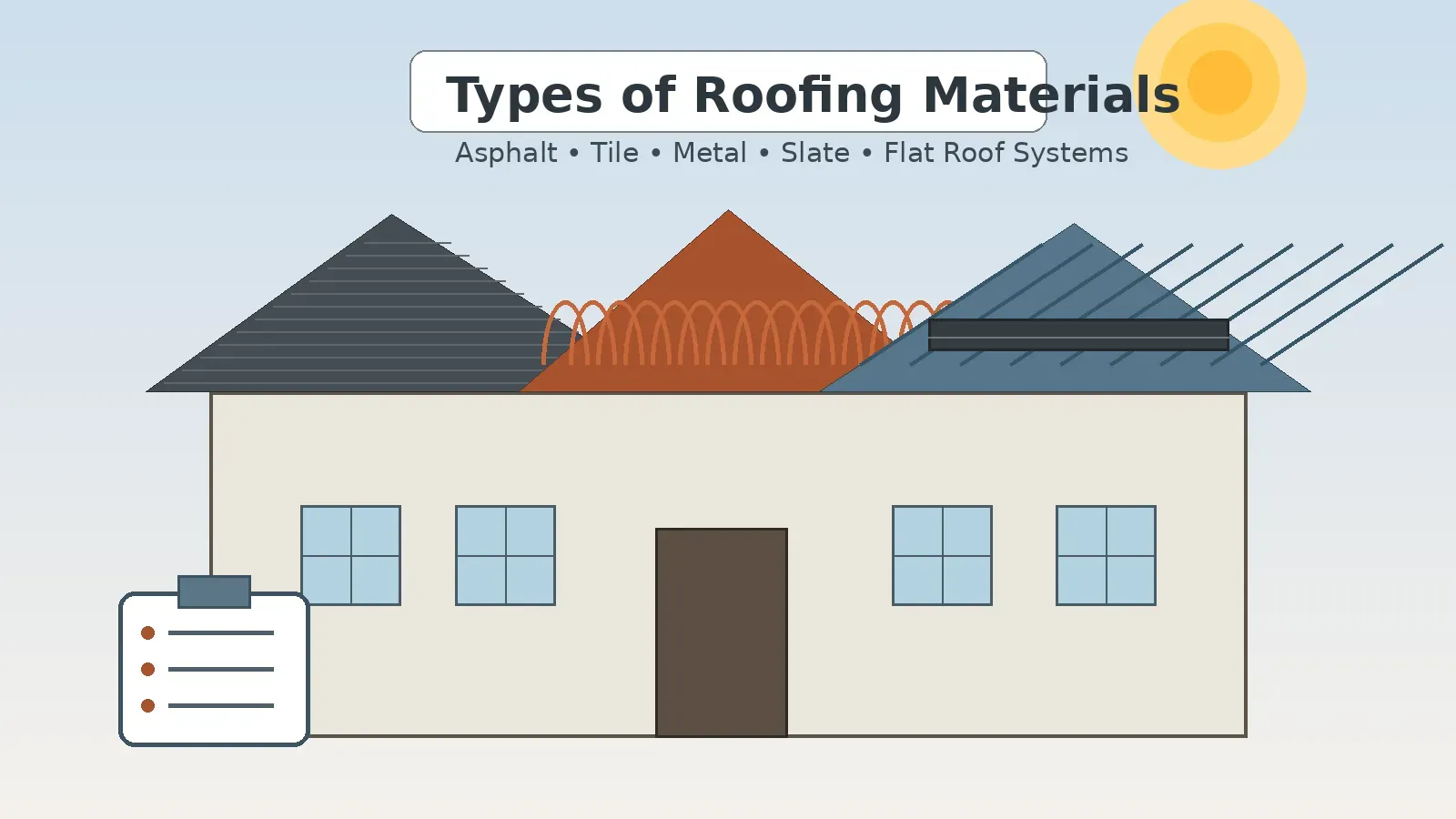
The best roofing material depends on your budget, home structure, neighborhood requirements, fire exposure, slope, and how long you plan to own the property. Use this table as a starting point, then confirm details with a certified roof inspection before making a major roofing decision.
| Roofing material | Typical lifespan | Relative cost | Best fit | Main concern |
|---|---|---|---|---|
| Asphalt shingles | 15 to 30 years | Low to moderate | Budget-conscious homes, many sloped roofs | Heat aging, granule loss, wind damage |
| Concrete tile | 40 to 50+ years | Moderate to high | Southern California homes, Spanish and Mediterranean styles | Underlayment aging, broken tiles, weight |
| Clay tile | 50+ years | High | Hot climates, premium curb appeal | Fragility, installation quality, underlayment |
| Metal roofing | 40 to 70 years | Moderate to high | Energy efficiency, fire resistance, long-term ownership | Fasteners, seams, noise, expansion |
| Slate | 75 to 100+ years | Very high | Luxury homes built to carry heavy roofing | Weight, specialized repairs, cracked slate |
| Wood shake or shingle | 20 to 40 years | Moderate to high | Rustic homes where allowed by code | Fire restrictions, rot, splitting, maintenance |
| Flat roof systems | 15 to 30+ years | Varies by membrane | Commercial buildings, low-slope additions, multifamily | Ponding water, seams, drainage, punctures |
What Are the Main Types of Roofing Materials?
The main types of roofing materials for homes and light commercial buildings are asphalt shingles, concrete tile, clay tile, metal roofing, slate, wood shake or wood shingles, and low-slope systems such as TPO, EPDM, modified bitumen, and built-up roofing. Each material has a different balance of cost, durability, appearance, maintenance, and inspection requirements.
For Southern California homeowners, the choice often comes down to four factors:
- Climate: intense sun, coastal moisture, inland heat, Santa Ana winds, and seasonal storms all affect roof performance.
- Fire exposure: many communities require or strongly favor Class A fire-rated assemblies, especially near hillside and wildland interface areas.
- Structure: tile and slate can be heavy, so the home must be able to support the load.
- Service life: some materials last decades, but only when the underlayment, flashing, ventilation, and drainage are also maintained.
A material label alone does not tell you whether a roof is healthy. Cert-A-Roof’s roof inspection process looks at the full system, not just the visible surface.
Asphalt Shingles
Asphalt shingles are the most widely used residential roofing material in the United States. They are popular because they are affordable, familiar to most contractors, available in many colors, and suitable for a wide range of sloped roofs.
Pros of asphalt shingles
- Lower upfront cost than tile, metal, or slate
- Fast installation compared with heavier specialty materials
- Many Class A fire-rated products are available
- Easy to repair when damage is limited to a small area
- Architectural shingles can improve curb appeal over basic 3-tab shingles
Cons of asphalt shingles
- Shorter lifespan than tile, metal, or slate
- Heat and UV exposure can accelerate aging in Southern California
- Granule loss, curling, cracking, and lifted tabs are common warning signs
- Wind can damage poorly sealed or aging shingles
- Dark shingles can absorb more heat unless a reflective option is selected
In Southern California, asphalt shingles can be a practical choice when budget matters and the roof has good ventilation. A professional inspection should check granule loss, seal strips, penetrations, flashing, roof-to-wall transitions, valleys, and signs that heat has shortened the material’s service life.
If you are comparing asphalt to tile or metal because your current roof is near the end of its life, Cert-A-Roof’s guide to roof replacement cost explains how material choice affects total project price.
Concrete and Clay Tile Roofs
Concrete and clay tile roofs are common throughout Southern California because they fit the region’s Spanish, Mediterranean, and mission-style architecture. They also handle heat well and can provide long service life when the roof system is installed and maintained correctly.
Concrete tile
Concrete tile is usually less expensive than clay tile and is available in many profiles, including flat, low-profile, and barrel-style designs. It is durable, fire resistant, and a strong fit for many Southern California homes. Over time, individual tiles can crack, shift, or break, especially when walked on incorrectly.
Clay tile
Clay tile is a premium material known for color stability, classic appearance, and long lifespan. It performs well in hot climates, but it can be fragile. Repairs require care because stepping in the wrong place can crack tiles and create new leak paths.
The underlayment matters as much as the tile
One of the biggest misunderstandings about tile roofs is assuming that the tile itself is the entire waterproofing system. Tile sheds water, but the underlayment beneath it is critical. In many tile roofs, the tiles may still look good while the underlayment has aged, cracked, or lost its ability to protect the decking.
A proper tile roof inspection should evaluate broken tiles, slipped tiles, ridge conditions, valley metal, flashing, bird stops, penetrations, underlayment exposure, and signs of water intrusion. For more detail on this material, see Cert-A-Roof’s guide to concrete tile roof repair.
Have a tile roof and are not sure whether it needs repair, maintenance, or replacement? Schedule a certified inspection before authorizing major work.
Metal Roofing
Metal roofing includes standing seam panels, metal shingles, corrugated panels, and specialty profiles that imitate tile or slate. It is often chosen for longevity, fire resistance, energy efficiency, and modern curb appeal.
Pros of metal roofing
- Long service life when installed correctly
- Strong resistance to fire, wind, and impact compared with many materials
- Reflective finishes can reduce heat absorption
- Lightweight compared with tile or slate
- Available in standing seam, shingle, and tile-look profiles
Cons of metal roofing
- Higher upfront cost than asphalt shingles
- Requires experienced installation around seams, penetrations, and flashing
- Can be noisy in rain without proper assembly
- Expansion and contraction must be handled correctly
- Fasteners and sealants need periodic inspection on some systems
In fire-prone or high-sun areas, metal can be a smart long-term option. The inspection focus should include panel seams, clips, fasteners, ridge caps, pipe penetrations, coating wear, corrosion near coastal environments, and the condition of the underlayment beneath the metal panels.
Slate Roofing
Slate is one of the longest-lasting and most distinctive roofing materials available. Natural slate can last for generations, which makes it appealing for high-end homes and historic properties. It is also heavy, expensive, and requires specialized installation and repair.
Slate makes the most sense when the structure is designed or reinforced to carry it, the homeowner values long-term durability over low upfront cost, and qualified slate professionals are available for maintenance. Not every roof should be converted to slate. Weight, fastening, slope, flashing, and replacement tile sourcing all matter.
A slate roof inspection should look for cracked, missing, slipping, or delaminating slate pieces, failed flashings, previous improper repairs, corrosion at fasteners, and gutter or drainage issues that can allow water to back up under the slate.
Wood Shake and Wood Shingle Roofs
Wood roofing has a natural look that many homeowners like, but it requires more caution in Southern California than in some other regions. Fire rules, insurance requirements, maintenance demands, and local building restrictions can limit where wood shake or wood shingles are appropriate.
Wood shakes are typically thicker and more rustic. Wood shingles are usually more uniform. Both can split, cup, rot, grow moss in shaded areas, and become brittle with age. Even when treated products are available, homeowners in wildfire-prone areas should confirm current local code and insurance requirements before choosing wood.
Inspection of a wood roof should evaluate splitting, missing pieces, fastener condition, biological growth, debris buildup, ventilation, flashing, and whether the roof still meets fire and insurance expectations for the property.
Flat and Low-Slope Roofing Systems
Flat roofs are not truly flat. They need enough slope to move water to drains, scuppers, or gutters. Flat and low-slope systems are common on commercial buildings, multifamily properties, modern homes, garages, and additions. They use different materials than steep-slope residential roofs.
Common flat roof materials
- TPO: a single-ply membrane often used on commercial roofs because of its reflective surface and heat-welded seams.
- EPDM: a rubber membrane known for flexibility and long use in low-slope roofing.
- Modified bitumen: an asphalt-based system often installed in rolls.
- Built-up roofing: multiple layers of bitumen and reinforcing material, often used on commercial buildings.
- Roof coatings: reflective or waterproofing coatings that can extend service life when the existing roof is a good candidate.
Flat roof inspections are highly drainage-focused. The inspector should look for ponding water, open seams, punctures, blisters, membrane shrinkage, clogged drains, deteriorated flashing, exposed edges, rooftop equipment penetrations, and signs of interior moisture.
For building owners and property managers, Cert-A-Roof’s commercial roofing team can inspect low-slope systems and document repair or replacement needs.
Which Roofing Material Is Best for Southern California?
For many Southern California homes, concrete tile, clay tile, Class A asphalt shingles, and metal roofing are the most practical choices. The best option depends on the home’s structure, budget, location, and long-term plan.
- For affordability: architectural asphalt shingles are often the most budget-friendly option.
- For regional style: concrete or clay tile works well with many Orange County and Southern California homes.
- For long-term durability: metal, tile, and slate can outperform asphalt when the roof system is installed correctly.
- For fire resistance: Class A assemblies are important, especially near hillside and wildfire exposure zones.
- For commercial properties: TPO, EPDM, modified bitumen, built-up roofing, or coatings may be more appropriate than steep-slope materials.
Southern California pricing can also run higher than national averages because of labor rates, permitting, disposal, fire-resistance requirements, and local code expectations. That is why a roof should be inspected before you decide that full replacement is the only option. Sometimes a targeted repair and certification path is more cost-effective. Other times, replacement is the safer long-term decision.
How Roofing Material Changes the Inspection
A roof inspection should be matched to the material. A checklist that works for asphalt shingles will not catch every issue on a tile, slate, metal, or flat roof. This is where Cert-A-Roof’s inspection-first approach is valuable.
| Material | Inspection priorities |
|---|---|
| Asphalt shingles | Granule loss, curling, lifted tabs, nail pops, flashing, valleys, ventilation, storm damage |
| Concrete or clay tile | Broken tiles, slipped tiles, underlayment condition, valleys, ridge details, penetrations, walking damage |
| Metal | Seams, fasteners, panel movement, corrosion, coating wear, flashing, penetrations |
| Slate | Cracked slate, slipping pieces, fasteners, flashing, improper repairs, structural load concerns |
| Wood shake or shingle | Splitting, rot, cupping, fire compliance, moss, debris, ventilation, fastener condition |
| Flat roof systems | Ponding water, seams, punctures, drains, scuppers, rooftop equipment, membrane wear |
Cert-A-Roof’s inspection reports are designed to give homeowners, real estate professionals, lenders, and property managers clear documentation. When a roof qualifies, the company can also provide LeakFREE roof certification, which is accepted for many real estate, lender, and insurance situations. Learn more about roof certifications and how they support property decisions.
Repair, Replace, or Certify: How to Decide
Material type is only one part of the decision. A 12-year-old asphalt shingle roof with localized flashing problems may need repair. A 35-year-old tile roof with aging underlayment may need more significant work even if most tiles look intact. A flat roof with chronic ponding may need drainage correction, not just another patch.
Before choosing repair or replacement, ask these questions:
- How old is the roof, and is that age typical for this material?
- Are leaks isolated, or are there signs of system-wide failure?
- Is the visible surface failing, or is the hidden underlayment the bigger issue?
- Does the roof meet current fire, insurance, and lender expectations?
- Would repairs realistically last, or would they only delay replacement for a short time?
- Could the roof qualify for certification after documented repairs?
Cert-A-Roof explains this decision process in more detail in Roof Repair vs. Replacement. The safest next step is usually a certified inspection that documents conditions before you commit to a large project.
If you are comparing roof materials for an upcoming repair or replacement, call 888-766-3800 or request an appointment to have Cert-A-Roof inspect your current roof first.
Frequently Asked Questions About Roofing Materials
What is the most common roofing material?
Asphalt shingles are the most common residential roofing material because they are affordable, widely available, and suitable for many sloped roofs. In Southern California, concrete and clay tile are also very common because they match regional architecture and perform well in hot climates.
What roofing material lasts the longest?
Slate is usually the longest-lasting roofing material, often lasting 75 to 100 years or more when installed and maintained correctly. Clay tile, concrete tile, and metal roofing can also provide long service life. Actual performance depends on installation quality, underlayment, flashing, ventilation, maintenance, and local weather exposure.
What is the best roofing material for hot climates?
Clay tile, concrete tile, reflective metal roofing, and cool-rated asphalt shingles can all work in hot climates. The best choice depends on roof structure, budget, fire exposure, and design goals. In Southern California, tile and metal are often strong long-term options, while Class A asphalt shingles can be practical for budget-sensitive projects.
Are tile roofs better than shingles?
Tile roofs usually last longer than asphalt shingles and are popular in Southern California, but they cost more upfront and require the structure to support the added weight. Asphalt shingles are more affordable and easier to repair. Tile is not automatically better for every home, especially if the underlayment is old or installation quality is poor.
Do I need a roof inspection before choosing a material?
Yes. A roof inspection helps determine whether you need repair, replacement, maintenance, or certification. It also identifies structural, drainage, flashing, ventilation, and underlayment issues that can affect which material makes sense for your property.
The Bottom Line
The best roofing material is the one that fits your home, climate, budget, fire exposure, and long-term ownership plan. Asphalt shingles offer affordability. Concrete and clay tile fit many Southern California homes and can last for decades. Metal offers strong durability and fire resistance. Slate is a premium long-life option. Wood requires careful code and insurance review. Flat roof systems need specialized drainage and membrane inspections.
Whatever material you choose, the visible roof covering is only part of the system. Underlayment, flashing, ventilation, drainage, workmanship, and maintenance often determine whether a roof performs as expected.
Cert-A-Roof brings more than 30 years of roofing and inspection experience, NRCIA-certified protocols, and over 75,000 completed inspections to that decision. Request an appointment or call 888-766-3800 to understand the condition of your current roof before you repair, replace, certify, or choose your next roofing material.
Comment (0)