Drone Roof Inspection Southern California Safety Guide
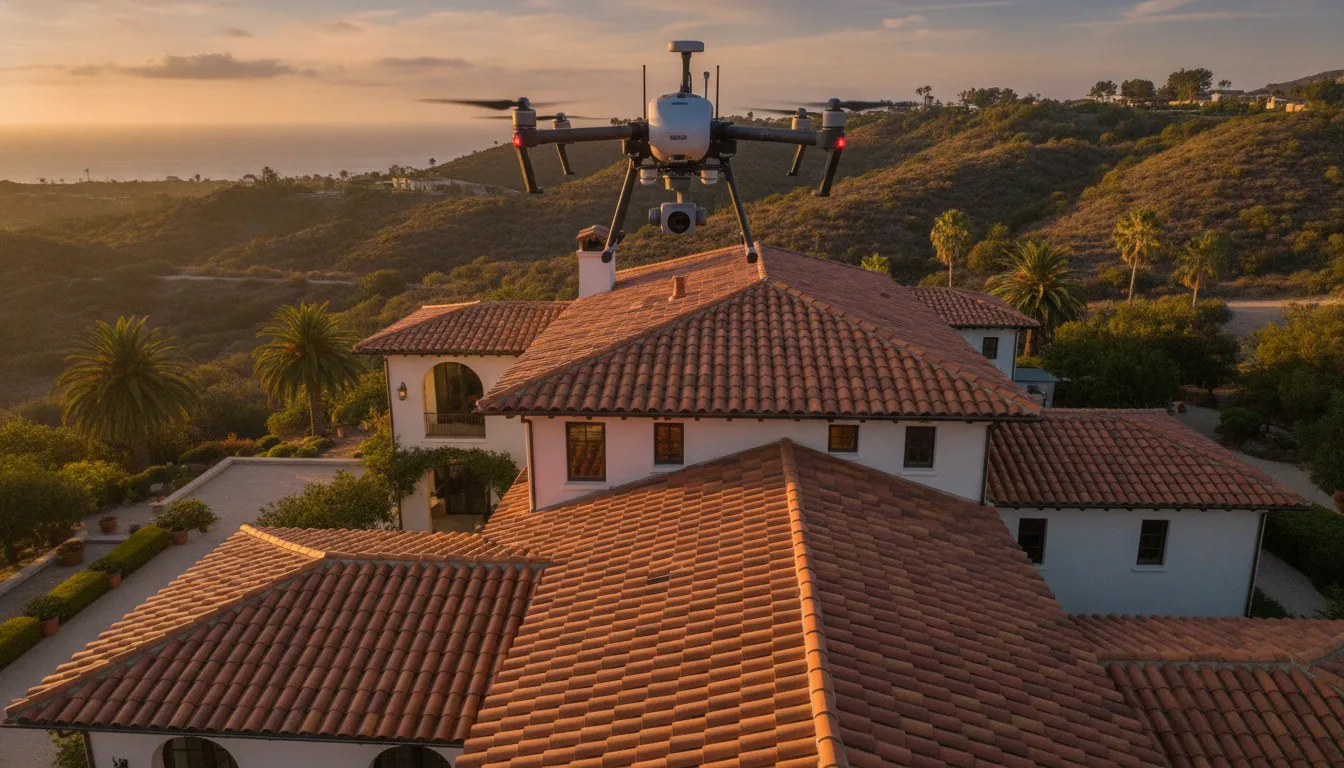
A drone roof inspection Southern California property owners schedule provides a close, documented look at fragile tile, steep slopes, and visibly damaged surfaces. It avoids putting boots on a vulnerable roof before an inspector understands its condition. Aerial imagery can reduce unnecessary surface contact. It also helps an experienced inspector decide whether a targeted hands-on review is safe and useful.
Schedule a drone roof inspection with Cert-A-Roof for professional aerial documentation and clear next steps.
This approach is especially useful for the clay and concrete tile roofs found throughout Southern California. It can also improve initial access to metal, slate, steep, complex, and storm-damaged roofs. The value does not come from simply flying over a house. It comes from pairing detailed images with a certified inspector’s judgment, a structured inspection process, and a report that helps the owner act.
When Is a Drone Roof Inspection Southern California Service Safer?
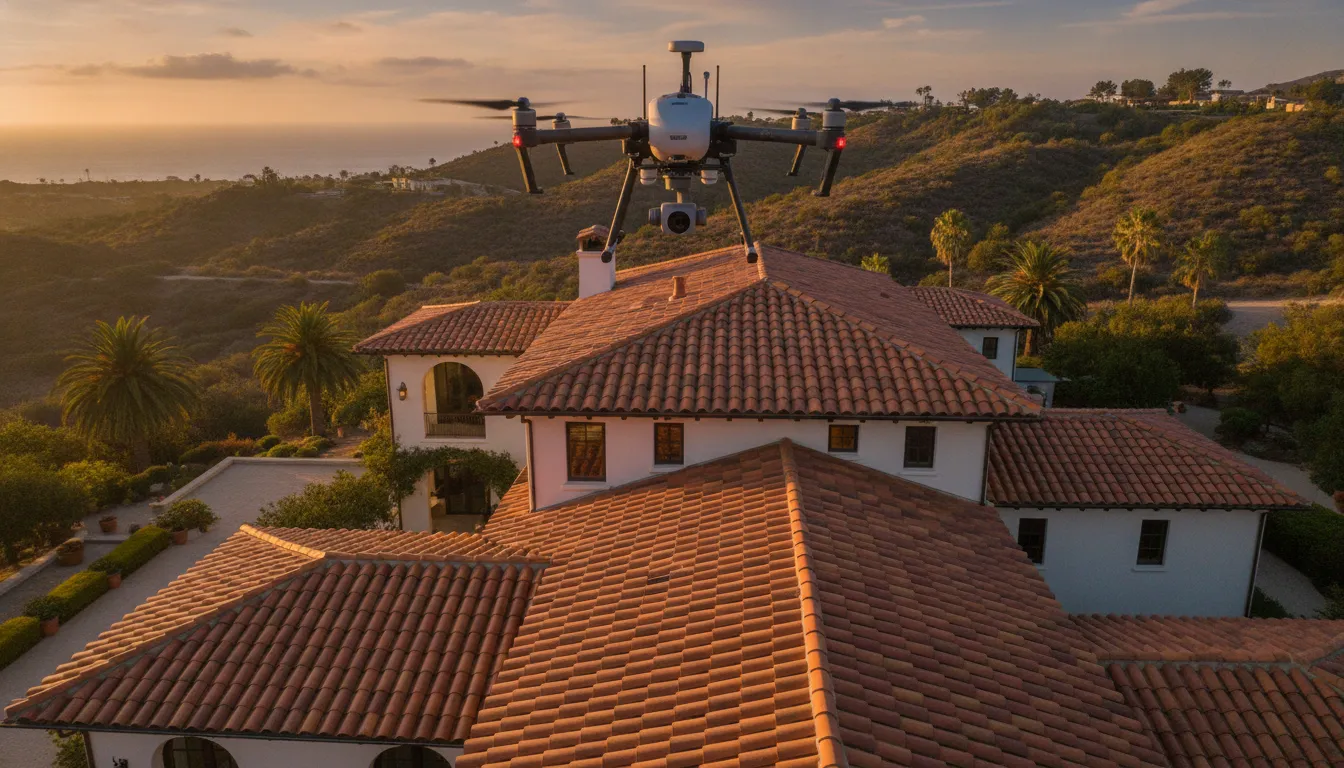
A drone is often the safer first inspection method when walking the roof could injure the inspector, damage the roof covering, or disturb an already compromised section. The inspector can examine the roof from multiple aerial angles before deciding whether anyone should step onto the surface.
This decision matters because roof access is not a routine walk. The Occupational Safety and Health Administration identifies falls as a major construction hazard and publishes specific fall-protection guidance for work at elevation. A steep pitch, moisture, loose debris, broken materials, and uncertain decking can increase the risk. Aerial review lets the inspector gather useful visual evidence without treating every roof as safely walkable.
Conditions that favor an aerial first look
- Fragile clay or concrete tile: Foot pressure can crack tiles or worsen existing fractures.
- Steep roof slopes: High-pitch sections create additional fall risk and can require specialized access planning.
- Visible storm or impact damage: A drone can document the affected area before anyone approaches it.
- Wet, loose, or unstable surfaces: Moisture, debris, and displaced materials can make walking unsafe.
- Complex or elevated roof sections: Courtyards, additions, multiple levels, and unusual rooflines can limit ladder access.
A drone does not automatically replace every hands-on inspection. Instead, it helps the inspector choose the safest and most informative next step based on material, slope, condition, access, and the owner’s goals.
Why tile roof drone inspection protects fragile surfaces
Tile roofs can perform well in Southern California’s climate, but they demand careful inspection. Clay and concrete tiles can crack under concentrated foot pressure, especially when they are aged, already fractured, or not fully supported beneath the point of contact. A tile roof drone inspection gathers close visual evidence without adding foot traffic across the field of the roof.
What aerial imagery can reveal on tile
High-resolution images can show missing, slipped, displaced, and visibly cracked tiles. They can also document ridge and hip conditions, flashing transitions, valleys, roof penetrations, skylights, vents, and debris accumulation. Wide shots establish the overall pattern, while closer angles help an inspector document a specific concern and its location.
This visual record is useful because a single broken tile does not tell the whole story. An inspector needs to consider where the tile sits, whether nearby materials have shifted. How water is likely to move through that roof section, and whether a targeted review is warranted. Owners who want to protect their roof between inspections can also review Cert-A-Roof’s clay tile roof inspection guide and roof maintenance services.
Why images still require professional interpretation
Aerial photos can be sharp and detailed, but the camera does not diagnose a roof on its own. Similar-looking conditions can have different causes, urgency, and repair implications. A qualified inspector interprets visible findings in context, notes the limits of the imagery, and recommends additional evaluation when a concern may extend below the surface.
How drones improve access to steep, metal, and slate roofs
Steep slopes and complex rooflines can prevent an inspector from seeing important areas from the ground or a ladder. A drone can capture the roof field, ridges, valleys, edges, transitions, and penetrations from several controlled angles while the operator stays on the ground.
Metal and slate need material-specific care
On metal roofs, aerial imagery can document visible panel conditions, seams, fasteners, flashing, penetrations, surface changes, and debris. Avoiding unnecessary walking also helps reduce the chance of denting or disturbing panels. On slate roofs, aerial review can identify visibly missing, shifted, or damaged pieces without adding contact to brittle material.
For steep roofs, imagery provides broad access before specialized equipment or a closer physical review is considered. This is not only about convenience. It lets the inspector plan any next step around the actual condition rather than approaching an unfamiliar roof with limited information.
What a camera cannot see
Imagery cannot always confirm concealed moisture, underlayment condition, decking damage, or the exact source of a leak. Those findings may require an interior review, moisture testing, or a carefully targeted hands-on assessment. If active leakage or damage is found, Cert-A-Roof’s roof repair team can help owners understand appropriate repair options after the inspection.
What does a Cert-A-Roof drone inspection include?
Cert-A-Roof uses an FAA-registered drone for fragile or dangerous-to-access roofs. The service is performed by an NRCIA Certified Roof Inspector and combines aerial documentation with professional interpretation. Cert-A-Roof’s published service scope covers tile, metal, slate, concrete, and composition shingle roofs where walking could cause damage or create unnecessary risk.
Commercial drone operations must follow federal requirements. The Federal Aviation Administration explains that operators flying for work or business generally operate under the FAA’s small unmanned aircraft rules. Flight planning also accounts for weather, obstacles, and applicable airspace restrictions. These checks are an important part of responsible inspection work, not an optional extra.
- Site and flight planning: The inspector considers the property, roof configuration, nearby obstacles, weather, visibility, and safe operating conditions.
- Aerial image capture: The drone records detailed views of accessible roof sections, transitions, flashings, penetrations, vents, skylights, valleys, and visible concerns.
- Certified professional review: An NRCIA Certified Roof Inspector evaluates the images in context rather than relying on imagery alone.
- Documented findings: The inspection report organizes photo observations and recommendations for the property owner.
- Practical next steps: The inspector explains whether monitoring, maintenance, repair, replacement estimates, or another inspection method should be considered.
Cert-A-Roof provides the drone inspection report within 24 hours. The service is recommended for homes of 2,500 square feet or less, with additional area handled according to the company’s published scope. Buildings must be under 400 feet tall. Flat roofs, wood shake, and wood shingles are not included in this drone service. An optional roof video is also available.
Explore Cert-A-Roof’s roof inspection options to choose the right method for your property and goals.
Drone inspection vs. walking the roof
Neither method is universally better. The right approach depends on the roof material, pitch, condition, access, weather, and inspection objective. A careful inspector uses the method that produces meaningful evidence without creating avoidable risk or damage.
| Inspection method | Best used for | Key advantage | Important limitation |
|---|---|---|---|
| Drone inspection | Fragile tile, steep slopes, complex rooflines, visible damage | Detailed visual access without adding foot traffic | Cannot confirm every concealed or subsurface condition |
| Walking inspection | Safely walkable roofs requiring close physical review | Allows direct examination of accessible materials | May be unsafe or could damage fragile surfaces |
| Combined approach | Roofs needing broad documentation plus targeted close review | Matches each inspection method to the condition | Requires professional judgment and careful planning |
A drone can provide the broad map that guides a focused physical review. If the aerial images show a concern near a penetration, valley, or transition. The inspector can decide whether that area requires closer evaluation and how to access it safely. This measured approach is more useful than assuming every roof should be walked or assuming imagery can answer every question.
What can a drone roof inspection find?
Visible roofing and flashing concerns
A drone inspection can identify visible cracked, missing, slipped, or displaced roofing materials. It can also document ridges, valleys, flashing, penetrations, drainage paths, debris, surface changes, and visible signs of storm or impact damage. Aerial views make it easier to see patterns across separate roof planes, while close images create evidence that an owner can review later.
Patterns that matter across the roof
An isolated concern and a repeating pattern can call for different responses. Multiple displaced tiles along the same area, repeated debris buildup in valleys, or visible changes around several penetrations may indicate a broader maintenance need. The inspector considers these relationships rather than presenting a folder of unrelated pictures.
What imagery cannot confirm by itself
Aerial images show exterior conditions visible to the camera. They generally cannot confirm concealed leaks, trapped moisture, underlayment deterioration, or structural conditions inside the roof assembly. A professional report should explain these limitations. Owners needing wider documentation for a property decision can learn about roof certifications and whether certification is appropriate for their situation.
When should Southern California owners schedule one?
A drone inspection is useful when an owner needs current documentation but wants to avoid unnecessary surface contact. It can support preventive maintenance, a property transaction, storm follow-up, or investigation of a visible concern. Timing matters because early documentation gives the owner a baseline and can help prevent a small visible issue from being forgotten.
- After strong wind, heavy rain, falling debris, or another event that may have affected the roof
- When broken, missing, or displaced tile is suspected
- Before buying or selling a property with a fragile or steep roof
- When a leak appears and the roof is difficult to access safely
- As part of routine roof condition documentation and maintenance planning
- Before arranging targeted work on a complex roofline
Weather, airspace, and site conditions matter
Flights depend on safe weather, adequate visibility, the property layout, nearby obstacles, and applicable airspace rules. The FAA’s airspace restrictions guidance explains why location must be checked before a flight. If conditions are not suitable, the inspection may need to be rescheduled or performed with another method.
Owners should not treat a consumer drone flight as equivalent to a professional inspection. The inspection’s value lies in safe operation, purposeful image capture, material knowledge, and an explanation of findings. Cert-A-Roof helps Southern California homeowners connect roof observations to practical next steps.
Frequently asked questions about drone roof inspections
Can a drone fully replace a roof inspection?
Not in every situation. A drone provides detailed exterior imagery and is particularly valuable when walking would be unsafe or damaging. Concealed moisture, underlayment, decking, and some leak sources may require additional inspection methods. The inspector should explain what the images establish and what remains unknown.
Are drones good for inspecting clay tile roofs?
Yes. A drone can document visible tile conditions without adding foot traffic that could crack fragile clay or concrete tiles. The inspector can review the imagery, note visible concerns, and decide whether a targeted close review is necessary and safe.
Can a drone inspect a steep roof?
Yes. Drones can capture detailed views of steep slopes and difficult roof sections from several angles while the inspector remains on the ground. Safe operation still depends on weather, visibility, obstacles, airspace, and the site.
What happens if the drone finds damage?
The inspector documents the visible concern, explains its significance, and recommends an appropriate next step. Depending on the finding, that may include monitoring, maintenance, repair, a replacement estimate, or further evaluation using another method.
Can a drone inspection be performed after a storm?
It can be a useful way to document visible storm damage without immediately walking on a compromised roof. The flight still depends on safe weather, site conditions, and applicable operating requirements. If conditions are unsafe, the inspection should wait.
Schedule a safer, more informed roof inspection
If your Southern California property has fragile tile, a steep slope, a complex roofline, or suspected damage, aerial assessment can provide valuable evidence without unnecessary roof contact. Cert-A-Roof combines FAA-registered drone capabilities, NRCIA-certified inspection judgment, photo observations, and a report delivered within 24 hours.
Schedule your Cert-A-Roof drone inspection today to document visible roof conditions and understand the right next step.
Comment (0)