Clay Tile Roof Inspection Southern California Guide
Clay tile roofs are a signature part of Southern California homes. They handle sun, style, and long service life well, but they need a different inspection approach than asphalt shingles. A rushed walk across the roof can crack tiles, miss hidden water paths, or leave a buyer with a report that does not answer the real question.
Schedule a certified clay tile roof inspection with Cert-A-Roof when you need careful access, clear photos. And a report you can use for repairs, certification, insurance review, or a real estate transaction.
The short answer: a clay tile roof inspection Southern California property owners can trust should use safe access, detailed photo documentation, and NRCIA-informed judgment. It should check visible tiles, valleys, flashings, penetrations, skylights, gutters, interior leak clues, and certification eligibility. Drone inspection can reduce breakage risk when walking the roof is unsafe or unnecessary.
This guide explains what makes clay tile inspection different, what a useful tile roof inspection report should include. And how Cert-A-Roof’s certified process helps buyers, sellers, agents, and property owners make the next decision with confidence.
Why clay tile roof inspection Southern California requires extra care
Clay tile roofs suit Southern California homes because they are durable and add a distinct look. Yet the same roof can be fragile during an inspection. A careful review must find defects without creating new cracked tiles. Property owners can request Cert-A-Roof’s roof inspection services when they need a documented evaluation rather than a quick look.
Safe access on fragile tile
Clay tile can crack under poorly placed foot traffic, especially where a tile has lost support. High-profile tiles are often barrel-shaped, so their curved surfaces also make footing less stable. An inspector must first judge whether roof access is safe. In some cases, a drone or another viewing method can limit contact with fragile areas.
Access planning protects both the roof and the person inspecting it. Proper fall protection equipment and inspection protocols are critical during roof work, according to Cal Poly’s fall protection program. Homeowners should not walk on clay tile to check a concern. A trained inspector can choose a safer method based on tile shape, slope, and condition.
Details beneath and between the tiles
The visible clay is only one part of the roof system. Tiles shed much of the weather, while the underlayment below helps protect the roof deck. An inspection should look for cracked, slipped, or missing tiles. It must also assess signs that hidden layers may no longer be doing their job.
Water often finds weak points where roof surfaces meet or change direction. That makes valleys, pipe flashings, chimney flashings, vents, and skylights key inspection areas. The inspector should check nearby tile placement and look for signs of past or active leaks. Interior ceilings and accessible attic areas can add useful evidence that a surface-only check may miss.
Certified inspection versus a free estimate
A quick free estimate often focuses on work a contractor may sell. A careful inspection has a different goal: document the roof’s condition and support a sound decision. Cert-A-Roof’s process includes component checks, interior observations, digital photos, and an electronic report. Findings can help owners plan repairs, review a real estate concern, or pursue certification.
Documentation matters because a cracked tile does not always reveal the full cause or scope of a problem. A certified inspector records what was seen, where it was found, and what should happen next. Property owners can learn more about working with certified roof inspectors in Southern California before choosing the right inspection path.
A careful clay tile roof inspection Southern California property owners can use should balance access, system-level review, and clear records. It should not treat the roof as a simple surface. That added care helps avoid needless tile damage while giving owners a more useful view of roof condition.
What a tile roof inspection report should include
A useful report turns inspection findings into a clear plan. It should show what the inspector found, where each issue sits, and what should happen next. For a clay tile roof inspection in Southern California, careful records matter because tiles can be fragile and hard to assess from the ground.
Photos tied to exact locations
Each finding should include a clear photo and a specific roof location. Helpful labels may name the slope, elevation, valley, skylight, chimney, or nearby vent. This detail lets an owner or roofer find the same area later without guessing.
The report should note broken, cracked, loose, or slipped tiles. It should also record gaps that expose the layers below. Flashing, roof penetrations, skylights, valleys, gutters, and drainage paths should each receive a written finding. Cert-A-Roof’s comprehensive roof inspection guide explains how these parts fit into a full review.
Access methods should also be clear. Clay tile should not be walked without a sound reason and a safe plan. Proper inspection and fall protection protocols help reduce risk during roof work, as outlined in Cal Poly’s roof safety guidance. When direct access may harm tiles, drone photos can document visible conditions safely.
Interior evidence and repair priorities
A strong report connects exterior defects with signs inside the property. It should record attic or ceiling stains, active moisture, damaged decking, or other leak evidence when those areas are accessible. Photos should make clear whether an interior sign lines up with a roof finding.
Recommendations should separate urgent repairs from items that need monitoring. Each repair should name the affected area and explain the reason for the work. When replacement may be more practical, the report should include a replacement estimate or explain why more review is needed.
Owners should be able to tell what is confirmed, what is suspected, and what could not be seen. This distinction keeps the report useful during repair planning, a property sale, or a discussion with another party. It also prevents a photo of one damaged tile from being treated as proof of a wider issue.
Certification status and delivery timing
The final pages should state whether the roof may qualify for certification. If it does not qualify yet, the report should list the repairs needed before another review. Readers can learn how findings lead to a decision through Cert-A-Roof’s NRCIA-certified inspection process.
Turnaround should be stated before the inspection. Cert-A-Roof expects to deliver its electronic LeakFREE inspection report within 24-48 hours. Its drone roof inspection report is expected within 24 hours and includes photo observations, recommendations, and repair or replacement estimates. A prompt report helps owners act while the findings remain current.
Drone vs. walk-on tile roof inspections
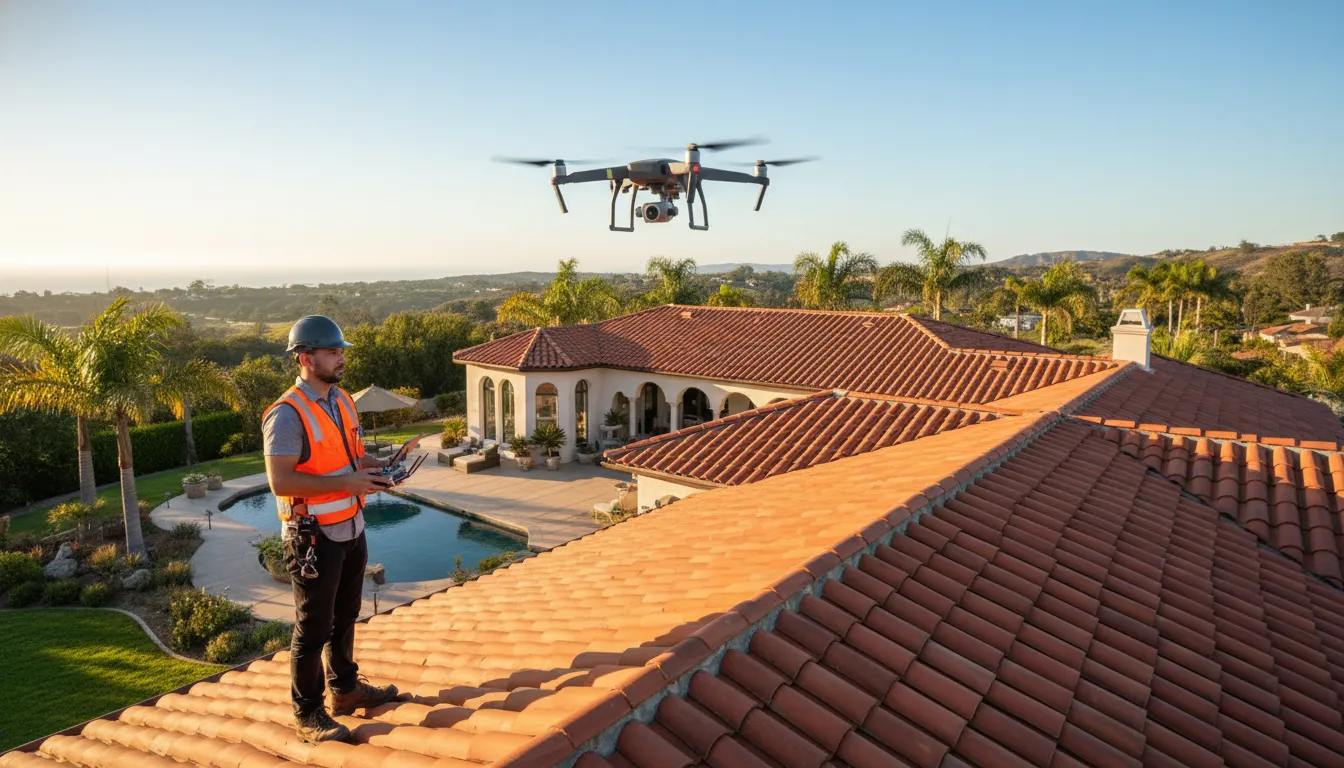
A clay tile roof inspection in Southern California should begin with the least disruptive method that can answer the inspector’s questions. Drone imaging limits foot traffic on fragile tiles while giving the inspector clear views of broad roof areas. Physical access remains useful when a finding needs close review or hands-on testing.
What a drone can document
A drone can capture high-angle photographs of tiles, ridges, valleys, vents, skylights, and flashing around roof openings. These images help an inspector map visible cracks, displaced tiles, debris, and areas that need closer study. Cert-A-Roof’s drone inspection for fragile tile roofs pairs aerial images with review by an NRCIA Certified Roof Inspector.
This approach is useful when walking could damage clay tiles or when roof pitch and access create added risk. It also creates a visual record that supports repair planning and future comparisons. Yet a drone only records what its camera can see; it does not replace the inspector’s judgment.
| Inspection factor | Drone inspection | Walk-on inspection |
|---|---|---|
| Tile contact | No foot traffic on the roof. | Direct contact with selected areas. |
| Best use | Broad visual review and photo mapping. | Close review of specific concerns. |
| Visible details | Tiles, ridges, valleys, vents, skylights, and flashing. | Conditions that need hands-on access. |
| Main limit | Cannot test or view concealed conditions. | May break fragile tiles if access is poorly managed. |
| Safety approach | Keeps the inspector off fragile surfaces. | Requires trained, insured professionals and safe access methods. |
What the certified inspector still evaluates
The tool does not define the inspection. A certified inspector reviews the roof as a connected system, not just a set of aerial images. The review may cover tile condition, valleys, vents, skylights, and pipe or chimney flashing. A full inspection can also include the attic and interior ceilings for signs of leaks.
That wider review helps separate a surface issue from a condition that may affect roof performance. For readers comparing scopes, Cert-A-Roof’s comprehensive roof inspection guide explains what to expect from a residential assessment. The final report should connect photographs with clear observations and practical next steps.
When physical access is necessary
Some concerns cannot be confirmed from the air. An inspector may need limited physical access to study a suspect detail, assess a repair area, or view a location blocked from the camera. The decision should account for tile condition, roof profile, slope, access points, and the specific question under review.
Homeowners should not walk on clay tile roofs. When access is needed, it should be limited to trained, licensed, bonded, and insured professionals. Proper roof work also calls for fall protection equipment and inspection protocols, as outlined in Cal Poly’s fall protection program. Careful access protects both the person and the roof.
How NRCIA certification supports real estate decisions
A consistent inspection standard
An NRCIA-certified inspector follows a set process rather than giving a quick visual opinion. The review covers roof surfaces, flashings, valleys, vents, skylights, and signs of leaks inside the building. For fragile clay tiles, the inspector can choose a careful access method that limits the risk of avoidable damage.
Safe access matters because roof work calls for sound fall protection and inspection protocols. Cal Poly’s roof safety guidance addresses these practices for roof inspection and maintenance. A clay tile roof inspection in Southern California should document what the inspector could safely view and note any access limits.
What LeakFREE documentation shows
A LeakFREE inspection creates a record of the roof’s observed condition at the time of review. Cert-A-Roof’s process includes digital photos, written findings, and an assessment of whether the roof qualifies for certification. If repairs are needed first, the report helps define the work before another certification review.
The resulting file can give each party the same starting point. Buyers can review known conditions, while sellers can address findings before negotiations advance. Cert-A-Roof explains its LeakFREE roof certification service, including the inspection and documentation used to assess eligibility.
- Photos connect written findings to visible roof components.
- Repair notes help clarify the scope of work under discussion.
- Certification status records whether the roof met the program’s requirements during the review.
- Access notes show where clay tile fragility or site conditions limited the inspection.
Decision support for each stakeholder
Buyers and sellers can use the report when discussing repairs, credits, or closing terms. Lenders, FHA and VA stakeholders, and insurance companies may also request roof records during their own review. Acceptance and requirements can vary, so parties should confirm what documents the specific organization needs.
Property managers gain a useful baseline for maintenance planning and vendor discussions. They can compare later findings with the prior photos and notes instead of relying on memory. A documented NRCIA-certified inspection process also helps managers explain roof decisions to owners and residents.
A certification supports decisions, but it does not promise that no future leak or damage will occur. Weather, foot traffic, movement, and hidden conditions can change a roof after inspection. The strongest use of the document is as a dated, professional record that informs the next step.
How to prepare for a clay tile roof inspection
Good preparation helps the inspector focus on the tile system, leak clues, and needed records. It also reduces delays during a clay tile roof inspection in Southern California. Homeowners, sellers, and agents can use the same simple plan.
Records and inspection goals
Start by collecting roof records and deciding what the report must support. This step helps the inspector understand past work without making assumptions. It also keeps a sale, repair decision, or certification request moving.
-
Gather the roof history. Find installation records, repair invoices, prior inspection reports, warranties, and permits. Note the roof’s known age and any changes to skylights, vents, or solar equipment.
-
List leak clues and concerns. Write down where and when you saw stains, drips, odors, or fallen tile pieces. Include photos and details about recent rain or wind when available.
-
Clear safe access areas. Unlock gates and move vehicles or stored items away from likely work areas. Make the attic opening and indoor stain locations easy to reach.
-
Stay off the clay tiles. Do not climb onto the roof to prepare or point out damage. Proper fall protection and roof safety protocols are critical for inspections, as this Cal Poly safety program explains.
-
Confirm timing and report needs. Set aside enough time for careful access and questions. Tell the inspector whether you need findings for repairs, a sale, a lender, or possible roof certification.
Safe access for fragile tile
Clay tile may be damaged by foot traffic, so preparation should never include walking the roof. Ask how the inspector plans to view hard-to-reach areas. A drone inspection for fragile tile roofs can document visible conditions where direct access may cause damage.
Keep pets indoors and tell the inspector about locked gates, steep slopes, power lines, or other site limits. If attic access is planned, clear a path without moving insulation or disturbing suspected damage.
Report and certification details
Before the appointment, confirm who should receive the report and when it is needed. Sellers and agents should share transaction deadlines at booking. Homeowners can review the NRCIA-certified inspection process before asking whether the roof may qualify for certification.
Also ask what photos, repair details, and follow-up choices the report will include. Clear goals help the inspector prepare the right documents while keeping the inspection focused on the clay tile roof.
When repairs, certification, or replacement come next
The inspection report is not the end of the decision. It is the point where the owner can choose the right next step. For clay tile roofs, that step may be a targeted repair, a certification review, closer monitoring, or a larger roof plan.
Small repairs after the report
Many reports find issues that can be handled in a focused repair scope. Examples may include cracked tiles, slipped tiles, damaged flashing, clogged drainage paths, or sealant that no longer protects a penetration. The report should show the location and explain why the item matters.
That level of detail helps avoid vague repair bids. A contractor can see what the inspector found and price the work more clearly. The owner can also compare proposals against the same written findings instead of relying on a verbal description.
Certification after corrective work
If the roof does not qualify for certification during the first visit, the report should explain what must be corrected. After repairs are complete, the roof may need another review before certification can be issued. Cert-A-Roof’s roof certification process is built around inspection, repair documentation, and eligibility review.
For a real estate sale, this sequence can reduce confusion. The buyer, seller, and agent can see what changed between the first report and the later certification review. That is stronger than a simple statement that the roof was “checked.”
When replacement enters the conversation
Replacement may come up when the report shows wide damage, repeated leaks, or aging system parts. It can also make sense when spot repairs are no longer practical. The inspector should explain the basis for that recommendation. A clay tile roof may look solid from the street, but the report should focus on roof performance, not just appearance.
Owners should ask which findings are urgent, which can be planned, and which need more review. A good report creates a priority order. That order helps protect the property and keeps budget decisions grounded in documented roof conditions.
Frequently asked questions about clay tile roof inspections
How much does a clay tile roof inspection cost in Southern California?
Cost depends on the property, roof size, access, inspection type, and report needs. A drone inspection, certification review, repair inspection, or forensic inspection may have different pricing. The safest answer is to request the scope before booking so the report matches your goal.
Can inspectors walk on clay tile roofs?
A trained inspector may use limited physical access when it is safe and necessary, but homeowners should not walk on clay tile roofs. Clay tile can crack under poorly placed weight. Drone inspection can often reduce foot traffic while still documenting visible roof conditions.
What should a tile roof inspection report look like?
A useful report should include dated photos, exact roof locations, visible tile damage, flashing and penetration findings, leak clues, access notes, repair recommendations, and certification status when requested. It should also explain what could not be safely viewed.
When should I schedule a tile roof inspection?
Schedule an inspection before buying or selling a property, after major wind or rain, when you see stains or broken tiles, before requesting certification, or when planning repairs. Older roofs and roofs with prior leak history may need closer monitoring.
Schedule a certified clay tile roof inspection
Clay tile roofs deserve careful handling and clear documentation. Cert-A-Roof helps Southern California owners, buyers, sellers, and agents understand roof condition without treating fragile tile like a standard walk-on surface. The result is a practical report that supports repair, certification, and transaction decisions.
Call (888) 766-3800 to schedule a certified roof inspection, or visit Cert-A-Roof’s roof inspection services page to choose the inspection path that fits your property.
Comment (0)