We take a bottom-line approach to each project. Our clients consistently see increased traffic, enhanced brand loyalty and new leads thanks to our work.

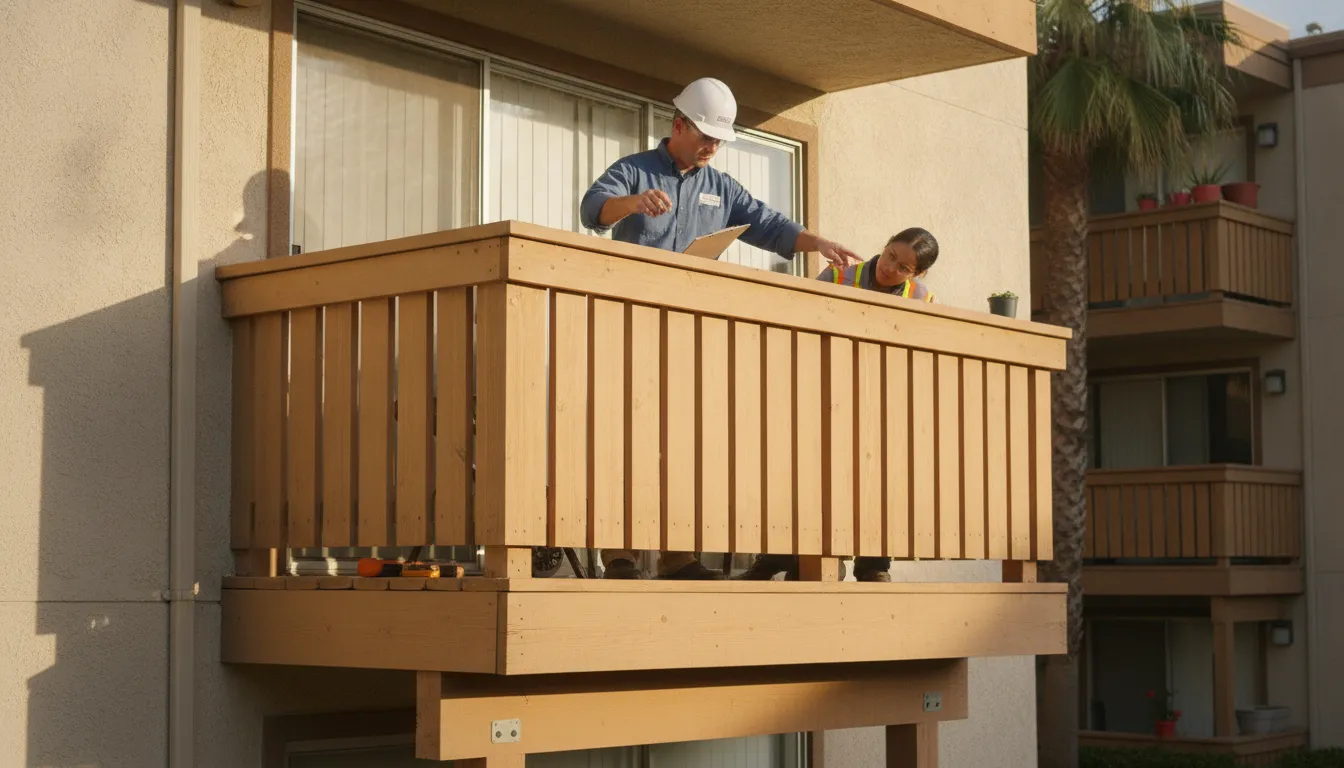
Inspector reviewing a California apartment balcony for the SB 721 reinspection timeline

June 19, 2026

Comment (0)

SB 721 Reinspection Timeline for California Owners

SB 721 Reinspection Timeline for California Owners

For California apartment owners, the SB 721 reinspection timeline is a recurring compliance obligation, not a one-time deadline. Knowing the six-year cycle now gives property teams time to coordinate access, review findings, plan repairs, and maintain complete records.

Schedule a deck inspection consultation before your next compliance window.

The SB 721 reinspection timeline requires owners of buildings with three or more units to do safety checks every six years. This cycle ensures that all decks, balconies, and stairways stay strong and safe for every tenant to use. The initial inspection deadline was extended by AB 2579 from January 1, 2025, to January 1, 2026. Property managers should verify current local requirements and then keep a regular six-year schedule. Missing these dates can lead to local building offices giving out fines of up to five hundred dollars each day. Owners must keep their check reports for at least two cycles, or twelve years, to show proof of safety if they are asked. Working with a licensed expert ensures that your building meets every legal rule on time.

Property owners often have questions about how these dates affect their long-term upkeep plans and building value. Learning the specific rules for your property helps you avoid the risk of sudden repairs or high legal costs. The path begins with the SB 721 reinspection timeline at a glance.

SB 721 reinspection timeline at a glance

In brief: Complete the initial inspection, correct required defects, keep reports, and schedule the next qualified inspection six years later.

California law needs owners of multifamily buildings to follow a strict safety plan. If your building has three or more units, you must track the SB 721 reinspection timeline to stay legal. This law focuses on high decks, balconies, and walkways. Missing these dates can lead to big fines or safety risks for the people who live there.

The first inspection deadline

Most property owners had to finish their initial safety check by January 1, 2026, after AB 2579 extended the former January 1, 2025 deadline. This first step set the baseline for the health of your building. If you missed this date, you should act fast to book a check with our Cert-A-Deck division. Getting a report now helps you avoid the daily fees that local building offices may charge.

The repeating six year cycle

Once you finish the first check, the law needs a new inspection every six years. Per the California legislative text, this cycle makes sure that wood rot or water damage does not hide in the walls. Each report must go into your records and stay there for at least two full cycles. This 12 year proof of care is key for your long term legal safety.

Key compliance dates and roles

Staying on track needs a clear plan. Use this table to see who must act and when they must do it.

Compliance Milestone Responsible Party Required Action
First Inspection Building Owner Finish check by Jan 1, 2025
Routine Recheck Licensed Inspector Repeat check every 6 years
Emergency Fixes Owner and Contractor Start work now on hazards
Standard Fixes Property Owner Finish minor repairs in 120 days
Record Keeping Property Manager Store reports for 12 years total
Inspector preparing for the SB 721 reinspection timeline at a California apartment balcony
Early inspection planning gives owners time to coordinate access, reporting, and repairs.

Handling repair windows

If an expert finds a safety issue, the clock starts for repairs. You must start work on urgent threats right away. For standard fixes, you usually have 120 days to finish the job. If you need more time, you can ask your local building office for a stay. You can learn more about these steps on our safety blog.

What properties and exterior elevated elements are covered?

In brief: SB 721 generally covers apartment buildings with three or more units and wood-supported exterior elevated elements more than six feet above ground.

Senate Bill 721, also known as the Balcony Law, sets strict rules for many California buildings. It focuses on the safety of parts that people use every day. If you own a large apartment building, you must know if your site falls under these rules to avoid big fines. The law aims to prevent harm by catching wood rot and decay before they lead to a collapse. This new standard keeps tenants safe and helps owners protect their long-term assets from damage.

Which buildings must follow the law?

The law mainly applies to apartment buildings with three or more units. This includes large sites and smaller multi-unit blocks. It does not cover single-family homes or buildings with only two units. If your site has a mix of stores and homes, it may still need a check if it meets the unit count. The initial inspection deadline was extended by AB 2579 from January 1, 2025, to January 1, 2026. Owners should confirm current requirements with their local building department. Missing these dates can lead to heavy fines from the city building office.

Once you finish the first step, you must follow the SB 721 reinspection timeline of six years. This means a pro must return every six years to check the safety of your structures. Keeping up with this cycle protects your tenants and keeps your land in good legal standing. Local building teams can charge you up to $500 per day if you miss these dates. Starting early gives you time to plan for any repairs without rushing for a fix.

Types of exterior elevated elements

The state uses the term Exterior Elevated Elements (EEE) to describe what needs a check. These are parts of the building that extend beyond the outer walls. Any part that relies on wood or wood-based products for support must be on your list for a pro review. Common examples include:

  • Balconies and decks
  • Porches and stairways
  • Walkways and landings
  • Entry ways and railings

Pros look at the walking surface and the load-bearing parts. They also check the parts that join to the main building. These spots often hide damage behind stucco or wood siding. A pro look ensures that the water seal is still strong and that the wood under it is not soft. For large sites with many units, the law allows a pro to check 15% of the elements as a sample. You can find more details about these building laws through city and state guides.

Height and material requirements

Not every deck or balcony needs a check under this law. The rule only targets parts that have a walking surface more than six feet above the ground. If your deck is just a few steps up from the grass, it likely does not need this legal check. However, any high balcony or stair system is one to watch. The rule also focuses on structures with wood-framed supports. Since wood can rot when wet, the state wants to ensure these high-risk areas stay strong and safe for many years.

Cert-A-Roof uses its expert team to help owners meet these standards. We look for signs of moisture and pests that can weaken a wood beam. Our team can also handle the repairs if we find a problem. This full service helps you stay on track with your legal duties without needing other teams. By staying ahead of the six-year cycle, you ensure that your building remains a safe place for everyone. You can learn more about how we help through our safety blog and news updates.

How should owners prepare for the next SB 721 reinspection?

In brief: Start six to twelve months early, organize prior reports, arrange tenant access, hire a qualified inspector, and reserve time for repairs.

Planning for your next SB 721 reinspection starts long before the six-year deadline. Because the state needs regular checks, building owners must treat compliance as an ongoing task. The law aims to find hidden wood decay or water damage in decks and balconies before they become unsafe. Setting a timeline now helps you avoid the high costs of late repairs and local fines.

Building a compliance timeline

You should start your work at least six to twelve months before your current inspection cycle ends. This buffer gives you enough time to find a qualified pro and review their work. If the report shows that you need repairs, you will have a clear window to get quotes and finish the work without a rush. Speeding through often leads to higher costs and less choice in parts.

Most owners use a “backward planning” path. Start with the date your next report is due and work toward today. Set aside at least thirty days for the pro to write the final report. You should also add sixty days for any non-emergency repairs. Under California Health and Safety Code rules, cities can fine owners who miss these dates. Early action is the best way to protect your budget.

Five steps for reinspection readiness

Following a set path ensures you do not miss key legal details or safety risks. Here is how to prepare for your next site visit:

  1. Inventory records: Gather all past reports and repair logs. Keeping these on site is a legal rule for building owners.
  2. Engage qualified inspector: Hire a licensed architect, civil engineer, or a “B” contractor with five years of work. They must not work for the local city building office.
  3. Schedule access: Tell tenants in advance that pros will need to see balconies, decks, and walkways. Clear access to support posts and underside areas is vital for a full check.
  4. Review report: Read the full report to find any issues with load-bearing parts or waterproofing. The law focuses on flashings, coatings, and sealants that keep water out.
  5. Coordinate repairs: If the report shows defects, start repairs right away. Save all proof of work to show that you have returned the building to a safe state.

Why scheduling buffers matter

Weather and labor shortages can delay even the best plans. If you wait until the last minute, you might find that local experts are already booked. A six-month buffer acts as insurance against these risks. It also lets you handle any repairs during the dry season. This is often easier for waterproofing work. By acting early, you keep your tenants safe and your property in line with state law.

What happens during inspection, reporting, and repairs?

In brief: A qualified professional samples covered elements, documents findings, identifies urgent hazards, and gives owners a clear basis for repair planning.

The SB 721 process begins with a look at all exterior parts. A pro inspector from our Cert-A-Deck division will check your decks and balconies. They look for dry rot, water damage, and weak spots. Most checks start with a scan of the wood and metal parts to find clear risks.

How the inspection works

Inspectors must check at least 15 percent of each type of deck or balcony on the site. If the first check shows deep rot, they may use tools like a borescope. This tool lets them see inside the wood through a small hole. This is a type of test that finds hidden damage without breaking the deck. This step helps property owners stay on the SB 721 reinspection timeline of once every six years.

The report and findings

Once the check is done, the inspector writes a full report. It lists the state of each deck and any repairs you need. The law says you must keep these records for at least two cycles. This means you should hold onto them for 12 years. If the report finds a “life safety threat,” the inspector must tell the city right away. For other issues, you will have a set time to fix the damage.

Repair time and next steps

Most repairs must start soon after you get the report. If the decks are safe but need work, you often have 120 days to finish the repairs. Big risks need a much faster fix to protect people. We help you move through this work to meet the safety rules found in California Senate Bill 721. Once fixed, your property is set for the next six years of use.

Common delays that can disrupt the reinspection timeline

In brief: Tenant access, missing records, inspector availability, permits, and repair scheduling are the most common causes of delay.

Keeping your building safe means sticking to the SB 721 reinspection timeline. State law says you must check your decks and balconies every six years. But many owners find that small snags can turn into big delays. If you wait too long, you might miss the date and face fines of up to $500 per day. Local building offices can enforce these rules with care, as shown in city building codes across the state.

Tenant access and paper trails

Getting into units is a common hurdle. Crews need to see the support beams and joints of every deck. This means they must enter a tenant’s home. You must give notice to your renters before the team arrives. If a tenant is not home or refuses entry, the whole day can be lost. It is best to set clear blocks of time and tell folks early to keep things on track.

Maintenance and labor gaps

Missing files also cause slow downs. The law says you must keep your records for at least two cycles. This means you should have 12 years of past work ready to show. If you just bought a site and the old owner lost the papers, you may have to start over. Our Cert-A-Deck experts can help you rebuild your past and make sure your new reports meet every rule.

Finding a pro to do the work is getting harder. As the state dates get closer, more owners rush to book their checks. This high demand makes pro schedules fill up fast. You might have to wait months just to get a crew on site. To avoid this, book your next check at least six months before your six-year window ends. Waiting until the last minute leads to high costs and more stress.

Permits and city rules

Old damage can also stop a check in its tracks. If a pro finds dry rot or rusted bolts, they cannot just sign off on the building. They must flag these safety risks for a fix. You then have to find a licensed team to fix the issues before the final report is done. This task often takes more time than the check itself. Steady care can help you find these problems before they become a crisis.

The speed of your local city hall plays a big role. If your decks need a fix, you will likely need a permit. Some cities grant these in a few days, but others take months. You cannot rush the city, so you must plan for this wait time. Every city also has its own way of checking work. What works in one town might not pass in the next. Using a team that knows local rules is the best way to avoid a rewrite of your plans.

Local rules can vary a lot. Based on the main SB 721 text, building offices have the power to set their own fees and fines. Property leads should talk to their local building desk early. Ask about any extra forms or fees they need. This keeps you from being surprised by a new rule as you try to finish. Clear talk with the city can save you weeks of back-and-forth mail.

Contact Cert-A-Roof to discuss inspection and repair planning before the deadline.

Coordinate inspection and repair planning early

Reduce handoff risk

An inspection report is most useful when the next steps are clear. Owners should review findings promptly, confirm which items need repair, and build enough time into the schedule for contractor bids, permits, access, and follow-up work.

Early planning also helps the property team separate routine maintenance from urgent safety concerns. When inspectors, managers, and repair professionals share the same records, there is less risk that a required item will be missed between handoffs.

Use a compliance-minded partner

Cert-A-Deck and Cert-A-Roof help California property owners approach elevated exterior element care with a focus on thorough inspections, clear documentation, and coordinated repair planning. Learn more about the deck inspection process before your next due date.

Owners should not wait until the final weeks of the SB 721 reinspection timeline to ask questions. A conversation well before the due date can reveal missing reports, access needs, and repair concerns while there is still time to act.

Keep the next six-year cycle on track

Keeping a rental building in Southern California means following rules like the SB 721 reinspection timeline. Once you finish your first check, the clock starts for the next one. A clear plan helps you manage your property and keep the good records you need to avoid big fines.

Store your inspection reports

The law says you must keep your deck inspection reports for a long time. You need to save these files for at least two full inspection cycles. Since each cycle lasts six years, you must keep records for 12 years. These reports show that your building was safe at the time of the check. If a city official asks for proof, you must show these papers fast. Missing reports can lead to fines of up to $500 per day. Keeping a digital backup and a paper copy is the best way to stay safe. Our Cert-A-Deck team helps owners track these files so they never miss a step.

Keep track of repairs and permits

When an inspector finds a problem, you must fix it fast. But just doing the work is not enough. You must also keep a full file of the project. These records prove that you followed the inspector’s advice and used the right parts. Your repair file should include:

  • All bills and invoices from the repair crew.
  • Clear photos showing the work before and after it was done.
  • Copies of city permits for any structural changes.
  • A log of who worked on the building and when.

The official SB 721 text sets clear rules for how you must handle these safety checks. These files are your best defense if a legal issue comes up later. They show that you took action to keep your tenants safe and your property in good shape.

Set a yearly care schedule

Don’t wait for the six-year deadline to think about your decks. Small issues like dry rot or rusted bolts can grow into big safety risks over time. We suggest a yearly check-up to catch small problems before they become costly repairs. A simple calendar reminder can help you stay on track. Plan for a full expert review at least one year before your next state deadline. This gives you plenty of time to get bids and finish any work. Taking this early path keeps your building safe and your budget stable.

Frequently Asked Questions

How often do I need to reinspect my balconies under SB 721?

You must have your balconies and decks checked every six years. This state law helps find wood rot or frame damage before it causes a fall. A pro must look at these items to make sure they are still safe for use. If you miss this six-year turn, you could face daily fines from the local building team. Working with a firm like Cert-A-Roof makes sure you stay in line with the law.

When was the first SB 721 inspection deadline for California apartments?

Most apartment owners had to finish their initial check by January 1, 2026, after AB 2579 extended the former January 1, 2025 deadline. This date applied to buildings with three or more units and wood decks or walkways. If your building is in this group, you must have a report on file now. This report shows the state that your raised wood parts are safe and in good shape. Owners who missed this date should book a check fast to avoid legal risks or high fees.

What are the fines for missing an SB 721 inspection deadline?

Local building teams can charge you up to five hundred dollars per day for not being in line with SB 721. These fines add up fast and can cost you much more than the check itself. In some cases, the city may also take away your right to rent the units. To avoid these costs, owners should keep a clear log of their six-year checks. Using a pro team helps find and fix issues before they lead to big fines.

Do all apartment buildings in California need an SB 721 inspection?

The law applies to buildings with three or more rental units that have raised wood walkways, decks, or porches. These parts must be at least six feet off the ground to fall under the rule. If your building has these “exterior elevated elements,” you must have them checked by a pro. The law aims to stop deck falls caused by wood rot that you cannot see from the outside. Reach out to a firm like Cert-A-Roof to learn if your site needs a check.

Plan your next SB 721 inspection with confidence

A clear schedule, organized records, and early repair planning can keep the next inspection cycle from becoming a last-minute problem. Cert-A-Deck and Cert-A-Roof can help you understand the next steps for your property’s exterior elevated elements.

Contact Cert-A-Roof to schedule a deck inspection consultation.

Leave a Reply

Your email address will not be published. Required fields are marked *