
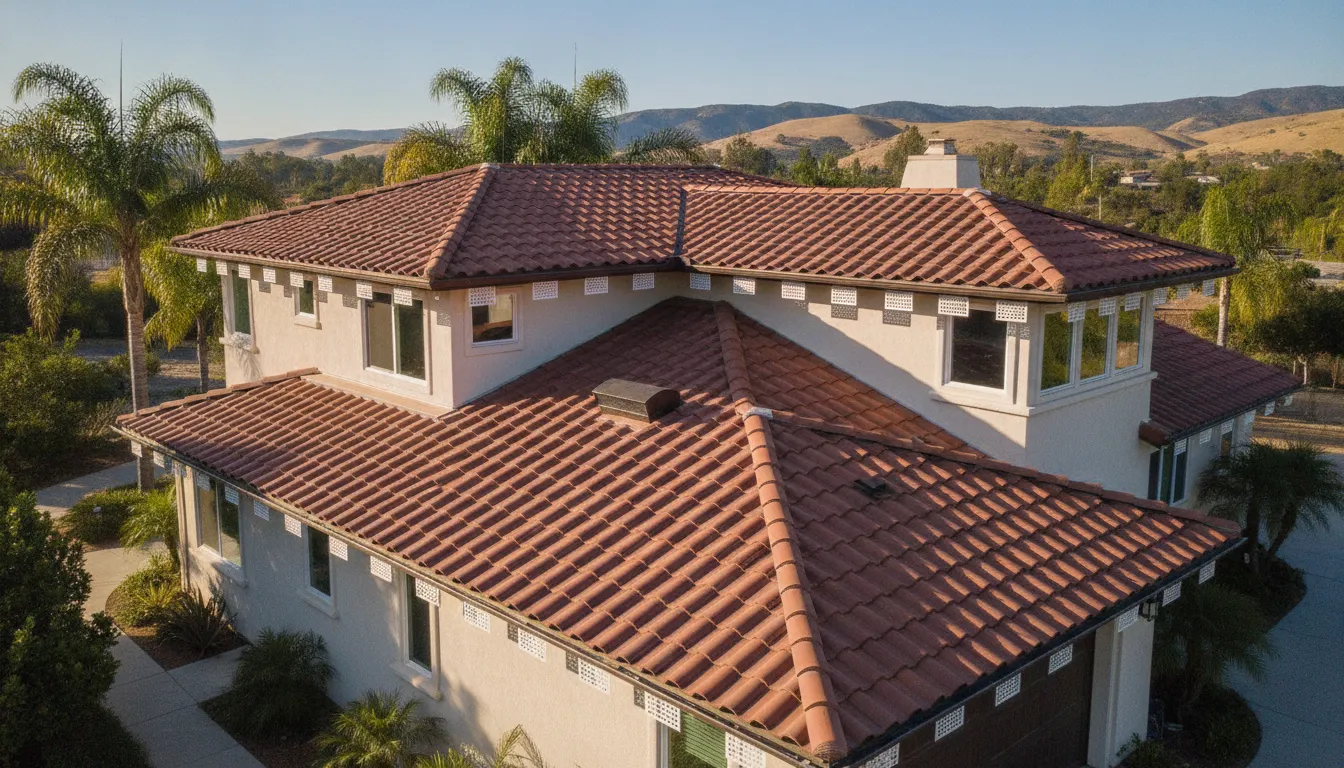
Roof Ventilation Southern California Home Guide
Attic temperatures in Southern California often hit 150 degrees during summer. This heat cooks your roofing materials and drives up your power bills. A balanced ventilation system is the best way to keep your house cool and safe.
Concerned about attic heat or moisture? Schedule a certified roof inspection with Cert-A-Roof to evaluate your ventilation and roof condition.
Roof ventilation Southern California systems use a mix of intake and exhaust vents to move hot air out of your attic during the year. This steady airflow can lower your attic temperature by 30 degrees and cut your home cooling costs by nearly 30 percent in the summer. State rules like Title 24 set exact vent sizes based on your attic floor area to ensure your home stays safe and well vented. Most homes need one square foot of vent space for every 300 square feet of attic space to meet these local building code rules. Using the right ridge and soffit vents keeps heat from baking your shingles, which helps your roof last longer and saves you money.
You must understand how these systems work to keep your home safe from heat and stop moisture from rotting your wood. Learning why roof ventilation matters in Southern California is the first step toward a more comfortable, durable home.
Roof Ventilation Southern California: Why roof ventilation matters in Southern California
The Southern California sun is famous for its warmth, but it can be a silent enemy to your home. In cities like Orange and Anaheim, roof decks face high heat for most of the year. This heat builds up in the space under your roof. Without a path for air to move, your attic becomes a hot box.
This trapped heat does more than just warm up your rooms. It puts a big strain on your whole house. Knowing the proper roof ventilation needs for our area is a key part of owning a home. It helps you avoid high costs and keep your home safe.
Curbing high attic heat
On a bright day in Southern California, your roof soaks up a huge amount of sun power. This power turns into heat that moves right into your attic. Without vents, the air inside can reach 150°F or even higher. This high heat then moves through your ceiling and into your bedrooms.
This forces your cooling system to run for hours just to keep up. Data from Oregon State University shows that poor airflow is a leading cause of home heat gain. By creating a steady flow of cool air, you can drop your attic heat by thirty degrees or more. This makes your home more comfortable and can lower your power bills each month.
The heat also takes a toll on the roof. High heat can cause shingles to dry out and curl. This makes them brittle and prone to blowing off. In our region, many homes use clay or concrete tiles.
While these are tough, the wood deck below them still needs to stay cool. If the wood gets too hot, it can warp or rot over time. You should inspect your roof ventilation system once a year to catch these issues early. A cool roof lasts much longer and works better in the sun.
Managing coastal moisture and damp air
The marine layer brings damp air into Southern California. If the air does not move, this water stays on your wood beams and insulation. Over time, trapped moisture leads to mold and wood rot.
This is common in places like Irvine and Huntington Beach. Mold in your attic can harm the air in your home and lead to health risks. Good vents act like a fan that pulls this damp air out before it can do harm.
Damp air also affects how well your attic insulation works. When it gets damp, it loses its power to block heat. This means your home gets hotter in the summer and colder in the winter.
Pros often check roof attic ventilation to look for signs of water damage like dark spots or wet insulation. Finding these signs early can save you thousands in repairs. It is better to have a small vent fix than a large mold cleanup later.
Meeting California building standards
California leads the way in energy rules for homes. The state has set clear rules for how much air must flow through a roof space. These rules help make our state more green and save owners money on power.
The California Building Standards Code outlines these exact needs for new roofs. It requires a balance of intake and exhaust vents. Following these codes ensures your home meets local laws and stays in good shape for a long time. Working with a local team ensures your setup prevents hot spots and adds value to your property.
Intake versus exhaust ventilation
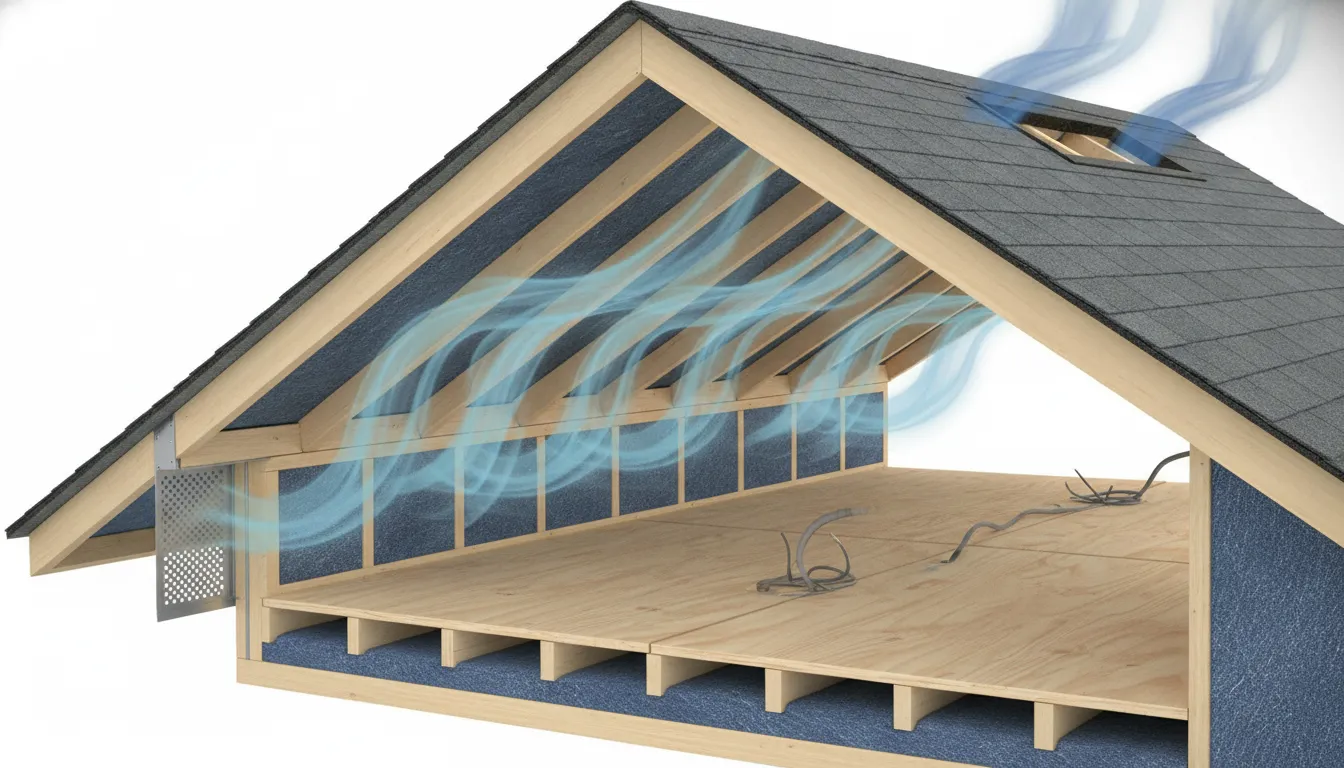
Proper roof ventilation Southern California homes use depends on a steady move of air. Your attic needs two types of vents to work well. One type lets cool air in, while the other lets hot air out. This mix creates a flow that keeps your home cool.
A balanced system is the best way to protect your house from high heat. Without both parts, attic heat can reach over 150 degrees on a sunny day. This heat can damage your shingles and make your air conditioner work too hard.
How intake vents work
Intake vents are the first part of the cycle. You will find them at the lowest part of your roof, usually in the soffit or eaves. These vents pull in fresh, cool air from the outside to push hot air toward the top.
Building rules say vent openings should be between 1/16 inch and 1/4 inch. It is also vital to keep a 1-inch gap between your attic insulation and the roof deck. This gap lets air move freely from the eaves up to the peak.
Common types of intake vents include soffit vents and drip edge vents. Soffit vents are common because they are easy to hide under the roof line. Both styles do the same job of starting the flow of air.
They provide the fresh air that every attic needs to stay dry. This is a key part of proper roof ventilation requirements for any local house. These intake points work with exhaust vents to create a full cycle.
The role of exhaust vents
Exhaust vents sit at or near the highest point of your roof to let hot air escape. Since hot air rises, these vents use natural pressure to move air out of the building. This process is called the stack effect.
It helps keep your attic from getting too hot during the day. A good setup can drop attic heat by 30 degrees and help you save on energy bills. This helps your home stay cool even when the sun is strong.
The state of California has strict rules for these vents. You can often use less vent space if you follow the 1/300 rule well. This rule works when you put half of the vent area near the top.
You can choose from many types of exhaust vents, such as ridge vents or turbine vents. Ridge vents run along the peak and are hard to see. Turbine vents use the wind to pull air out of the attic space.
Why you need a balanced system
A balanced system uses an equal amount of intake and exhaust space. Many people make a mistake by only adding exhaust vents, which can pull air from inside your home. This costs you more money and makes your home less cool.
When the system is not balanced, the air flow stops and heat stays trapped. This can lead to mold, rot, or damage to your roof shingles. A steady flow of air is needed to protect your roof structure from the sun.
To avoid these problems, you should have a pro look at your attic during a normal roof check. They can tell if your system is working well for the Southern California sun. They look at the size and spot of your vents.
A balanced setup is the best way to keep your roof strong and your home cool. This plan helps your roof last longer and keeps your energy bills low. It is a smart way to manage your home for a long time.
| Feature | Intake Vents | Exhaust Vents |
|---|---|---|
| Placement | Low on eaves or soffits | High on the roof peak |
| Flow Role | Brings in cool air | Pushes out hot air |
| Popular Types | Soffit or drip edge | Ridge, box, or turbine |
| Main Goal | Starts air cycle | Completes air cycle |
| Code Position | Lowers moisture entry | Follows the 1/300 rule |
What are the roof ventilation requirements?
Roof vents are key for every home in Southern California. In our state, they are also a legal rule. These rules help keep your home safe, dry, and cool. Air must move. Good air flow stops heat from building up in the attic. Without it, your roof can age too fast and fail early. High heat can also warp wood in your attic and damage shingles. The state sets these rules to save energy and protect your house. When proper roof ventilation requirements are met, your roof can last for a long time.
Attic heat is a big problem during the hot summer. Without good air flow, attic air can reach 150 degrees. It is too hot. This heat soaks into your ceiling and makes your rooms hot. It forces your AC to work much harder and raises your power bills. Good vents can lower attic heat by 30 degrees. This helps you save money and stay cool at home. It also keeps the roof deck from getting too hot and drying out. Proper check roof attic ventilation plans make sure your home stays cool all year.
Understanding the 1/150 and 1/300 ratios
California uses a set math rule for attic air flow based on floor area. The normal rule is the 1/150 ratio. It is simple math. This means you need one square foot of vent space for every 150 square feet of attic floor. This makes sure enough air moves through the space to keep it dry. This rule is the baseline for most homes in the state. It is set by the California Residential Code to protect your home.
You might be able to use less vent space if you place half of the vents high on the roof. In this case, you can use the 1/300 ratio. This works because hot air rises on its own. High vents let heat out much better than low ones. To use this rule, high vents must be at least three feet above low ones. This creates a natural pull that moves air without any fans. It works well. It is a smart way to keep your home cool with fewer vents on the roof.
Balancing intake and exhaust airflow
A good vent system needs a balance of air coming in and going out. Intake vents sit near the eaves, and exhaust vents stay near the ridge. You should have an equal amount of both types. If you have too much exhaust, the system might pull air from inside your home. This wastes your cold air and costs you money. You should also avoid mixing different types of exhaust vents. Using a ridge vent and a fan at the same time can break the system.
If intake vents are blocked by insulation, the entire system will fail. You should check your attic to make sure air paths are clear. Use baffles to keep insulation away from the vents. This simple step keeps air moving and stops mold growth. Mold can grow in a damp attic and cause health issues for your family. A balanced system makes sure that air moves across the whole underside of the roof deck. This keeps the wood cool and stops damp air from building up on the rafters.
Local codes and Title 24 rules
Building codes in California can change from city to city. State rules under Title 24 set the basic needs for every home. But cities like Orange or Irvine may have their own laws. Some areas near the coast have different needs than spots further inland. Damp air can change how you plan your vents. You must check with local building offices to know the exact rules for your area. They may have strict rules for fire safety in some zones.
Wildfire safety is a big worry in many parts of Southern California. In these zones, vents must have special screens to keep embers out. These screens have very small holes to stop sparks from entering your attic. Because the holes are small, they can get clogged with dust. You will need to clean them more often to keep air flowing. Proper roof ventilation Southern California homes need is about a plan that fits your house. Talking to a local expert is the best way to get a system that works.
Warning signs your attic needs better airflow
Poor roof ventilation often shows up in ways you might not expect. In Southern California, the mix of hot sun and sea air can trap heat and moisture inside your home. If you notice these red flags, it is time to inspect your roof ventilation system. Catching these signs early can save you from big repair bills later on.
Hot rooms and high bills
Does the top floor of your home feel much warmer than the ground floor? This is a common sign of a ventilation failure. When hot air cannot escape through the roof, it stays in the attic. This heat then pushes down into your rooms. Your air conditioner has to work much harder to keep up. If your power bills are rising, your proper roof ventilation requirements might not be met.
You can check this yourself by touching your ceiling on a hot day. A ceiling that feels hot to the touch means the attic is acting like an oven. This heat buildup can also damage your roof from the inside out.
Mold and musty smells
Moisture is just as dangerous as heat. Even in dry areas, daily tasks like bathing and cooking send steam up into the attic. Without good airflow, this water vapor turns into liquid on cold surfaces. This can lead to mold growth on your wood or insulation. The Centers for Disease Control and Prevention notes that mold can cause health issues for some people.
Look for dark spots on your wood beams or a musty smell in the attic. You might also see rusted nails or fasteners. These are clear signs that damp air is trapped. To stay safe, you should check roof attic ventilation with a pro who can find the source of the dampness.
Damaged roof shingles
Your roof itself will show signs of distress. When an attic gets too hot, it bakes the shingles from below. This causes them to curl, crack, or lose their grit much faster than they should. If your roof looks old before its time, airflow is often the cause. You may also see warped wood under the roof deck. Blocked vents are a primary cause of these problems.
How to improve roof ventilation safely
Fixing the airflow in your home is a smart move for any owner. In Southern California, the sun can heat your attic to high levels in just a few hours. This heat can damage your roof and make your AC work too hard. Making your roof ventilation Southern California system better helps keep your home cool and dry. You can take some simple steps to check your vents without needing to climb a ladder.
Check for blocked intake vents
The first step is to look at the vents under the eaves of your roof. These are called intake vents. They let cool air enter the attic from the outside. Often, these vents get clogged with dust, spider webs, or even bird nests. If air cannot get in, the hot air at the top of the roof cannot get out. This breaks the cycle of airflow and traps heat inside your home.
You can clean these vents from the ground. Use a long brush or a garden hose with a soft spray to clear away dirt. Do not use high pressure, as this can push water into the attic. If you see that the vents are painted shut, you might need a pro to replace them. Keeping these paths open is the best way to meet the proper roof ventilation requirements for your home.
Inspect the attic from the inside
Next, head up into your attic space with a good light. You want to see if anything is blocking the air as it comes in from the eaves. Sometimes, the padding in your attic gets pushed over the vents. This stops the air before it can even start to move. You should also check for baffles, which are plastic trays that keep a gap between the roof and the padding. If these are missing, the air will be blocked.
While you are there, look for signs of dampness or wood rot. Even in dry areas, coastal fog can bring in moisture that gets trapped. The Centers for Disease Control and Prevention warns that damp indoor spaces can lead to mold growth. If you see dark spots on the wood, it means your current system is not moving enough air to dry things out. You should never try to fix mold issues yourself if they look large.
Follow best practices for a healthy roof
- Walk around your house to find all the intake vents under the roof eaves.
- Clear away any dust or nests using a brush or a vacuum from a safe spot.
- Check your attic for padding that covers the paths where air should flow.
- Install baffles if you find that padding is blocking the gap at the roof edge.
- Look for light shining through the vents when you are inside the dark attic.
- Note any hot spots or smells that might mean the air is not moving well.
- Schedule a pro to inspect your roof if you find signs of damage or blockage you cannot reach.
Following these steps will help you stay safe while making your home better. You should never walk on a steep roof or try to cut new vent holes yourself. This can lead to leaks or falls that are costly. Working with a pro ensures that your home stays cool and dry. A safe approach protects both your health and your home’s value for years to come.
Proper airflow is not just about comfort; it is about saving money. When your roof stays cool, your shingles will not curl or crack as fast. This means you will not have to buy a new roof nearly as soon. Taking the time to check your system now is a small task that pays off in the long run. By keeping the air moving, you keep your Southern California home in top shape.
When ventilation problems call for roof repair
Roof ventilation in Southern California does more than just move air. It protects the bones of your home from extreme heat and trapped dampness. When a system fails, the damage can spread far beyond the vents themselves. You may find that adding new vents is not enough to fix the root cause. Often, poor airflow leads to deep building problems that need a real roof repair.
Signs of heat damage to roof decking
In the hot sun of Southern California, attic heat can rise to 150 degrees. Without the right airflow, this heat gets trapped against the bottom of your roof. This high heat can bake your roof shingles from the inside out. It makes them brittle and causes them to lose their top layer of stone bits much sooner than they should. This heat damage is a common reason for a short roof life.
Over time, this heat also warps the wood decking beneath your shingles. You might see wavy lines on your roof or feel soft spots when you walk on it. If the wood has started to sag or crack, a simple vent upgrade won’t work. You will need to replace the bad wood to keep the roof strong and safe. Following the 1/150 rule for proper roof ventilation needs helps prevent this kind of costly harm to your home.
Fixing flashing and vent leaks
Ventilation problems often show up as leaks around the vents themselves. If a vent was not set up right, or if the metal edge has cracked, water will find its way into your home. This is common with older plastic vents that become weak in the sun. The seal at the base of the vent can fail, letting rain seep into the attic. This can lead to big bills if you do not catch it early.
In these cases, you must repair the roof flashing to stop the water. A skilled pro will check the area around each vent for signs of rust or gaps. They will replace old, worn parts with new metal and high-quality seals. It is also a good time to inspect your roof ventilation system for any blocks from bird nests or leaves. Keeping the airflow clear is the best way to avoid leaks in the future.
Mold and wood rot in the attic
Even in a dry place like Orange County, wet air can build up in a bad attic. This happens when hot air from your kitchen or bath gets trapped in the roof space. When this air hits the cool roof deck at night, it turns into water. This wetness leads to mold growth and wood rot on the wood frame and decking. This is a silent danger that many owners miss until the damage is big.
If you see dark spots on the wood in your attic, the rot has already started. This rot makes the structure of your home weak and unsafe. You cannot just add a fan and hope for the best at that point. You need to remove the rotten wood and fix the source of the damp air. Keeping a proper roof ventilation rules plan is the best way to keep your attic dry. A healthy attic means a roof that lasts for a long time.
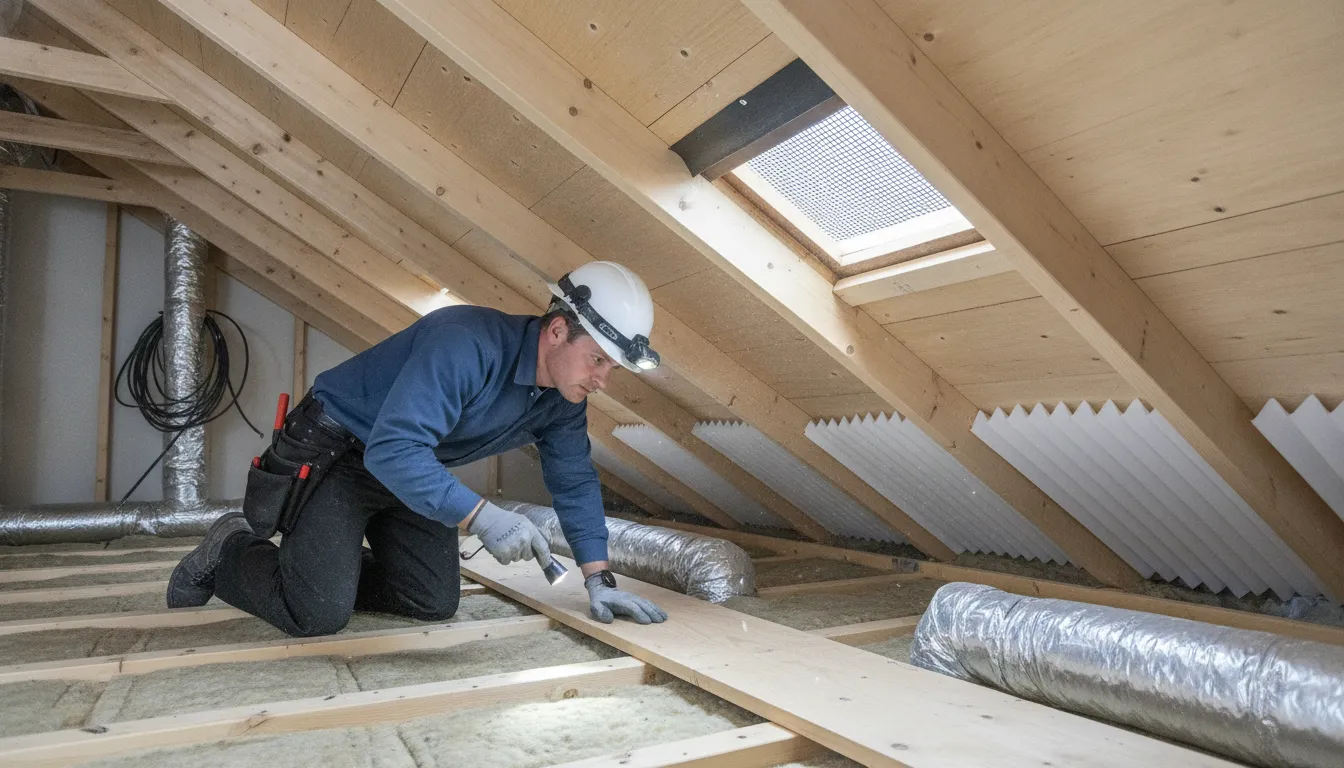
What a professional roof ventilation inspection covers
A deep roof check is about more than just looking for leaks. In Southern California, the heat can trap air in your attic and cook your shingles from the inside out. An expert roof inspection looks at the whole system to make sure air flows well. Pros check every part of the roof to find spots where heat or wet air might get stuck. This helps your home stay cool and protects your roof from damage.
Measuring intake and exhaust balance
One of the most vital parts of the job is checking the balance of air. For **roof ventilation Southern California** homes, experts look at the intake and exhaust vents. They check the net free air space to see if it meets local rules. Based on the California Residential Code, most homes need a ratio of 1/150 of the floor area for venting. This ratio can sometimes be 1/300 if the vents are placed in the right spots at the top and bottom of the roof.
The inspector will look for high vents near the ridge and low vents at the eaves. If you have too much exhaust and not enough intake, the system will not work right. This can pull air from inside your home instead of the outside. Pros make sure the air moves from the bottom to the top without stops. They also check that upper vents are at least three feet above the eave vents to create a good flow. During the check, they look at things like:
- Eave and soffit vent openings for air intake.
- Ridge vents or attic fans for air exhaust.
- The distance between high and low vents.
- The total area of all vent openings.
Inspecting baffles and insulation
Another big step is checking the area where the roof meets the attic floor. Many times, thick insulation blocks the air coming in from the eaves. An expert will look for baffles. These are plastic or foam trays that keep a path open for air. The City of Dublin building rules state that there must be at least one inch of space between the insulation and the roof board. Without this gap, your intake vents are useless.
The inspector will also check for dust or bird nests that might clog the screens. They look at the mesh to see if the holes are the right size. If the holes are too big, pests can get in. If they are too small, they can get blocked by dirt or paint. Making sure these paths are clear is key to keeping your attic heat down. When you check roof attic ventilation, you make sure your home stays in good shape.
Finding signs of heat and moisture damage
Next, the inspector looks for signs of past or current problems. Trapped heat can cause shingles to curl or blister over time. This can shorten the life of your roof by many years. They also look for rust on nails or mold on the wood under the roof. These are clear signs that the air is too damp and not moving enough. Moisture can ruin your insulation and make it less helpful at keeping your home cool.
The pro will also check every roof opening like pipes, vents, and skylights. These spots are common places for air to leak or water to get in. They make sure the metal flashing is tight and there are no gaps. A good inspection helps you meet proper roof ventilation requirements so you can avoid big repair bills later. By finding these small issues now, you can extend the life of your roof and save money on energy costs.
Frequently Asked Questions
How much does it cost to install roof vents?
The price to put in roof vents depends on the type you pick. For instance, ridge and soffit vents often cost from $530 to $1,075. Small box vents are cheap and may cost $55 to $200 each. If you want a fan with a motor, the price can hit $1,000. These costs include the vent and the labor. Per Prime American Roofing, good vents save you money on power.
How do I calculate roof ventilation for my home?
To find the right vent space, start with the floor area of your attic. The main rule is to have one square foot of vent area for every 150 square feet of floor space. If you place your vents at the top and bottom of the roof, you might only need half that much. Per the California Residential Code, this makes sure enough air moves to keep your attic dry and cool.
How much can roof ventilation lower attic heat?
On hot days, a roof without vents can reach over 150 degrees. This heat makes your AC work much harder and raises your costs. Adding the right vents can lower that heat by about 30 degrees. This keeps your home nice and protects your roof shingles from damage. Per Prime American Roofing, a cool attic also helps your roof last longer and saves you money each month.
Do I need special roof vents for wildfire areas?
Yes, homes in fire zones need vents that stop sparks from going in the attic. These vents use metal mesh to block hot coals. The holes in the mesh must be between 1/16 inch and 1/4 inch wide. Per the City of Dublin, these screens are a key part of keeping your home safe during a fire. You should check them often to make sure they do not get blocked by dust or dirt.
Ready to fix the air flow and ventilation issues in your attic?
Poor air flow in your attic space can lead to high energy bills and trapped moisture that rots your roof structure from the inside out. Southern California heat will bake your shingles and cause them to fail much faster than normal if you do not fix the air flow now. You should inspect your roof ventilation system to find hidden damage before it leads to a leak or more costly issues for your home. By acting today, you will protect your roof deck from rot and avoid the high cost of a new roof for your family home.
Ready to book? Schedule an expert roof check to request a certified roof inspection and protect your Southern California home today.

Comment (0)