Roof Moss Removal California: Protection Guide for Homeowners
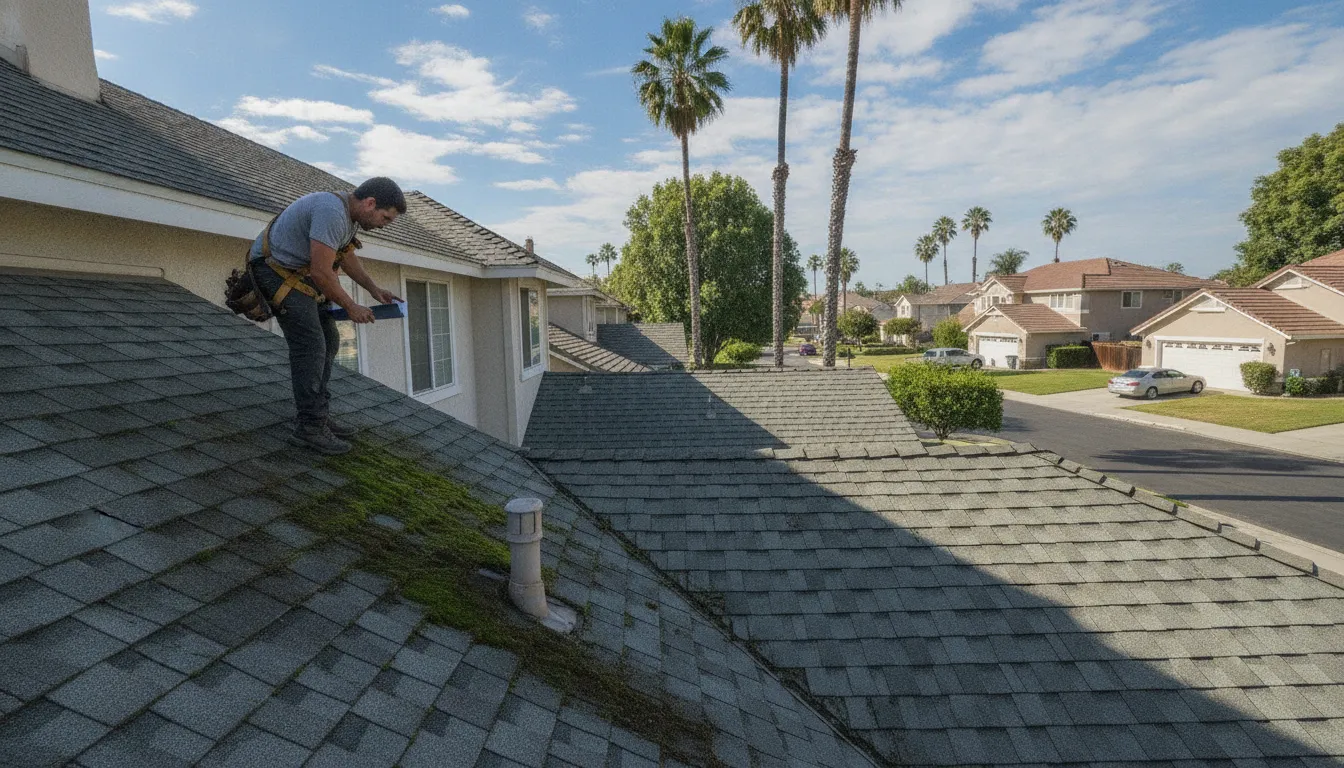
Black streaks or green growth on a Southern California roof are more than a cosmetic issue. Moisture can remain trapped against roofing materials, especially on shaded slopes, beneath trees, or in coastal fog zones. If growth is spreading, schedule a roof inspection with Cert-A-Roof before attempting to clean it yourself.
Effective roof moss removal California homeowners can rely on starts by identifying whether the growth is moss or algae. Assessing the roof’s condition, and choosing a method that removes the growth without damaging shingles or other materials. Moss can hold moisture and debris against the roof, while algae commonly appears as dark streaks and represents a separate biological concern. Early evaluation helps distinguish surface staining from a problem that may shorten roof life or allow water intrusion.
Southern California’s dry summers do not eliminate the conditions that support roof growth during wet winters. Shade, limited airflow, nearby vegetation, and coastal moisture can create favorable pockets on otherwise dry roofs. Understanding where moss and algae take hold makes the removal plan more precise and helps prevent the same problem from returning.
Roof Moss Removal California: Why Moss and Algae Grow on California Roofs
Southern California is often described as dry, but its climate is not uniformly dry throughout the year. The region follows a Mediterranean pattern, with wetter winters and long, sunny summers. During the rainy season, roof surfaces can stay damp long enough for moss to establish, especially where sunlight and airflow are limited. Oregon State University Extension notes that moss on roofs is common in moist climates and can contribute to damage that leads to costly repairs or replacement.
That seasonal pattern explains why a homeowner may notice new growth every winter, even if the roof looks clean by late summer. Moss spores can settle on roofing surfaces at any time, then take hold when rain, shade, and trapped organic debris create a consistently damp microclimate. Algae is a different biological concern. It often appears as dark or black streaks and, like moss, is encouraged by moisture. The two can occur together, but they should not be treated as identical growth.
Shade creates a damp roof microclimate
North-facing roof slopes receive less direct sunlight than south-facing slopes. In neighborhoods with mature trees, overhanging branches can add another layer of shade while dropping leaves, needles, and small debris onto the roof. Those materials hold moisture against the surface after rain. Branches can also restrict airflow, slowing evaporation and creating the conditions moss needs to persist.
Coastal homeowners face a related issue. Marine layer and coastal fog can wet roof surfaces without a noticeable rainfall event. In Orange County, San Diego, and nearby coastal communities, repeated foggy mornings may keep shaded sections damp through the cooler part of the day. Roof areas that dry quickly in inland sunlight may remain moist near the coast, particularly beneath trees or on heavily shaded slopes.
Roof materials respond differently
Material also affects susceptibility. Composition shingles and wood shakes generally offer more texture and moisture-holding surfaces than tile, making them more prone to visible moss growth when shade and debris are present. Tile roofs can still develop moss or algae, especially in shaded joints and low-drainage areas, but the growth pattern and potential risks differ. Reviewing the characteristics of common roofing materials can help explain why neighboring homes experience different results under the same weather conditions.
For California homeowners, recurring growth is usually a signal to examine shade, drainage, debris, and roof condition together rather than treating the visible moss as an isolated stain.
The Hidden Damage Moss Causes to Your Roof
Moss is more than a green surface stain. As it grows across composition shingles, its root-like structures can work underneath shingle edges and lift them away from the roof deck. That opening gives rainwater a path beneath the shingle, where it can reach underlayment, sheathing, insulation, and framing. The Oregon State University Extension explains that moss can lift asphalt shingles and allow water to penetrate the underlying layers.
Once moisture gets under the roofing system, the damage may continue even when the roof looks dry from the ground. Moss traps water, soil, leaves, and other debris against the surface. That extended dampness encourages biological decay and speeds the decomposition of roofing materials. On wood components, prolonged moisture can contribute to fungal deterioration. On asphalt shingles, repeated wetting and drying can weaken the mat and adhesive bonds.
Shingle displacement and granule loss
Lifted or distorted shingles are vulnerable during every rain event, especially when wind drives water uphill beneath their edges. Moss can also loosen the protective granules embedded in asphalt shingles. Granule loss exposes more of the shingle to ultraviolet radiation and weathering, reducing its ability to shed water and protect the roof deck. Granules in gutters or at the base of downspouts can be an early sign that the roof needs a closer inspection, although granule loss can have several causes.
In cold-weather regions, moss that holds moisture against a roof can also increase the conditions that contribute to ice formation and ice damming. Southern California roofs are less likely to face prolonged freezing conditions, but mountain and inland properties can experience occasional cold-weather exposure. The broader concern is trapped moisture: a roof assembly that cannot dry efficiently is more likely to develop hidden deterioration.
Cosmetic staining can signal a separate concern
Algae is not the same organism as moss, but the two often appear together. Algae commonly creates dark or black streaks that homeowners may mistake for moss or mildew. These streaks are primarily a cosmetic warning, yet they indicate moisture conditions that deserve attention. If growth is spreading, pooling around roof details, or accompanied by soft spots, lifted shingles, or interior staining, appearance is no longer the only issue.
Roof certifications also examine moss and algae when they may affect roof integrity or leak resistance. Cert-A-Roof includes these conditions in its inspection process for NRCIA compliance. That means visible growth can become a repair item when a certification is requested for a sale, refinance, insurance matter, or property record. Review the signs of roof leaks and schedule an inspection before a manageable maintenance concern develops into sheathing damage or a premature roof replacement.
Professional vs. DIY Roof Moss Removal
Removing visible moss is only part of the job. The method you choose affects the shingles, the underlayment, and your personal safety. A homeowner may be able to address a small, accessible patch from the ground or a secure lower roof section. But roof work becomes substantially more hazardous on steep or wet surfaces. The Oregon State University Extension Service warns that roof moss removal requires precautions such as strong-traction shoes and stable ladders. Review its roof moss safety guidance before attempting any DIY work.
| Method | Effectiveness | Safety Risk | Cost Range | Risk to Shingles |
|---|---|---|---|---|
| Pressure washing | Fast visual removal, but poor long-term control if the cause of the growth is not addressed | High, because wet roofs and ladders create slip and fall hazards | Equipment rental to moderate service cost | Very high. Water pressure can strip granules, loosen shingles, and force water beneath the roofing system |
| Soft washing or chemical treatment | Good when the product and application are appropriate for the roofing material | Moderate to high, due to roof access, runoff, and chemical handling | Product cost for DIY, or moderate professional cost | Low when applied correctly, but improper concentration or rinsing can damage roofing and landscaping |
| Manual brushing | Useful for limited surface growth, but may not eliminate embedded growth or the moisture conditions supporting it | High without traction shoes, stable ladders, and fall protection | Low material cost, plus the value of your time | Moderate to high if shingles are scraped, lifted, or brushed against the direction of their installation |
| Professional service | Comprehensive removal approach with treatment selection, cleanup, and inspection for related damage | Lower homeowner exposure because trained workers supply the access equipment and safety controls | Inspection-based service cost that varies by roof size, slope, and severity | Lowest when the contractor uses a roof-appropriate method and avoids aggressive pressure |
Why pressure washing is a poor shortcut
Pressure washing can make a roof look clean immediately, but that appearance can conceal damage. The force may remove protective granules or lift shingle edges, and some roofing manufacturers warn that pressure washing can void the shingle warranty. It can also drive water into areas that should remain dry. For these reasons, homeowners should not treat a pressure washer as a routine roof-cleaning tool.
When a treatment is safer than scraping
Soft washing and carefully selected treatments can control moss without aggressive abrasion. Potassium salts of fatty acids are biodegradable, soap-based products that kill moss by damaging its cell membranes, according to Oregon State University Extension. They still require label-compliant application, runoff control, and care around plants, painted surfaces, and metal components. Treatment may kill the growth without instantly removing every stain or attached fragment, so the roof should not be aggressively scrubbed to force a faster cosmetic result.
What professionals notice that homeowners may miss
A professional removal visit should include more than moss disposal. Moss can lift asphalt shingles and allow water to reach underlying layers, while trapped moisture and debris can accelerate deterioration. During removal, an experienced inspector can identify lifted or brittle shingles, soft decking, damaged flashing, blocked drainage, and signs of leakage. Homeowners often focus on the green growth and miss these structural issues. If the roof has extensive moss, steep slopes, visible damage, or an uncertain remaining life, schedule an inspection before choosing a removal method.
What Professional Roof Moss Removal Looks Like
Effective roof moss removal is more than making the roof look clean. The process should remove active growth without tearing shingles, forcing water beneath the roofing system, or overlooking damage that moss has concealed. Cert-A-Roof’s NRCIA-certified inspectors follow a documented protocol designed to evaluate the roof before, during, and after treatment.
- Initial roof inspection. A certified inspector assesses the location and extent of moss growth, including shaded slopes, roof edges, valleys, and areas beneath trees. The inspection also looks for pre-existing damage caused by prolonged moisture. Moss can lift asphalt shingles and allow water to reach the layers below, so removal should not begin until vulnerable areas are identified. A thorough residential roof inspection establishes the condition of the roof before work starts.
- Dry removal of loose growth. The technician gently brushes or removes loose moss by hand, working with the roofing material rather than against it. This controlled approach helps limit granule loss and avoids pulling at shingles that may already be weakened. It also reduces the chance of driving debris beneath shingle edges.
- Biodegradable moss treatment. Remaining growth receives an appropriate treatment, rather than an improvised household chemical. Potassium salts of fatty acids are biodegradable, soap-based products that kill moss by damaging its cell membranes. The treatment is applied carefully to limit unnecessary contact with surrounding landscaping and exterior surfaces.
- Low-pressure rinsing. Once the treatment has had the proper opportunity to work, the roof is rinsed with controlled, low-pressure water. Pressure washing is not an equivalent shortcut. Its force can damage shingles, strip protective granules, and push water beneath roofing components. The goal is to remove loosened material while preserving the roof assembly.
- Post-treatment inspection. The inspector verifies that the visible moss has been removed and checks for newly exposed leaks, lifted shingles, damaged flashing, or other conditions revealed by cleaning. This step matters because a clean surface can make previously hidden roofing defects easier to see.
- Documentation and recommendations. Cert-A-Roof records the findings and explains any recommended repairs, monitoring, or prevention measures. The result is not simply a cleaner roof. It is a condition-based assessment that helps the property owner understand what was found and which next steps deserve attention.
How to Prevent Moss and Algae From Returning
Removing visible growth is only half the job. In Southern California, moss and algae can return when shaded roof areas stay damp through winter rain, coastal fog, or runoff from nearby trees. A prevention plan reduces those moisture conditions and helps protect shingles before growth becomes a recurring maintenance expense.
Use zinc or copper strips at the ridge
Metal strips installed near the roof ridge can provide ongoing protection after rain. As water moves over the zinc or copper, it carries small amounts of metal ions down the roof surface. Those ions create an environment that discourages moss spores and algae from becoming established. Strips should be installed correctly and selected for the roof material. A professional can also check whether the existing roof is suitable for the installation and whether fasteners could create leak risks.
Reduce shade and trapped moisture
Trim tree branches that overhang the roof, especially over north-facing slopes and other areas that receive little direct sunlight. More sunlight helps roof surfaces dry faster, while better airflow reduces the damp conditions moss favors. Keep branches far enough away to limit leaf accumulation and abrasion, but do not remove healthy trees without considering local arborist guidance.
Gutters deserve the same attention. Leaves and sediment can obstruct drainage, allowing water to back up near the roof edge or remain concentrated in shaded areas. Clean gutters and functioning downspouts help move rainwater away from the roof. As Cert-A-Roof notes, clean gutters reduce the moisture moss needs to survive. During the rainy season, inspect gutters more often if the property is surrounded by mature trees.
Schedule treatment and maintenance before growth accelerates
Where moss has returned before, a preventive treatment may be appropriate before the winter rainy season. Potassium salts of fatty acids are biodegradable, soap-based products that kill moss by damaging its cell membranes, according to Oregon State University Extension. Product selection and application should account for the roofing material, nearby landscaping, runoff, and label directions. Treatment is not a substitute for correcting shade, drainage, or damaged shingles.
Annual inspections and maintenance can identify small areas of moss, algae staining, blocked drainage, loose flashing, or early shingle damage before they become expensive repairs. Schedule regular roof maintenance and review how often to arrange professional roof maintenance based on your roof’s age, condition, and surroundings. An ounce of prevention is usually less costly than repeated removal followed by premature roof repair or replacement.
How Much Does Roof Moss Removal Cost in California?
Professional roof moss removal in California commonly costs about $300 to $800 for a typical single-story home. That range is a planning estimate, not a fixed price. Heavy infestations, large roofs, difficult access, or specialized treatment for delicate materials can push the total above $1,000. A contractor should inspect the roof before recommending a treatment and provide pricing based on its actual condition.
What affects the price?
- Roof size and pitch: A larger roof requires more labor and treatment product. Steep slopes also take longer to access safely and usually cost more than a low-slope roof.
- Infestation severity: Thin growth may need limited removal and treatment. Thick moss that has spread beneath shingle edges requires more careful hand work and a closer inspection for damage.
- Roofing material: Composition shingles, tile, and wood shake each require different handling. Tile and shake can be fragile, while aggressive cleaning can remove granules from asphalt shingles or damage the surface.
- Accessibility: Multiple stories, limited ladder placement, obstructions, and steep or complicated roof sections increase setup time and safety requirements.
- Southern California location: Labor and access costs vary across Orange County, San Diego, Los Angeles, and nearby communities. Coastal fog, tree cover, and shaded roof planes can also affect the amount of growth present.
Removal versus waiting for repairs
Roof moss removal is generally a maintenance expense, and homeowners insurance does not typically cover routine moss treatment. Coverage depends on the policy and the cause of any resulting damage, so review your policy rather than assuming treatment will be reimbursed.
Delaying treatment can be more expensive. Moss traps moisture and debris, which can accelerate the decomposition of roofing materials, according to Oregon State University Extension. It can also lift asphalt shingles and allow water to reach underlying layers. Repairs for lifted shingles and related water damage may run from roughly $500 to $2,000 or more, depending on the affected area. Extensive deterioration can eventually contribute to premature replacement.
For that reason, professional roof moss removal California homeowners arrange is often a worthwhile investment, especially when it prevents avoidable repairs. If you are evaluating the roof’s condition for a sale, refinance, or maintenance plan, review roof certification costs and schedule an inspection before choosing a treatment.
Frequently Asked Questions
Is moss removal necessary for my roof in California?
Yes, especially when moss is established, spreading, or holding moisture against roofing materials. Moss can trap moisture and debris, accelerate material deterioration, and lift asphalt shingles enough to let water reach underlying layers. An inspection can determine whether cleaning is sufficient or whether the roof has concealed damage.
What is the safest way to remove moss without damaging shingles?
Use a gentle removal and treatment method suited to the roofing material rather than pressure washing. Aggressive brushing or high-pressure water can dislodge granules and damage shingles. A professional may use a biodegradable treatment, such as potassium salts of fatty acids, followed by careful removal and a post-cleaning inspection.
Is DIY roof moss removal safe?
It can be hazardous because a wet or sloped roof creates a serious slip and fall risk. Safe work requires appropriate traction footwear, stable ladder placement, and proper equipment. Homeowners should avoid climbing onto a roof when conditions are wet or when they cannot safely identify damage, and should consider a professional inspection instead.
How can I prevent moss from growing back on my California roof?
Reduce the damp, shaded conditions moss prefers. Trim branches that block sunlight, keep gutters clear so water does not remain near the roof edge. And ask a roofing professional whether zinc or copper strips are suitable for the roof. Regular maintenance can also identify developing growth before it becomes difficult to remove.
What determines the cost of professional roof moss removal?
Pricing depends on roof size, pitch, accessibility, the amount of moss or algae, the roofing material, and whether cleaning reveals repairs that are needed. A roof inspection should come first so the service plan addresses both visible growth and any lifted shingles, moisture intrusion, or deterioration beneath it.
Ready to Schedule a Roof Inspection?
Moss and algae can be easier to address when a qualified inspection identifies where moisture is collecting and whether roofing materials have been affected. To schedule a roof inspection with Cert-A-Roof, contact our team through the contact page. We can help you understand the roof’s condition and the next appropriate step for your Southern California home.
Comment (0)