The Complete Guide to Residential Roof Inspections
Your roof is one of the largest investments you will make as a homeowner, yet most people never think about it until something goes wrong. A residential roof inspection is the single most effective way to catch small problems before they turn into expensive emergencies. This guide covers everything you need to know: what a professional inspector actually examines, when to schedule an inspection, how it differs from a commercial evaluation, what it costs, and why Southern California homeowners face unique challenges that make routine inspections even more critical.
Request An Appointment or call 888-766-3800 to schedule your residential roof inspection today.
Whether you are buying a home, preparing to sell, or simply want to protect your property, understanding the residential roof inspection process puts you in control.
Quick Summary: A residential roof inspection is a professional evaluation of your home’s roofing system that covers six critical areas: roofing materials, flashing, drainage, ventilation, structural elements, and the attic interior. Inspections typically take 45 minutes to two hours and cost $150 to $400.
- Schedule at least one professional inspection per year, plus after major storms
- A certified inspector catches issues that DIY checks miss, including moisture, ventilation deficiencies, and underlayment deterioration
- NRCIA-certified inspectors follow the industry’s highest standards for residential roof evaluation
- Southern California homeowners face accelerated roof aging from UV, Santa Ana winds, and thermal cycling
- A professional inspection can uncover problems that would cost thousands if left unaddressed
What Is a Residential Roof Inspection?
A residential roof inspection is a systematic evaluation of a home’s roofing system performed by a trained professional. The inspector examines every component that contributes to the roof’s ability to keep water out, maintain structural integrity, and perform efficiently over time.
Unlike a quick visual check from the curb, a proper roofing inspection follows established industry protocols. At Cert-A-Roof®, our inspectors are certified by the National Roof Certification and Inspection Association (NRCIA) and follow standardized procedures that cover both the exterior and interior of the roofing system. This level of thoroughness is what separates a true professional roof inspection from a casual assessment.
A comprehensive residential inspection typically takes 45 minutes to two hours depending on the roof’s size, pitch, and complexity. At the end, you receive a detailed report with photographs, findings, and prioritized recommendations.
What Does a Residential Roof Inspection Include?
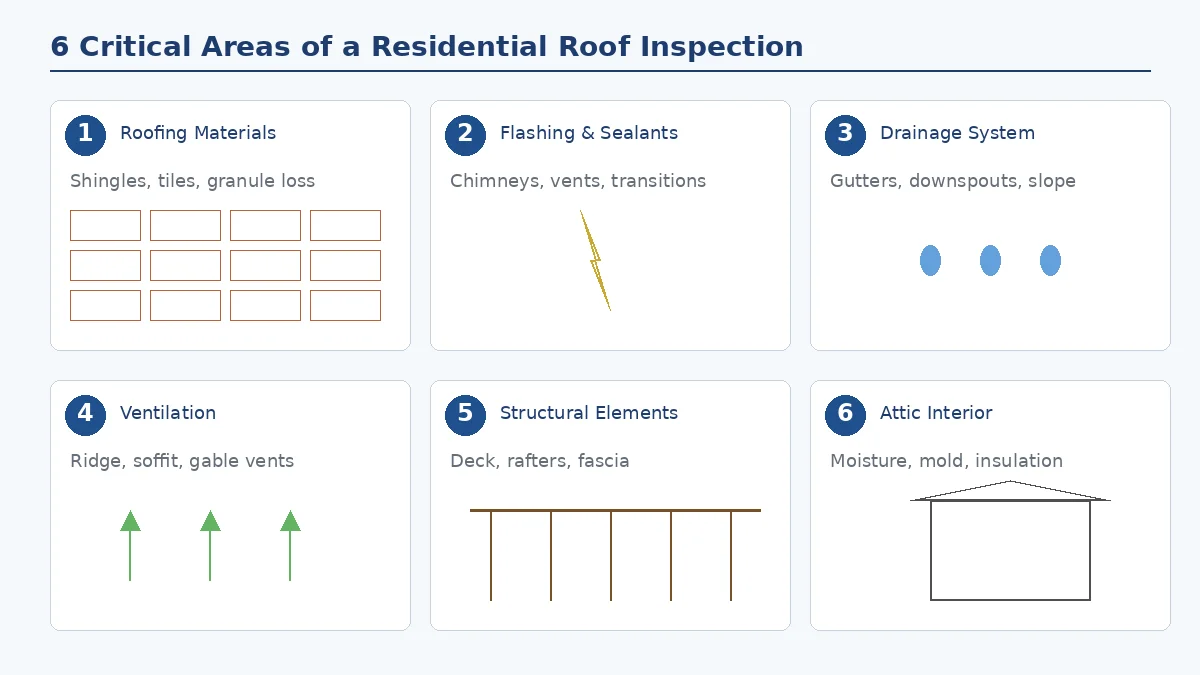
A professional roof inspection service covers far more than just shingles. Here is a breakdown of the six critical areas that a certified roof inspector evaluates during a home roof inspection.
Roofing Materials
The inspector examines every visible roofing material for signs of wear and damage. On asphalt shingle roofs, this means checking for curling, cracking, blistering, and granule loss. For tile roofs, which are common across Southern California, the focus shifts to cracked, chipped, or displaced tiles. Missing or damaged materials are the most obvious entry points for water.
Flashing and Sealants
Flashing is the metal or composite material installed at transition points: around chimneys, vents, skylights, and where the roof meets a wall. These areas are responsible for more leaks than any other part of the roof. The inspector checks for lifted edges, rust, cracked sealant, and improper installation.
Drainage System
Gutters, downspouts, and roof slope all play a role in moving water off the roof efficiently. Clogged gutters, improper pitch, or disconnected downspouts can cause water to pool and seep under roofing materials. The inspector evaluates the entire drainage path.
Ventilation
Proper attic ventilation prevents heat and moisture buildup that can warp decking, accelerate shingle aging, and promote mold growth. The inspector checks ridge vents, soffit vents, and gable vents to confirm adequate airflow. In Southern California, where attic temperatures can exceed 150°F in summer, ventilation problems degrade roofing materials faster than almost any other factor.
Structural Elements
The roof deck, rafters, fascia, and soffits form the structural backbone. The inspector looks for sagging ridge lines, soft spots, rotted wood, and any signs that the structure has been compromised. These issues are often invisible from outside the home.
Attic Interior
A thorough inspection always includes the attic. The inspector looks for daylight penetrating the roof deck, water stains, mold, mildew, and insulation problems. Evidence of moisture in the attic is one of the earliest indicators that the exterior roofing system has a weakness.
Residential vs. Commercial Roof Inspections: Key Differences
Homeowners sometimes wonder whether a standard home inspection covers the roof adequately, or how a residential evaluation differs from a commercial roof inspection. The differences are significant.
Roofing systems. Residential roofs are typically pitched and use asphalt shingles, tiles, or metal panels. Commercial roofs are often flat or low-slope and use membrane systems like TPO, EPDM, or built-up roofing. The inspection techniques, failure modes, and repair approaches differ substantially.
Code requirements. Commercial properties must meet stricter building code requirements, fire ratings, and load-bearing standards. Residential inspections focus more on weather protection, ventilation, and material lifespan.
Scope. Commercial inspections often include HVAC penetrations, rooftop equipment pads, and drainage systems designed for large surface areas. Residential inspections concentrate on the components most relevant to a single-family home: attic space, chimney flashing, and living-area leak potential.
Frequency. Commercial roof maintenance programs typically require biannual inspections. For residential properties, an annual roof inspection is the recommended standard, with additional inspections after severe weather events.
| Factor | Residential Roof Inspection | Commercial Roof Inspection |
|---|---|---|
| Roof Type | Pitched (shingles, tiles, metal panels) | Flat/low-slope (TPO, EPDM, BUR, PVC) |
| Inspection Focus | Attic, chimney flashing, shingle condition, ventilation | HVAC penetrations, equipment pads, membrane integrity, drainage |
| Code Requirements | Weather protection, ventilation, material lifespan | Stricter fire ratings, load-bearing standards, occupancy codes |
| Recommended Frequency | Annually (+ after storms) | Biannually (spring and fall) |
| Duration | 45 minutes to 2 hours | 1 to 4+ hours (larger surface area) |
| Cost Range | $150 – $400 | $300 – $1,000+ |
When Should You Schedule a Residential Roof Inspection?
Knowing when to inspect is just as important as knowing what to inspect. Here are the six situations where scheduling a professional roof inspection service is essential.
Annual Maintenance
The industry standard recommendation is one professional inspection per year. An annual roof inspection catches gradual deterioration from sun exposure, thermal cycling, and normal aging before minor issues compound into major damage. For roofs older than 15 years, consider twice-yearly inspections.
Before Buying a Home
A residential roof inspection is one of the most valuable steps in the home-buying process. A standard home inspection may note visible roof issues, but it does not provide the depth of analysis that a certified roof inspector delivers. The inspection report gives you leverage in negotiations and protects you from inheriting hidden problems.
Before Selling a Home
Sellers who provide a current roof inspection report build buyer confidence. A clean inspection, or better yet a LeakFREE® Roof Certification, demonstrates that the roof is in verified condition and removes one of the biggest concerns buyers have.
After a Major Storm
Southern California may not get heavy rain year-round, but when storms hit, they can be intense. High winds, hail, and heavy downpours can cause damage that is not visible from the ground. A post-storm inspection identifies issues like lifted shingles, cracked tiles, and compromised flashing before they lead to interior water damage. If you suspect damage, scheduling an emergency roof repair evaluation is the safest move.
When Your Roof Is Approaching End of Life
Most asphalt shingle roofs last 20 to 30 years. Tile roofs can last 50 years or more with proper care. As your roof approaches its expected lifespan, more frequent inspections help you plan for replacement on your timeline rather than reacting to a failure.
Before an Insurance Renewal
Many insurers require or request a roof inspection for homeowners insurance underwriting, especially on older homes. A current inspection report can help you maintain favorable premiums and avoid coverage gaps.
DIY vs. Professional Roof Inspection
Homeowners can and should perform basic visual checks from the ground. Walking the perimeter with binoculars and checking for missing shingles, sagging gutters, and visible debris is a good habit. However, a DIY check has clear limitations.
What you can spot from the ground:
– Missing or visibly damaged shingles or tiles
– Sagging gutters or disconnected downspouts
– Debris accumulation on the roof surface
– Obvious structural sagging
What only a professional catches:
– Hairline cracks in flashing and sealant
– Early-stage granule loss on shingles
– Moisture in the attic and decking
– Ventilation deficiencies
– Underlayment deterioration beneath surface materials
– Subtle structural compromises
A certified roof inspector brings specialized training, safety equipment, moisture detection tools, and the experience to recognize patterns that indicate future failures. The cost of a professional inspection is a fraction of what you would spend if a hidden issue goes undetected for even one season.
NRCIA Certification Standards: What Sets a Certified Inspector Apart
Not all roof inspections are created equal. The National Roof Certification and Inspection Association (NRCIA) sets the gold standard for residential roof inspection protocols. NRCIA-certified inspectors must complete rigorous training, adhere to standardized inspection procedures, and maintain continuing education to keep their certification active.
At Cert-A-Roof®, our team follows NRCIA protocols on every inspection. Paul Watrous, our President, also serves as President of the NRCIA, which means our inspection standards are not just industry-compliant; they are shaped by the same leadership that defines the national benchmarks.
When you hire an NRCIA-certified inspector, you get:
- A standardized, repeatable inspection process
- Detailed photographic documentation
- A formal report that is recognized by insurers, lenders, and real estate professionals
- Eligibility for the LeakFREE® Roof Certification, backed by a warranty
This certification matters because it provides accountability. A certified inspector’s reputation and credential depend on the accuracy and thoroughness of every report.
How Much Does a Residential Roof Inspection Cost?
Residential roof inspection costs vary based on roof size, complexity, and the type of inspection required. General industry pricing for a standard inspection ranges from $150 to $400. Specialized inspections, such as forensic evaluations or insurance claim inspections, may cost more due to the additional documentation and analysis involved.
Factors that affect pricing include:
- Roof size and pitch: Larger and steeper roofs take more time and carry higher labor requirements.
- Roof material: Tile and slate roofs require more careful handling than standard asphalt shingles.
- Type of inspection: A LeakFREE® inspection with certification includes more comprehensive evaluation and documentation than a basic maintenance check.
- Location: Pricing can vary by region and market.
The return on investment is clear. A $200-$400 inspection can uncover issues that would cost thousands to repair if left unaddressed. Annual inspections consistently save homeowners money over the life of their roof.
Southern California-Specific Roof Inspection Considerations
Homeowners in Orange County, San Diego, Anaheim, Irvine, Santa Ana, and the broader Southern California region face environmental conditions that accelerate roof aging in specific ways.
UV Radiation
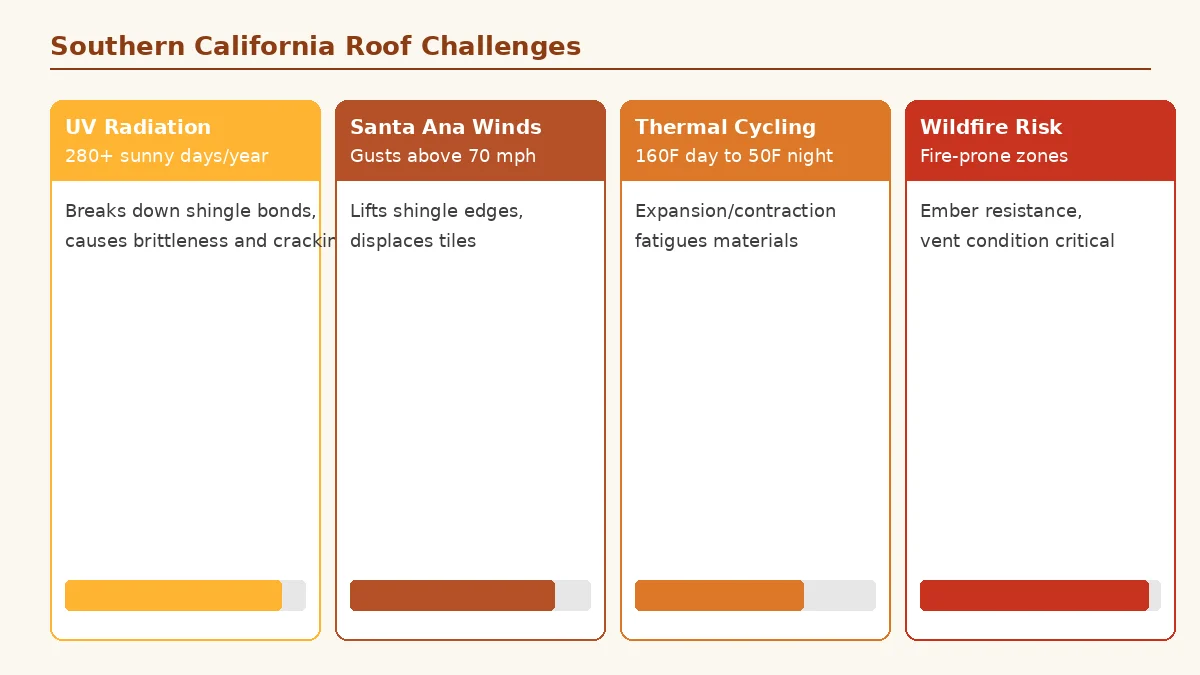
Southern California averages more than 280 sunny days per year. Prolonged UV exposure breaks down the chemical bonds in asphalt shingles, causing them to become brittle and crack. It also degrades sealant compounds around flashing and penetrations. A professional inspector knows exactly what UV damage looks like at different stages and can assess remaining material life.
Santa Ana Winds
These hot, dry winds can gust above 70 mph and are a leading cause of roof damage in the region. Santa Ana winds lift shingle edges, displace tiles, and stress flashing connections. After a Santa Ana wind event, an inspection is strongly recommended, even if the roof looks fine from the ground. Wind damage often starts at edges and ridge caps, areas that are difficult to see without getting on the roof.
Thermal Cycling
Despite the mild reputation of the climate, Southern California roofs experience significant temperature swings. A roof surface that reaches 160°F in afternoon sun and drops to 50°F overnight undergoes repeated expansion and contraction. Over time, this thermal cycling fatigues materials, loosens fasteners, and creates gaps in sealant joints. An experienced inspector in this region knows to look for these stress patterns.
Wildfire Preparedness
In fire-prone areas of Southern California, the condition of your roof is a critical factor in your home’s wildfire defensibility. An inspection that evaluates ember resistance, clearance from overhanging vegetation, and the condition of attic vents provides actionable information for fire preparedness.
Roof Inspection Checklist for Homeowners
Use this quick checklist between professional inspections to monitor your roof’s condition:
- [ ] Walk the perimeter and look for fallen or displaced shingles/tiles
- [ ] Check gutters for excessive granule buildup (indicates shingle aging)
- [ ] Look for visible sagging along the ridge line
- [ ] Inspect visible flashing around the chimney and vents for gaps
- [ ] Check for moss, algae, or dark staining on the roof surface
- [ ] Look inside the attic for water stains, mold, or daylight through the decking
- [ ] Note any increase in energy bills, which may indicate ventilation problems
- [ ] After storms, check for debris, displaced materials, or new leaks
If any of these checks reveal concerns, schedule a professional residential roof inspection promptly.
Ready to protect your home? Request An Appointment or call 888-766-3800 for a professional residential roof inspection.
Frequently Asked Questions
How often should a residential roof be inspected?
The industry standard is once per year. Roofs older than 15 years or in regions with extreme weather should be inspected twice annually. Always schedule an additional inspection after a major storm or wind event.
What is the difference between a roof inspection and a roof certification?
A roof inspection evaluates the current condition of your roof and produces a report. A roof certification, such as Cert-A-Roof’s LeakFREE® Certification, goes further by certifying that the roof will remain leak-free for a specified period, backed by a warranty.
Does a standard home inspection include the roof?
A general home inspection includes a surface-level review of the roof, but it is not a substitute for a dedicated residential roof inspection. Home inspectors are generalists; a certified roof inspector is a specialist who evaluates components a general inspector may miss.
Can I be present during the roof inspection?
Yes. At Cert-A-Roof®, we encourage homeowners to be present so we can walk you through our findings in real time and answer your questions on the spot.
How do I prepare for a roof inspection?
Clear access to the attic, trim any branches touching the roof, ensure pets are secured, and have your previous inspection reports available if possible. The inspector will handle the rest.
Protect Your Home with a Professional Residential Roof Inspection
Your roof works around the clock to protect your home, your family, and your investment. A residential roof inspection is the most reliable way to ensure it is performing as it should. Whether you are preparing for a real estate transaction, responding to storm damage, or simply staying ahead of maintenance, a professional evaluation from an NRCIA-certified team gives you the information you need to make confident decisions.
Cert-A-Roof® has performed over 75,000 inspections across Southern California and Western Montana. Our team brings 30+ years of experience and follows the highest certification standards in the industry.
Ready to schedule your inspection? Request An Appointment or call us today at 888-766-3800.
Comment (0)