Commercial Roof Replacement vs Repair: How to Make the Right Decision
A commercial roof can look serviceable from the parking lot while concealed moisture, aging materials, or code concerns are already affecting the building. For property owners and managers, the right choice is not simply the lowest immediate invoice. It is the option that protects the asset, limits disruption, and makes financial sense over the roof’s remaining service life.
Commercial roof replacement vs repair should be decided from a professional inspection that documents the damage, evaluates the roof’s age and remaining life, and checks applicable building-code requirements. Repairs are generally less expensive upfront when damage is limited. While replacement may be more responsible when deterioration is widespread or the system is near the end of its useful life.
That evidence-based approach is especially important for flat commercial systems, where water intrusion can remain hidden and damage the underlying deck. The framework below explains how to weigh condition, cost, longevity, and compliance before committing to a repair or replacement plan.
Schedule a roof inspection with Cert-A-Roof today to determine whether commercial roof replacement or repair is the right choice for your building. Contact our team to get a professional assessment of your roof’s condition, remaining service life, and the most cost-effective path forward.
Making the Commercial Roof Replacement vs Repair Decision
The right choice should come from evidence, not from the age of a leak or the size of a repair estimate. A professional inspection should identify visible and concealed damage, consider the roof’s age and condition, and evaluate whether current code requirements affect the work. This process gives a property owner a defensible basis for choosing between a targeted repair and a larger roofing project.
Commercial roofs generally do not last as long as most residential roofing systems. Their broad, low-slope surfaces, mechanical equipment, foot traffic, drainage demands, and exposure to business operations can create different maintenance and failure patterns. The roof system’s material, installation history, maintenance records, and local weather exposure also matter. A roof that looks serviceable from the ground may still have moisture or membrane problems that change the recommendation.
When a repair may be the practical choice
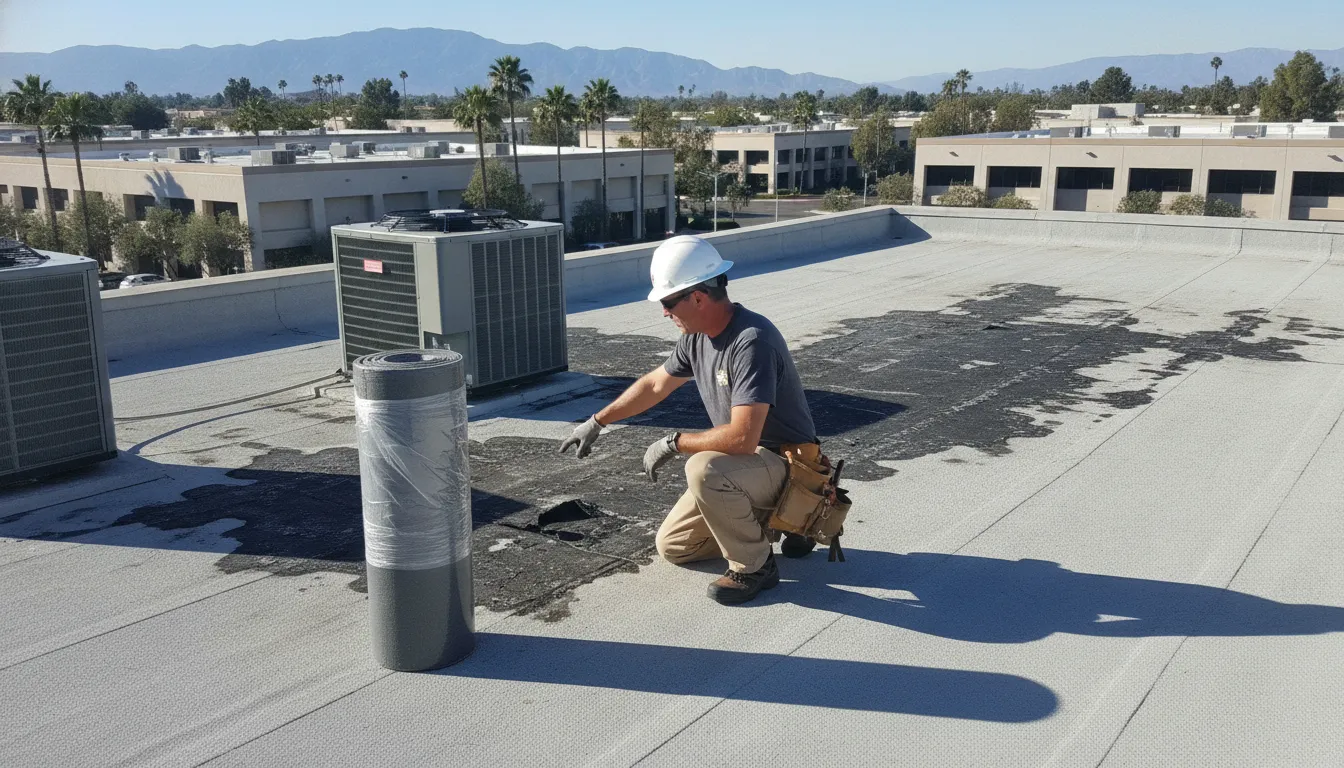
Repair is usually appropriate when the damage is limited and localized, while the surrounding roof system remains sound. Examples can include an isolated membrane puncture, a small flashing failure, or a defined area of storm damage. Repairs are generally less expensive upfront than complete replacements when the affected area is minimal. They can also reduce disruption for tenants and help preserve budget for other building priorities.
That does not mean the least expensive immediate option is always the best financial decision. The inspection should determine whether the issue is truly isolated or a symptom of broader deterioration. Repeated repairs in multiple areas, recurring leaks, wet insulation, or widespread surface failure may indicate that continued patching is only postponing a replacement decision.
When age and damage point toward replacement
Age is one of the best indicators that a commercial roof may need replacement, especially when it is combined with extensive damage or an uncertain maintenance history. Replacement becomes more compelling when deterioration affects large portions of the system, repairs no longer provide dependable protection, or the roof cannot reasonably meet current code requirements. A professional assessment can clarify the extent of work and identify whether the existing assembly has remaining useful life.
For a complete evaluation, property managers and building owners can review commercial roofing services and schedule an inspection before committing to either path. The goal is a sound, code-aware decision that protects the building, its occupants, and its operating budget.
Signs a Commercial Roof Can Be Successfully Repaired
When damage is limited to a defined area and the underlying roof system remains sound, repair is often the more practical financial choice. Repairs are generally less expensive upfront than complete replacement, particularly when the affected area is small. That lower initial cost does not make repair automatically appropriate, however. A professional assessment should confirm that the roof can be restored without leaving hidden deterioration behind.
The roof structure is still sound
Before spending money on any repair, the roof assembly and supporting structure need to be evaluated. The U.S. Department of Energy recommends a structural evaluation before repair work begins, with a professional engineer involved if damage compromises structural integrity: roof repair guidance. This is especially important after severe weather, when visible membrane damage may not show the full extent of the problem.
A repair is more likely to be suitable when the deck, insulation, flashing, and surrounding membrane are stable. And the damage is localized to a puncture, seam, flashing detail, or small leak area. If the deck is weakened across broad sections or the roof has widespread deterioration, a replacement evaluation is more appropriate.
The membrane can be repaired with a compatible method
Commercial roofs use different membrane materials, and the membrane type determines which repair methods and materials are appropriate. A patch or sealant that works for one system may not bond correctly to another. The inspection should identify the existing assembly before a contractor recommends a repair approach. For property owners comparing commercial roof replacement vs repair, compatibility is a technical issue, not simply a pricing decision.
Proper technique also matters. In a damaged area, unsound roofing material should be removed down to the sheathing before the repair is rebuilt. Materials that cannot dry before being covered should not be reused, because trapped moisture can contribute to structural problems, mold, or buckling. These practices are outlined in the Department of Energy’s roof repair recommendations.
Water intrusion is identified early
Water intrusion can remain hidden for long periods and eventually damage the underlying deck. Early detection gives a repair team a better chance to isolate the entry point, remove compromised material, and protect the surrounding roof system. Interior stains are useful warning signs, but they do not always identify where water entered, so the visible symptom should not be treated as the entire repair area.
Ongoing maintenance is part of making a repair last. Commercial roof maintenance is essential for extending the service life of the system, including by catching deteriorated sealants, drainage issues, and flashing problems before they spread. For targeted help, review our flat roof repair for commercial buildings service. A documented inspection and timely maintenance plan can preserve a repairable roof while giving the owner clearer evidence when replacement eventually becomes necessary.
When Commercial Roof Replacement Is the Better Option
Replacement becomes the stronger choice when the roof has reached the end of its practical service life, rather than simply accumulated one isolated defect. Age is the best indicator that a commercial roof may need replacement. Commercial systems generally do not last as long as most residential roofing systems. And repeated repairs on an aging assembly can become a cycle of short-term spending without restoring dependable protection.
A professional inspection should determine whether the roof has enough sound material to support another repair or restoration. Widespread deterioration, recurring leaks in multiple areas, saturated insulation, or damage beneath the membrane can indicate that patching the visible symptom will not address the underlying problem. The decision should also account for the roof’s condition across the entire building, not just the location where water happens to appear.
Replacement can improve long-term performance
A new commercial roof provides access to modern materials, updated installation methods. And a new warranty that often lasts 20 to 30 years, depending on the system and manufacturer. Those improvements can make the building easier to maintain and may improve energy performance. They can also give property owners a clearer planning horizon than a series of unpredictable emergency repairs. Review the available commercial roofing services before selecting a system or scope of work.
This is why the commercial roof replacement vs repair decision should be framed as an investment analysis, not just a comparison of today’s invoices. A commercial roof is one of the most important investments in a building. A properly designed replacement can protect inventory, equipment, tenants, and interior finishes while supporting the property’s long-term value and marketability.
Code requirements may make replacement necessary
Major roof work may trigger current building-code requirements that an older system cannot satisfy. A professional assessment of applicable codes is required for major replacements, and local building agencies can provide additional guidance. Code compliance can affect insulation, drainage, fire performance, structural capacity, and the scope of required upgrades. Confirming those requirements early helps prevent delays and avoids designing a repair that cannot be approved.
Can a new roof go over the existing system?
Sometimes, modern roofing systems can be installed directly over an existing system under specific conditions. That option depends on the existing assembly, moisture levels, structural condition, manufacturer requirements, and local code. It should never be assumed simply because the old roof is difficult or expensive to remove. An inspection can establish whether an overlay is appropriate or whether full removal is the safer investment.
Commercial Roof Repair vs Replacement: Cost Comparison Over 5-10 Years
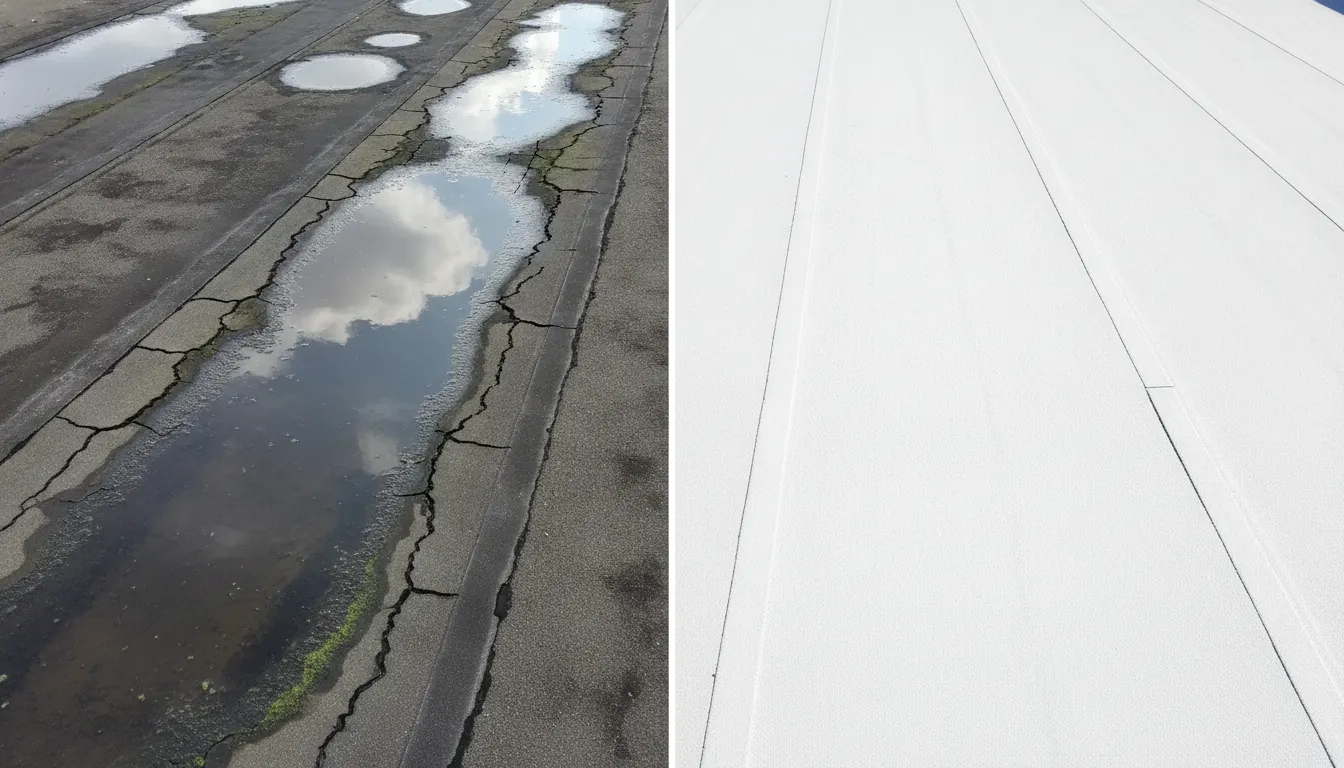
When comparing commercial roof repair vs replacement, the lowest invoice today is only one part of the decision. Property owners should also weigh service life, warranty protection, energy performance, and the likelihood of recurring maintenance over the next five to ten years.
| Factor | Repair | Replacement |
|---|---|---|
| Upfront cost | Generally less expensive when damage is limited and the existing roof remains serviceable. Repairs can address isolated leaks, damaged membrane areas, or specific flashing problems without paying for a complete system. | Requires a larger initial investment because the project involves substantial material, labor, disposal, and potentially code-related work. The scope may be narrower when a new system can be installed over the existing roof under appropriate conditions. |
| Long-term cost and ROI | Can offer strong short-term value when the roof has useful life remaining. However, repeated repairs, hidden moisture, and escalating failures can make the five- to ten-year total higher than the first repair invoice suggests. | Higher upfront spending can provide more predictable ownership costs and a reset on system performance. A new roof may also deliver modern materials, improved efficiency, and a new warranty, depending on the selected system. Warranty and system benefits vary by product and installation. |
| Warranty | Coverage depends on the repair scope, material, installer, and existing roof warranty. A repair does not necessarily restore the warranty or remaining life of the full system. | A new commercial roof warranty often lasts 20 to 30 years, depending on the system. Confirm what the warranty covers, including materials, workmanship, maintenance requirements, and exclusions. |
| Energy efficiency potential | Targeted repairs preserve the current assembly, so energy improvements may be limited to sealing gaps, correcting moisture issues, or improving associated components. | A replacement can be an opportunity to select a cool roof or other efficient assembly. The U.S. Department of Energy reports that cool roof options can reduce annual air-conditioning energy use in a single-story building by up to 15%: Department of Energy cool-roof guidance. Cool roofing can also reduce peak electricity demand, while efficiency improvements may lower operating costs over time. |
| Lifespan extension | Effective repairs and consistent maintenance can extend the service life of a sound roof. But they cannot permanently correct widespread deterioration or a system near the end of its useful life. | Replacement establishes a new service-life baseline and may improve long-term reliability. Still, replacing a mechanically sound roof solely to increase solar reflectance is rarely economical, according to the Department of Energy guidance. Evaluate the roof’s condition, energy goals, and full project economics together. |
In practice, the right choice depends on condition rather than price alone. A professional inspection should identify the roof’s remaining life, the extent of concealed damage, and whether energy or code improvements materially change the five- to ten-year outlook. That evidence helps owners avoid both unnecessary replacement and a repair cycle that only postpones a larger capital project.
How Professional Inspections Guide the Decision
Choosing between repair and replacement should begin with evidence, not a contractor’s first impression or a single visible leak. A professional inspection documents the roof’s current condition, the extent of damage, its age, and the issues that may affect code compliance. That information gives a property owner a defensible basis for budgeting and planning instead of relying on assumptions.
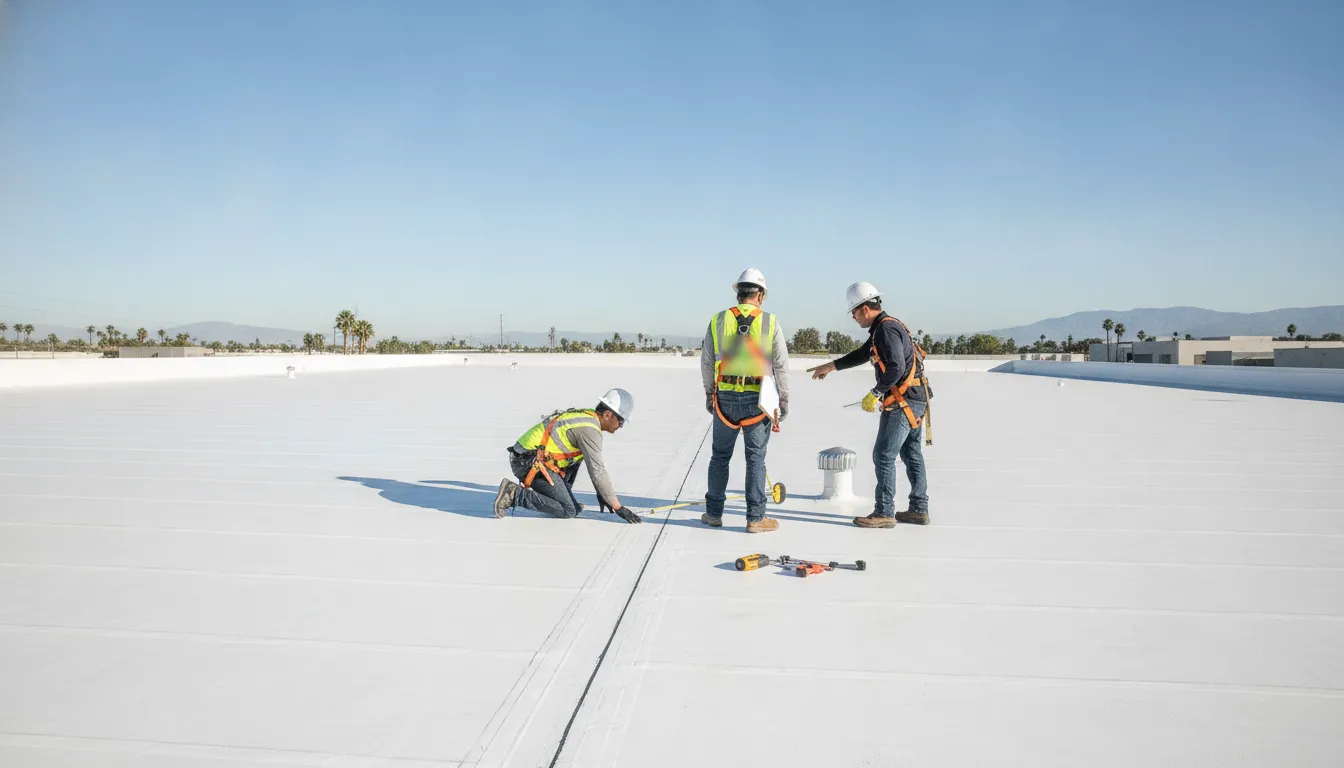
A thorough commercial roof inspection evaluates more than the membrane surface. The inspector looks for active and concealed water intrusion, membrane deterioration, drainage concerns, flashing failures, and conditions that could affect the roof assembly or underlying deck. Water intrusion can remain undetected for long periods, so a roof that appears serviceable from the ground may have developing damage below the surface. If structural concerns are identified, the inspection findings can indicate when additional evaluation by a qualified professional engineer is appropriate.
Use certification to document condition and remaining life
When a building is being sold, refinanced, insured, or placed under new management, a commercial roof certification can provide useful documentation. Certification verifies the roof’s current condition and expected remaining life at the time of inspection. It does not promise that a roof will never need maintenance, but it gives decision-makers a clearer record for comparing continued repairs with a planned replacement.
Inspect on a schedule, not only after a leak
Professional roof inspections should occur at least annually and after major storm events. Annual inspections help identify small defects before they become widespread failures. Post-storm inspections can document wind, impact, or water-related damage while conditions are still fresh. For Southern California property owners, this routine also supports maintenance planning across multiple buildings and helps distinguish ordinary wear from event-related damage.
Check compliance before authorizing major work
A major replacement requires a professional assessment of current building codes and applicable requirements. Code compliance may affect the scope, materials, drainage details, insulation, or permitting path. An inspection can surface those considerations early, before a repair plan becomes difficult to change. By contrast, replacing a mechanically sound roof solely to increase solar reflectance is rarely economical, according to the U.S. Department of Energy’s cool roof guidance. Energy goals should be weighed with condition, service life, compliance, and total project cost.
Cert-A-Roof applies NRCIA-standardized inspection practices with a forensic, compliance-first perspective. The result is a clearer answer to the commercial roof replacement vs repair question and a practical path for protecting the building’s value.
Frequently Asked Questions
When should you repair a commercial roof instead of replacing it?
Repair is usually appropriate when damage is limited, the roof system is structurally sound, and the membrane still has useful service life. The repair method should match the membrane material, and an inspection should check for hidden moisture or deck damage before work begins.
What is the primary indicator that a commercial roof needs replacement?
Age is one of the strongest indicators that replacement may be appropriate, especially when paired with recurring leaks, widespread deterioration, or declining performance. A professional inspection should assess the current condition, remaining service life, and whether the roof can meet applicable building-code requirements.
Are commercial roof repairs cheaper than replacement?
Repairs are generally less expensive upfront when the damage is minimal. However, repeated repairs can become a poor long-term investment if the roof is near the end of its service life or has widespread concealed damage. Compare the immediate repair cost with expected maintenance, disruption, and replacement needs over the next several years.
What is the difference between roof restoration and replacement?
Restoration improves an existing roof system, while replacement installs a new system. Restoration may be considered when the existing roof remains structurally sound. Replacement becomes more appropriate when age, widespread damage, moisture, or code requirements make continued repairs unreliable.
How do I decide between commercial roof repair and replacement?
Start with a professional inspection that documents visible damage, hidden moisture, membrane condition, structural concerns, age, and code implications. A roof certification can also verify current condition and expected remaining life. Use those findings to compare short-term repair savings with the roof’s longer-term reliability and operating needs.
Schedule a Roof Inspection for Your Commercial Property
A clear repair-versus-replacement decision starts with a professional look at your roof’s current condition, remaining service life, and operating needs. Cert-A-Roof can help you understand the next practical step before planning commercial roofing work. Schedule a roof inspection with Cert-A-Roof to move forward with an informed plan for your property.
Comment (0)