
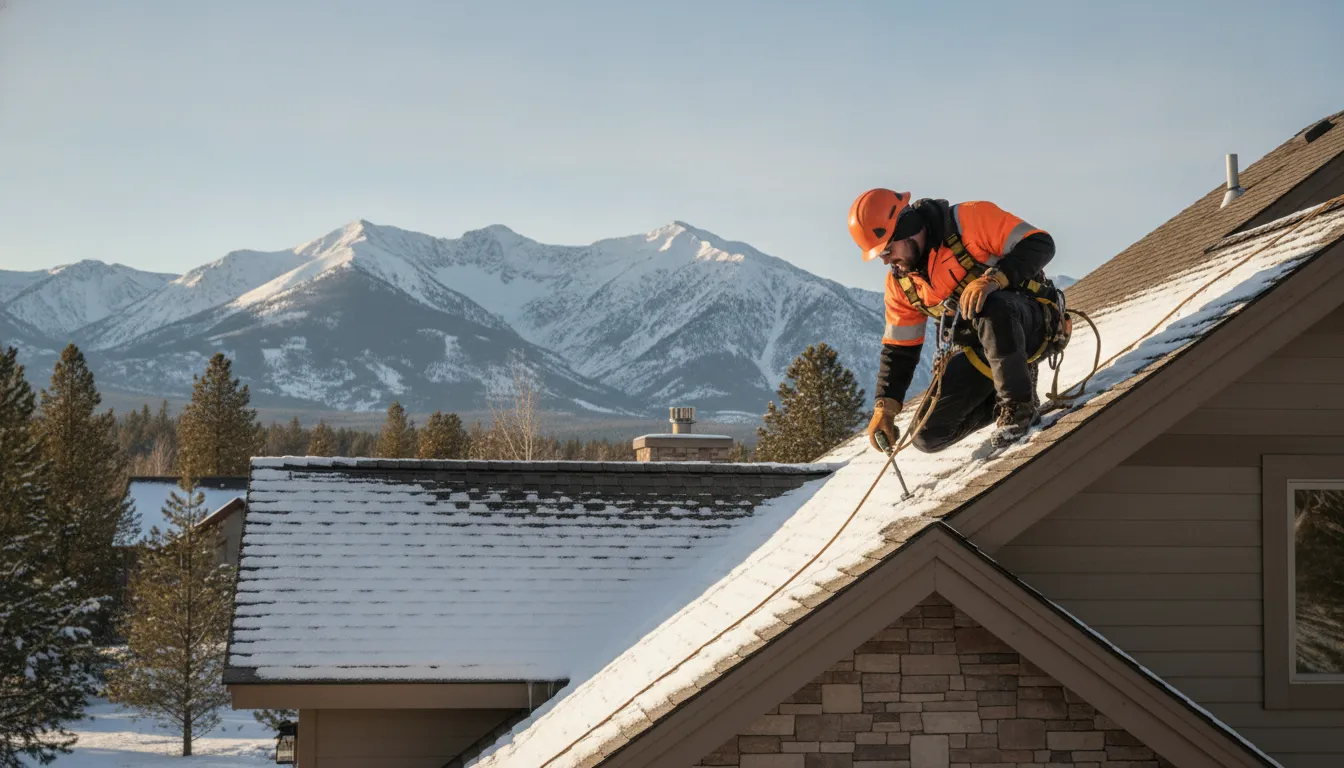
Montana Roof Inspection After Winter Storms
Montana snow can hide lifted shingles, weak flashing, and leaks until the spring thaw. A timely inspection finds that damage before runoff reaches the attic.
Montana roof inspection identifies damage caused by heavy snow, ice dams, repeated freeze-thaw cycles, and high winds before small defects become costly interior leaks. A qualified inspector checks shingles, ridge caps, flashing, penetrations, skylights, gutters, drainage, attic ventilation, insulation, structural sagging, and the underside of the roof deck. That full-system review matters because Montana law sets a minimum design roof snow load of 30 pounds per square foot after allowed reductions. The report should distinguish active leaks, storm damage, drainage problems, and maintenance needs, then explain which repairs deserve immediate attention and which can wait. Clear photographs and written findings help owners plan repairs, support insurance claims, and document roof condition for buyers, sellers, lenders, or property managers.
The key question is not whether Western Montana weather reaches your roof, but where its effects will appear first. To understand the warning signs and the value of prompt documentation, start with Why Montana roof inspection matters after snow, ice, and wind. Here’s how.
Why Montana roof inspection matters after snow, ice, and wind
A Montana roof inspection finds storm damage before spring rain drives water into the building. Winter can strain roofing in several ways at once. Snow adds weight, ice blocks drainage, and wind can loosen exposed materials. Damage may stay hidden until melting snow reaches a weak seam or flashing joint.
Snow load and ice dam stress
Heavy snow places steady pressure on the roof deck, framing, fasteners, and other parts. Montana law sets a minimum design roof snow load of 30 pounds per square foot after allowed reductions. The Montana Department of Labor and Industry explains this minimum, though local design needs may be higher.
Even a roof built for local loads can develop damage after repeated storms. An inspector looks for sagging, shifted materials, cracked flashing, and signs of stress inside the attic. These checks matter for homes and commercial buildings in Polson, Flathead Valley, Missoula, and Bitterroot Valley.
Ice dams create a different problem. Heat from the building can melt snow higher on the roof, while colder eaves let that water freeze again. The resulting ice can hold meltwater behind it. That water may then reach gaps near shingles, underlayment, roof edges, or flashing.
Spring thaw and drainage problems
Spring thaw can reveal trouble that was not clear during winter. Meltwater tests roof valleys, gutters, downspouts, penetrations, and low-slope areas for days at a time. Blocked drainage or damaged flashing can send water toward the roof deck instead of away from it.
A post-winter inspection should cover both the outside surface and visible areas below the roof. Water stains, damp insulation, soft decking, and rusted fasteners can point to an active or past leak. A professional roof inspection also records the condition of problem areas for focused roof repair services.
Local conditions shape where damage appears. Flathead Valley and Polson properties may face heavy snow and repeated freezing. Missoula and Bitterroot Valley roofs can also face snowmelt, wind, and debris from nearby trees. Each site needs a close review rather than a quick look from the ground.
Wind damage that is easy to miss
Strong wind may lift shingle edges, loosen ridge caps, bend metal panels, or pull flashing away from walls. Some damage settles back into place and looks normal from below. Yet the loosened part may no longer seal well during the next rain or thaw.
Owners should arrange an inspection after a strong wind event, especially when debris is on the roof or materials are found nearby. Interior leaks are not the only warning sign. New drafts, ceiling marks, loose gutters, and unusual roof sounds can also call for review.
Timely findings help owners choose focused repairs before small faults spread. They also create a clear record of roof condition after severe weather. A local Montana roofer can assess climate-specific wear and explain which items need prompt work or continued monitoring.
What winter weather does to a Western Montana roof
Western Montana winter weather does not stress a roof in just one way. Snow adds weight, while shifting temperatures move water into small gaps. Wind can loosen exposed materials, and poor drainage keeps meltwater where it can cause damage. A Montana roof inspection looks at how these forces work together, not only at visible surface wear.
Snow load and structural stress
Snow may look light when it first falls, but layers can build and compact. Montana law sets a minimum design roof snow load of 30 psf after allowed reductions. Local design loads may be higher, based on the site and the rules of the local jurisdiction.
Uneven snow can place added stress on valleys, roof edges, and areas beside upper walls. A roof that starts to sag may also change how water drains. Inspectors check the roof plane, framing clues, and the underside of the deck for leaks or rot. These checks help separate surface damage from a deeper structural concern.
Wind adds a different kind of pressure. Some Montana design criteria use a wind speed of 115 mph, which shows why fastening and roof integrity matter. Gusts can lift shingles, damage ridge caps, or open seams around exposed edges. Those openings may stay hidden beneath snow until melting water finds them.
Freeze-thaw cycles and ice dams
Freeze-thaw cycles push water into cracks, where it freezes and expands. Repeated cycles can widen gaps around shingles, fasteners, flashing, skylights, and other roof openings. Chimney flashing is another weak point because it joins materials that can move at different rates. Small defects can become leak paths during the next thaw.
Ice dams form when heat reaches the roof deck and melts snow higher on the slope. The water then runs toward colder eaves and freezes again. This ridge of ice can hold later meltwater behind it. The trapped water may work under roof coverings and reach the deck or interior.
Attic insulation and ventilation help limit heat transfer to the roof deck. They also help reduce the conditions that lead to ice dams and condensation. Building criteria recognize this winter risk through an ice barrier requirement for residential roofs in areas subject to snow and ice. An inspection checks whether key roof-edge details remain sound.
Flashing, ventilation, and drainage
Flashing directs water away from joints, walls, chimneys, and roof openings. Bent, loose, or poorly sealed flashing can let melting snow enter before a ceiling stain appears. Inspectors also check skylight seals and other penetrations before winter moisture tests them. Inside the attic, stains or damp decking can reveal leaks that the roof surface hides.
Drainage matters most when temperatures rise and snow starts to melt. Leaves and debris in valleys or gutters can trap moisture and block discharge. Water may then pool, refreeze, or flow behind roof-edge materials. Clear paths through valleys, gutters, and downspouts help move runoff away from the roof and building.
Winter damage is often a chain of small failures rather than one clear break. A loose shingle can admit water, while blocked drainage and another freeze make the damage worse. A thorough roof inspection checklist helps connect surface wear with attic, flashing, ventilation, and drainage findings. That full view supports timely repair decisions.
What should a professional Montana roof inspection include?
A professional Montana roof inspection should cover the whole roofing system, not just visible shingles. The inspector should assess how exterior materials, drainage, attic conditions, and the roof structure work together. This broad view matters where snow, ice, wind, and changing temperatures can expose small defects.
Exterior roofing and drainage
The exterior review starts with shingles or other roof coverings. The inspector looks for cracks, loose edges, missing pieces, worn surfaces, poor fastening, and signs of past repairs. Ridge caps and roof valleys also need close review because damage there can let water reach lower layers.
Flashing should be checked along walls, chimneys, valleys, and roof edges. The inspector should also examine every penetration, including plumbing vents, exhaust vents, and pipe boots. Skylight glass, frames, seals, and nearby flashing need the same care before winter moisture arrives.
Gutters, downspouts, valleys, and discharge points show whether water can leave the roof as planned. The review should note clogs, loose sections, poor slope, and drainage that sends water toward the foundation. Use this thorough roof inspection checklist to see the main exterior and interior items that deserve attention.
Attic and structural conditions
A sound Montana roof inspection also moves inside the attic when access is safe. The inspector should check ventilation paths, intake vents, exhaust vents, and insulation coverage. Weak airflow or uneven insulation can warm the roof deck and raise the chance of ice buildup near cold eaves.
The underside of the roof deck may reveal trouble that is not clear from outside. Dark stains, damp wood, rot, frost, rusted fasteners, or damaged framing can point to leaks or trapped moisture. The inspector should trace each sign toward a likely source instead of only recording the stain.
Structural checks include the roofline, rafters, trusses, decking, and visible supports. The inspector should note sagging, movement, cracked members, or areas stressed by past snow. The Montana Department of Labor and Industry requires a minimum design roof snow load of 30 pounds per square foot after allowed reductions.
Photos and the written report
The final product should be more than a quick verbal opinion. A useful report identifies each inspected area, records its condition, and explains defects in plain language. It should separate urgent safety or leak concerns from routine maintenance and longer-term planning items.
Clear photos should show both the full roof area and close views of each defect. Labels should state where the photo was taken and what it shows. This record can help owners compare future changes and support discussions after storms or during a property sale.
The written report should list inaccessible areas and explain why they could not be checked. It should also give practical next steps, such as repair, added review, or routine monitoring. When choosing a professional roof inspection company, ask for a sample report to confirm that its findings are specific and easy to use.
When should you schedule a roof inspection in Montana?
The best time for a Montana roof inspection depends on weather, property plans, and insurance needs. A set schedule helps find small defects before snow, wind, or melting water puts added stress on the roof.
Most owners should plan a routine inspection each year and add checks after severe weather. The right timing may vary by roof type and condition, as explained in the recommended frequency for roof inspections.
Seasonal inspection checklist
Use this sequence to plan inspections around Montana’s demanding weather cycle. It also creates clear records showing the roof’s condition before and after major events.
- Schedule a fall inspection before snow arrives. Have the inspector check flashing, seals, gutters, valleys, vents, and roof penetrations while they remain easy to reach.
- Request a check after major snow or wind. Call once conditions are safe if you notice sagging, drifting snow, loose materials, or indoor leaks.
- Inspect during the spring thaw. Melting snow can reveal drainage trouble, damaged flashing, weak seals, and moisture paths that stayed hidden during winter.
- Book an inspection before buying or listing property. The report can show current roof condition and help both parties plan for needed work.
- Plan around insurance deadlines. Arrange the visit early enough to receive photos, findings, and repair details before the carrier’s documentation due date.
Fall and post-storm priorities
Fall gives an inspector a practical window to find open seams, worn seals, blocked drainage, and loose materials before winter. This timing matters because Montana law sets a minimum design roof snow load of 30 pounds per square foot after allowed reductions.
A post-event inspection serves a different purpose. It looks for new changes, such as lifted shingles, damaged ridge caps, impact marks, leaks, or structural movement.
Do not climb onto a snowy, icy, or wind-damaged roof yourself. Note visible concerns from the ground, photograph indoor water marks, and let a qualified inspector assess unsafe areas.
Spring, real estate, and insurance timing
Spring thaw is a useful time to check how well water leaves the roof. An inspector can trace stains, assess valleys and gutters, and review the underside of the roof deck.
For a sale or purchase, schedule the inspection before negotiations or contingency deadlines become tight. A written condition report gives buyers and sellers a shared record instead of relying on a quick visual opinion.
Insurance work also requires prompt action. Ask the carrier what records it needs and when they are due, then schedule the inspection with time for reporting.
Keep prior reports, repair invoices, and dated photos together for comparison. A consistent record makes it easier to separate recent storm damage from older wear during the next thorough roof inspection checklist review.
Roof inspection red flags after storms, ice dams, and spring thaw
Storms and thaw cycles can expose damage that stayed hidden through winter. Start with a ground-level check after strong wind, heavy snow, or fast melting. A prompt Montana roof inspection can separate a small repair from a leak that reaches insulation, walls, or framing.
Urgent signs outside the home
Look across the roofline from a safe spot. A sag, dip, or uneven ridge can point to a structural problem after heavy snow. Keep everyone away from the area and call a professional at once. Montana sets a minimum design roof snow load, but actual snow weight and roof condition still vary.
Wind can lift shingles, tear ridge caps, and loosen flashing around chimneys or vents. From the ground, also check for bent gutters, blocked downspouts, and roofing pieces in the yard. Use a thorough roof inspection checklist to record each concern without climbing onto the roof.
- Call promptly for a sagging roofline, missing roof sections, broken flashing, or an active leak.
- Schedule an inspection for lifted shingles, damaged ridge caps, loose gutters, or debris packed in valleys.
- Watch for ice at the eaves, which may block meltwater and force it beneath roofing materials.
Leak clues inside the home
A roof problem may first appear indoors. Check ceilings and upper walls for new stains, damp drywall, peeling paint, or dripping water. Inspect the attic only when entry is safe. Look for wet insulation, dark roof decking, musty odors, frost, or daylight around roof openings.
Pay close attention below skylights, chimneys, vents, and roof valleys. Leaks near these points may signal failed seals or broken flashing. Ice dams form when roof heat melts snow that then freezes at colder eaves. Bozeman’s building criteria note that an ice barrier is required in areas subject to snow and ice.
During spring thaw, mark the edge of each ceiling stain and note the date. Take clear photos of damage outside and inside. These records help a roof inspector trace the path of water, which may travel far from its entry point.
What not to do after severe weather
Do not walk on a wet, icy, steep, or damaged roof. Avoid breaking ice dams with an axe or shovel because strikes can harm shingles and flashing. Do not pull snow from below power lines. Never enter an attic with standing water near wiring.
Place a container beneath a drip only if the room is safe. Do not cover stains, remove damaged materials, or make lasting repairs before the roof is assessed. Call a professional for active leaks, structural sagging, broad shingle damage, skylight leaks, or attic moisture that returns after drying.
A professional can check the roof surface, flashing, drainage, attic, and roof deck without adding risk. The inspection should also document storm and thaw damage for repair planning. Ask for urgent service when water is moving, the roofline has changed, or any part of the structure seems unsafe.
Montana roof inspection checklist by season
A Montana roof inspection schedule should follow weather events, not just the calendar. Fall preparation, winter snow, spring thaw, and strong winds can expose different weak points. Use this seasonal checklist to track visible changes from the ground and inside the attic. Leave steep, icy, or snow-covered roof surfaces to a trained inspector.
Seasonal inspection schedule
Start each check with photos of the same roof slopes, ceilings, and attic areas. Those images make new damage easier to spot. They also create a clear record for an insurer, buyer, seller, or repair contractor. For a broader review of roof parts and warning signs, use this thorough roof inspection checklist.
| Timing. | What to check. | Why it matters. |
|---|---|---|
| Fall, before the first major snow. | Gutters, valleys, flashing, vents, skylight seals, loose materials, attic airflow, and ceiling stains. | Clears drainage paths and finds weak seals before snow and ice cover the roof. |
| After heavy snow. | Uneven snow depth, new sagging, bowed framing, ceiling cracks, leaks, and doors that suddenly bind. | Finds signs of unusual roof stress while there is still time to limit harm. |
| After strong wind. | Missing or lifted shingles, loose metal panels, ridge caps, flashing, gutters, and debris impact. | Finds openings that may let later rain or melting snow reach the roof deck. |
| During spring thaw. | Ice at eaves, blocked downspouts, overflow marks, attic dampness, wet insulation, stains, and soft decking. | Shows where meltwater backed up, drained poorly, or entered the building. |
| Before real estate or insurance events. | Roof age, past repairs, active defects, storm photos, invoices, inspection reports, and remaining service life. | Provides a dated condition record for decisions, disclosures, coverage, and claims. |
Checks after snow and wind
Heavy snow deserves close attention because roof loads vary across Montana. State guidance sets a minimum design roof snow load after allowed reductions at 30 pounds per square foot. Local design needs may be higher. The Montana Department of Labor and Industry snow-load guidance explains how jurisdictions determine the required load.
Do not judge roof stress from snow depth alone. Wet, packed, and drifted snow can affect a roof differently than light powder. From a safe place, look for uneven roof lines, fresh ceiling cracks, and new leaks. Call a professional at once if the roof appears to sag or interior framing changes shape.
After strong wind, compare each visible slope with earlier photos. Look for shifted materials, bent flashing, loose gutters, and debris strikes. Check the attic during daylight for new pinpoints of light or damp areas. A small opening can stay hidden until the next rain or thaw sends water inside.
Documentation for property decisions
A real estate sale, policy renewal, or damage claim needs more than a quick visual check. Gather dated photos, repair invoices, warranty details, and past reports before the inspection. Ask the inspector to separate active defects from older repairs and normal wear. Clear records help each party understand the roof’s current state.
Keep one folder for every seasonal check and weather event. Label images by date and roof area, then note any change since the last review. If an inspection finds damage, record the repair and take follow-up photos. This simple record helps show when a problem began and whether the fix held.
How to choose a certified roof inspector in Western Montana
Local climate knowledge
Start by asking how the inspector assesses roofs exposed to Western Montana weather. A qualified inspector should understand heavy snow, ice dams, wind damage, and repeated freeze-thaw cycles. They should also know where these forces tend to damage flashing, fasteners, valleys, drainage paths, and roof edges.
Local code knowledge matters too. Montana law sets a minimum design roof snow load of 30 pounds per square foot after allowed reductions. Ask how the inspector uses this state snow load guidance when noting structural concerns. The inspector should explain concerns clearly without claiming to replace an engineer.
Experience in Polson, Flathead Valley, Missoula, or Bitterroot Valley can help an inspector spot local weather patterns. Ask for examples from similar roofs and recent storms. Their answers should address your roof material, slope, age, exposure, and past repair work.
Standards, scope, and certification
Confirm which formal inspection standard the inspector follows and request a written scope before the visit. The scope should cover roof surfaces, flashing, penetrations, drainage, visible structure, and the underside of the roof deck. Use a thorough roof inspection checklist to compare the promised scope with the finished work.
Ask what the inspector’s certification means and whether it is current. A useful credential should require a consistent inspection method, clear findings, and professional documentation. Also verify liability insurance and any coverage needed for inspection errors before signing an agreement.
Inspection and roof certification are not the same service. An inspection records current conditions, while a certification addresses roof performance and remaining useful life. Ask whether the inspector can issue a roof certification after needed repairs, and learn what limits or terms apply.
Reports built for decisions
A strong report should help a homeowner, buyer, seller, insurer, or repair contractor understand the same roof. Before hiring, request a sample report with private details removed. Check whether it separates observed damage, maintenance needs, safety concerns, and items that need more review.
- Look for dated photos tied to exact roof areas and defects.
- Expect plain descriptions of likely causes, urgency, and next steps.
- Confirm the report states inspection limits and inaccessible areas.
- Ask whether the inspector can support insurance or real estate questions.
Turnaround time also matters during a claim or property sale. Ask when the written report will arrive and how urgent findings are shared. A dependable professional roof inspection company should give a clear schedule before the inspection starts.
Finally, compare inspectors by the quality of their process, not by price alone. Ask who performs the fieldwork, who reviews the report, and how questions are handled. Clear answers show whether the Montana roof inspection will produce records that others can use.
Frequently Asked Questions
How often should I get a roof inspection in Montana?
Schedule a professional Montana roof inspection at least once a year, preferably before winter. Arrange another inspection after hail, high winds, heavy snow, or visible ice dams. Annual checks help find small maintenance issues before they worsen. Between visits, inspect gutters twice yearly and watch for leaks, missing shingles, or sagging.
Can I use drone technology for my roof inspection?
A drone can safely capture detailed images of steep, icy, or difficult-to-reach roof areas. However, images alone cannot reveal soft decking, hidden moisture, attic ventilation problems, or insulation concerns. A complete inspection should combine aerial images with close exterior checks and an attic assessment when access and conditions allow.
Why is a roof inspection important before selling my home?
A pre-sale roof inspection documents the roof’s condition and identifies repairs that could delay negotiations or closing. A roof certification can also verify remaining useful life for buyers, lenders, and insurers. Clear findings help sellers address defects early and give all parties a shared record of the roof’s condition.
Is a professional roof inspection necessary in Montana?
A professional inspection is especially useful after severe weather, before a property sale, or when leaks and sagging appear. Trained inspectors can assess drainage, flashing, attic conditions, and structural warning signs that are easy to miss. Montana also requires a minimum design roof snow load of 30 psf after allowed reductions, according to the Montana Department of Labor and Industry.
Ready to Schedule Your Montana Roof Inspection?
Waiting until the next heavy snowfall or storm can allow hidden roof damage to worsen and leave you facing a more disruptive repair. Starting now gives you time to understand your roof’s condition, address urgent concerns, and plan needed work before harsh weather returns. A professional inspection can replace uncertainty with a clear path for protecting your Western Montana property.
Do not wait for a leak or visible damage to force a rushed decision. Schedule a professional Montana roof inspection to identify concerns and understand your next steps. Request your inspection now so you can plan repairs on your timeline, not during the next storm.


Comment (0)