Metal Roof Inspection California: The Essential Guide
Standing seam and metal panel roofs are built for durability, but they still need informed care. Southern California sun, coastal air, seasonal rain, wind, and nearby wildfire conditions can expose weaknesses at fasteners. Seams, flashings, coatings, and drainage points before a leak reaches the living space.
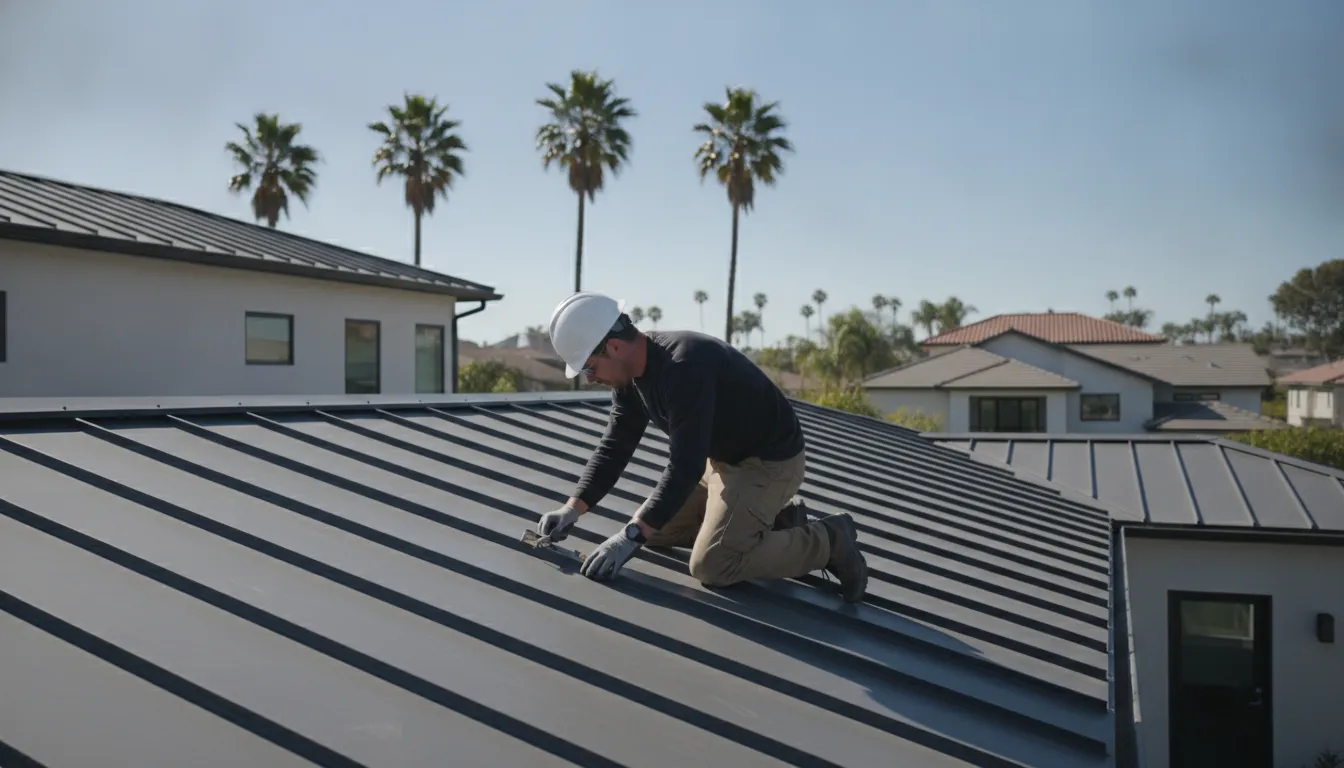
A professional metal roof inspection California homeowners can rely on examines panels, fasteners, seams, penetrations, flashing, drainage, corrosion, and signs of movement or water intrusion. Regular inspections help identify minor defects early, support long-term roof performance, and give you objective information before repairs become urgent.
Whether your home is in Orange, Anaheim, Irvine, Santa Ana, or another Southern California community. The inspection should account for the way metal roofing responds to local weather and installation conditions. The first step is understanding why a metal roof requires a specialized evaluation rather than a quick visual check.
Why Metal Roofs Need Specialized Inspection in Southern California
Metal roofing is not simply a smoother version of tile or composition shingles. Standing-seam and exposed-fastener panel systems rely on connected panels, seams, clips, flashings, and fasteners that move as temperatures change. An effective inspection must evaluate how those components work together, rather than looking only for cracked tiles, missing granules, or lifted shingles.
Thermal movement changes the inspection priorities
Metal expands when heated and contracts as it cools. Southern California roofs can experience intense direct sun during the day followed by cooler nighttime temperatures. Repeated movement can stress seams, penetrations, clips, panel laps, and fastener holes. Inspectors look for buckling, oil-canning, distorted panels, gaps, and sealant that has lost flexibility. A panel may still appear intact from the ground while movement has begun to compromise a connection or flashing detail.
Fastener systems also require a different approach from adhesive-based roofing components. Depending on the roof design, panels may use exposed screws with washers, concealed clips, or other mechanical connections. The inspection checks for missing, loose, overdriven, or improperly seated fasteners, as well as compatibility between fastener materials and the panel finish. Adhesive alone cannot compensate for a failed mechanical connection, and adding sealant over a problem may conceal rather than correct it.
Southern California exposure adds regional risk
Wind is a key concern during Santa Ana conditions. The U.S. Department of Energy’s building guidance notes that metal panels should provide uplift resistance appropriate to the site’s design wind speed and exposure. Coastal properties in Orange County and San Diego also face salt-laden air, which can accelerate corrosion at cut edges, dissimilar-metal contacts, scratches, and fastener points. Those details deserve close attention even when the broad panel surface looks clean.
Metal roofing can provide durable, weather-resistant cladding against wind, water intrusion, hail, and wildfire when properly selected and installed. It is also fire-resistant, an important advantage in California’s wildfire-prone areas. Those benefits do not eliminate inspection needs. Windborne debris, heat, smoke, corrosion, and water can still expose weaknesses at seams and penetrations. A specialized inspection considers the roof assembly, attachment method, local exposure, and installation history together.
For ongoing protection, pair professional evaluations with annual metal roof maintenance suited to the property’s coastal, inland, or high-wind conditions.
What a Professional Metal Roof Inspection Looks For
A professional inspection follows a consistent path from the visible metal panels down to the roof structure and into the living space. The goal is not simply to spot rust. It is to identify how water, movement, fasteners, ventilation, and supporting materials are affecting the entire roofing system.
Panel condition, alignment, and fasteners
The inspector first reviews the panels for straight, uniform alignment, dents, scratches, deformation, coating breakdown, exposed edges, and signs of corrosion. Panels that have shifted or buckled may reflect expansion and contraction, impact, installation problems, or movement below the surface. Visible perforations or metal loss require prompt attention because they create a direct path for water intrusion.
Every accessible fastener is checked for tightness, proper placement, missing hardware, and overdriving. Fasteners must also be compatible with the panel finish. Incompatible materials can trigger galvanic corrosion, allowing deterioration around the fastener and eventually weakening the panel connection. This detail is easy to miss during a casual visual review but is central to a reliable inspection.
Flashing and penetration seals
Vents, skylights, chimneys, curbs, and other roof penetrations receive close attention because each opening interrupts the panel system. The inspector checks whether flashing is securely installed, whether seams have gaps, and whether sealants have separated, cracked, or deteriorated. Flashing must also integrate correctly with the underlayment so water is directed away from the opening rather than trapped beneath the panels. The U.S. Department of Energy’s Building America Solution Center identifies properly integrated flashing and underlayment as part of a durable metal roof assembly: metal roof installation guidance.
Structure and underlayment
Where access allows, the inspection includes trusses, rafters, and the roof deck. Cracks, splits, sagging, rot, warping, or other structural changes can affect panel alignment and indicate a deeper repair need. The underlayment is checked for exposed areas, tears, gaps, improper installation, and deterioration. It serves as an important secondary water barrier if panels are damaged or displaced, so a sound-looking exterior does not automatically mean the system is protected below.
Drainage, ventilation, and interior evidence
Ridge and soffit vents should remain unobstructed, and the inspector looks for moisture intrusion around vent openings. Gutters and downspouts are reviewed for debris, blockages, poor slope, separation, and discharge problems. Inside the building, water stains, discoloration, mold growth, damp insulation, peeling paint, or musty odors can reveal an active or historic leak even when the exterior appears dry.
Use this metal roof inspection checklist as a starting point, but do not treat it as a substitute for safe, professional evaluation of concealed conditions.
Common Metal Roof Issues Found During Inspections
A professional inspection often finds small defects that can become expensive if water reaches the roof deck, insulation, or interior finishes. The repair cost depends on the number of affected panels, accessibility, surrounding damage, and whether the underlying structure also needs work.
Fasteners, movement, and panel distortion
Popped, loose, or missing fasteners are common trouble spots. They can allow water beneath the panels, while poorly seated fasteners may enlarge their holes as the roof moves. Thermal expansion and contraction can also cause buckling, oil-canning, or warping. A limited fastener repair is generally less costly than correcting widespread movement, replacing panels, or repairing wet materials below the roof.
An inspector also looks for dents, scratches, and other deformations caused by hail, falling branches, foot traffic, or equipment. A shallow cosmetic dent may require monitoring, but a deep crease or damaged seam can compromise drainage and watertightness. Costs rise when several panels must be replaced or matching the existing finish is difficult.
Corrosion and coating breakdown
Galvanic corrosion can develop when incompatible metals contact one another, including mismatched fasteners, flashing, or accessories. Exposed sheet edges are especially vulnerable. Rust, oxidation, peeling, or coating breakdown means the protective surface is no longer performing as intended. Localized surface treatment may be appropriate in an early stage, while advanced corrosion can require panel replacement and substrate repairs.
Standing water accelerates corrosion because prolonged moisture keeps the metal wet and can expose weak points in the finish. Correcting the drainage problem may involve clearing obstructions, adjusting details, or addressing slope and framing. That makes ponding repairs potentially more involved than treating the visible rust alone.
Perforations and impact damage
Visible perforations are a severe water-ingress risk and should not be treated as a cosmetic issue. Impact damage can create holes, split seams, or distort panels enough to redirect water. The final cost depends on whether the damage is isolated, whether insulation or decking is wet, and how far moisture has traveled. Metal roof leak detection can help trace concealed moisture before repair decisions are made.
A Metal Roof Maintenance Schedule for Southern California Homeowners
A consistent maintenance plan helps a metal roof keep performing between professional evaluations. Routine inspection can protect performance, reduce leak risk, and help preserve applicable warranty coverage, even when the roof system is designed for a long service life. Use this schedule as a practical starting point, then follow the maintenance requirements provided by your roof manufacturer.
-
Schedule a professional inspection twice a year
Arrange one professional inspection in spring and another in fall. A qualified inspector can identify loose or missing fasteners, panel movement, sealant failure, coating wear, and drainage problems before they become active leaks. The inspection should also include ventilation, roof penetrations, flashing, and areas that are difficult or unsafe for a homeowner to access. This bi-annual approach supports the roof’s performance and may help preserve warranty requirements. For a broader list of tasks, use this metal roof inspection checklist.
-
Clear gutters and downspouts during each seasonal visit
Remove leaves, roof debris, and other blockages from gutters and downspouts. Confirm that gutters have a functioning slope and that downspouts direct water away from the foundation. Poor drainage can leave water against roof edges and building components, while blocked outlets can contribute to overflow during Southern California rain events.
-
Check valleys, low spots, and ventilation
Inspect valleys and low areas for accumulated debris that could impede water flow or create localized corrosion. Also confirm that ridge and soffit vents are unobstructed and that there are no signs of moisture intrusion around vent openings. Good airflow helps limit moisture buildup in the roof structure. The annual metal roof maintenance guide can help organize recurring seasonal work.
-
Inspect coatings, sealants, and fasteners before small defects spread
Look for early rust or oxidation, peeling or damaged coating, and failed sealant around penetrations and seams. Have compatible coating touch-ups applied where appropriate, and have a professional re-torque loose fasteners rather than tightening them indiscriminately. Overdriven or incompatible fasteners can damage panels and contribute to leaks or galvanic corrosion. Sealant should be replaced when it has cracked, separated, or lost adhesion.
-
Perform an after-storm inspection
After strong weather, especially a Santa Ana wind event, check from the ground for displaced panels. Lifted flashing, new dents, loose debris, overflowing gutters, or water stains inside the home. Do not walk on a wet or damaged roof. Instead, schedule an inspection promptly so concealed damage can be documented and addressed. Routine maintenance is generally less expensive than allowing a minor defect to develop into extensive water damage or a major repair.
Repair vs. Replace: When to Replace Damaged Metal Roof Panels
The right choice depends on whether the defect is isolated and correctable or evidence of a broader system failure. A professional inspection should assess the panel, fasteners, coating, underlayment, and roof deck together before recommending repair or replacement.
| Condition | Repair Recommended | Replace Recommended |
|---|---|---|
| Loose or missing fasteners | Replace individual fasteners with compatible, properly seated fasteners when the panel remains sound. | Replace the panel if enlarged holes, torn metal, or repeated fastener failure prevents a secure connection. |
| Localized sealant failure | Remove failed sealant and reseal the isolated joint, penetration, or flashing with compatible materials. | Replace the affected panel or flashing when movement, gaps, or substrate damage prevents a durable seal. |
| Isolated rust or coating breakdown | Clean, treat, and recoat limited surface oxidation when the metal remains structurally intact. | Replace areas where corrosion has caused substantial metal loss or the protective coating has broadly failed. |
| Visible perforations | Use a temporary measure only when needed to limit immediate water entry while planning permanent work. | Replace perforated panels because holes or metal loss create a direct water-intrusion risk. |
| Widespread corrosion | Repair only a clearly limited area after confirming surrounding panels and connections are sound. | Replace panels or larger roof sections when corrosion is recurring, extensive, or affecting structural performance. |
| Panel buckling or distortion | Correct a minor, localized issue only after identifying the cause, such as fastener stress or movement. | Replace panels that are permanently warped, impact-damaged, or no longer shed water correctly. |
| Compromised underlayment or deck | Repair limited underlying damage when the panel can be removed and reinstalled without loss of integrity. | Replace panels as needed to access widespread rot, gaps, sagging, or deteriorated underlayment and decking. |
| Multiple failed previous repairs | Rework a patch only when the original cause is understood and the panel is otherwise serviceable. | Replace the panel or section when repeated patching indicates the repair approach is not lasting. |
| Storm damage | Repair minor dents or displaced components when seams, fastener holes, and panel geometry remain intact. | Replace panels with punctures, severe deformation, uplift damage, or compromised connections. |
Panel gauge and thickness affect whether a repaired fastener or seam can hold securely. The extent of corrosion, the condition of the underlayment and deck, and the number of affected panels also change the cost comparison. Early defect identification can prevent accelerated deterioration, while prior patches deserve careful review because they may be prone to repeat failure. For additional context, review this metal roof leak detection guide and ask about a metal roof certification when documentation of roof condition is needed.
Frequently Asked Questions
How much does a metal roof inspection cost in California?
The price depends on roof size, pitch, accessibility, number of penetrations, roof age, and whether the inspection includes leak tracing or certification documentation. A proper evaluation should be based on the roof’s condition and scope, not a one-size-fits-all price. Schedule an inspection so the required work can be assessed accurately.
Do I need a professional inspection for my residential metal roof?
Yes, especially after severe weather, when buying or selling a home, or when you notice leaks, corrosion, loose fasteners, stains, or panel distortion. A professional can assess areas that are difficult or unsafe for homeowners to reach, including flashing, fasteners, underlayment, drainage paths, and structural supports.
How often should I schedule a metal roof inspection in Southern California?
Arrange routine inspections as part of ongoing maintenance, and schedule an additional evaluation after high winds, hail, falling branches, or nearby wildfire exposure. Regular inspections help identify minor defects before they become leaks or accelerated deterioration, and they can help preserve applicable warranty coverage.
Does an inspection include leak detection and drainage assessment?
It should. The inspection can trace visible or suspected water entry and examine flashing around vents, skylights, and other penetrations. It should also check gutters, downspouts, valleys, low spots, and ponding because blocked or inadequate drainage can contribute to localized damage and corrosion.
What is the difference between a roof inspection and a roof certification?
An inspection documents the roof’s current condition, including defects and maintenance or repair needs. A roof certification is a separate professional statement prepared for a defined purpose, such as a real estate transaction, and may require specific documentation or conditions. Ask which service and report format your situation requires.
Ready to schedule a metal roof inspection?
A professional inspection can help you understand your roof’s current condition and prioritize maintenance before small issues affect its performance. If your home has a standing seam or metal panel roof in Southern California, schedule a metal roof inspection with Cert-A-Roof. The inspection-first process gives you clear information about recommended next steps without pressure to commit to unnecessary work.
Comment (0)