
Roof Storm Damage Insurance Claim California: A Complete Guide
A severe wind storm can tear shingles off a California roof in minutes. Before you call your insurer, you should schedule a roof inspection with Cert-A-Roof today to get clear proof of the damage.
A roof storm damage insurance claim California process requires immediate photo proof, prompt storm loss notification, and a professional roof inspection before the insurance adjuster visits your property. According to the official California Department of Insurance website, you are responsible for taking reasonable steps to protect your property from subsequent damage after a severe storm. Be sure to document these temporary repairs, save all your receipts for bought materials, and avoid making extensive permanent repairs until after the adjuster has inspected the roof. Hiring an independent certified expert to conduct a thorough forensic roof inspection before that visit provides the clear and objective evidence you need to avoid unfair claim denials.
How do you successfully navigate this complex local insurance process to get your roof fully repaired? The path to a successful claim settlement begins with Documenting Storm Damage After a California Storm. Here is how you can gather the vital proof needed to protect your home.
Documenting Storm Damage After a California Storm
High winds and heavy rain can cause severe roof damage in Southern California. When a major storm hits your home, you must act fast to protect your family and property. Proper proof is the first step toward a successful roof storm damage insurance claim California carriers will approve. This clear documentation ensures you get the full coverage you need to restore your home.
Safety first during damage checks
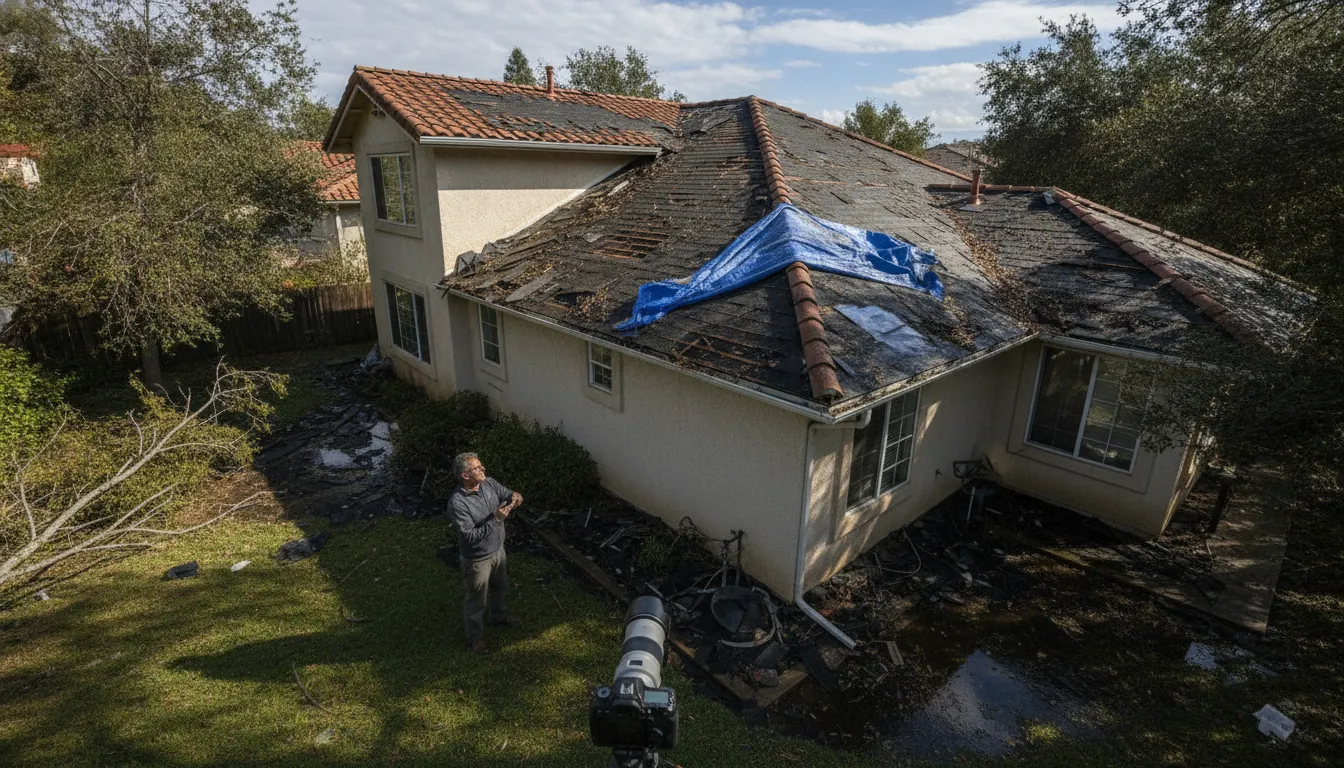
Never climb onto a wet or damaged roof because of the extreme fall risk. Roof surfaces are slick and unstable after a heavy storm. Instead, check things from the ground using a camera zoom to spot cracked or missing shingles. Your personal safety is far more valuable than any piece of property.
Photo and video evidence from the ground
Start by taking clear photos and videos of your entire yard, fences, and gutters. Next, focus on the roof line to find dented metal, broken tiles, or loose flashing. Take shots from several different angles to show the full scope of the storm damage. You must do this as soon as the weather clears and it is safe.
Insurance carriers require strong, clear proof of damage before they will pay a claim. To get the best results, you should schedule a forensic roof inspection for storm damage before filing. Professional inspectors find hidden leaks that are hard to see from the ground. This detailed proof will make your insurance claim much stronger and help prevent denials.
Temporary roof protection and receipt tracking
Once you have photos, you must protect your home from more water damage. According to the California Department of Insurance guidelines, you are responsible for taking reasonable steps to secure your property after a loss. This often means using plastic sheeting or plywood to cover any holes in the roof. If you do not, your insurer might deny coverage for any subsequent damage that occurs.
Be sure to track all the money you spend on these temporary fixes. Buy basic supplies yourself, save every receipt, and avoid making permanent repairs before the adjuster visit. Insurers will usually pay you back for reasonable costs to protect your home if you save your receipts. This detailed documentation ensures you get back every dollar you spent on safety steps.
How the Roof Insurance Claims Process Works
Filing a roof storm damage insurance claim California homeowners submit after a storm is a multi-step process. The process has many stages that you must handle with care. Knowing what to expect helps you avoid common pitfalls and gets the coverage you need to repair your home. From the first check to the final payout, each step needs careful records.
Professional pre-inspection benefits
Before you contact your insurance company, you should have a clear picture of the damage. Getting an expert roof inspection for insurance helps you prove the exact state of your roof. A trained inspector can spot hidden issues that an untrained eye might miss. They provide a detailed report that serves as a solid guide for the claims adjuster.
An expert roof inspection provides you with photo proof and a clear repair estimate. State boards, lenders, and insurers all accept this standardized proof. Having this proof on hand prevents the insurer from claiming the leaks are from old wear and tear.
Step-by-step claims timeline
The path from storm damage to a finished roof has some key steps. Following these steps in order helps prevent delays and ensures a smoother process with your carrier.
- Schedule an expert roof inspection. Have a trained pro inspect your roof to find all wind and water damage before you contact your carrier.
- Contact your insurance company. Call your carrier to report the loss and start your claims timeline. Write down the exact date of the storm so you can share it with them.
- Submit your initial proof. Send your insurer the inspection report, photos, and any emergency repair details to support your case. This helps speed up the review.
- Host the insurance adjuster. Walk the property with the adjuster during their visit to point out all noted damage. Do not make permanent repairs before this visit.
- Review the scope of loss. Compare the adjuster’s list of repairs with your pre-inspection report to ensure no damage is missed. Both parties must agree on this scope.
- Receive payment and complete repairs. Use the first check to start the work with your contractor. Once the repairs are done, submit final invoices to recover your withheld depreciation refund.
Payout and repair guidelines
Managing repairs while your claim is pending takes careful planning. According to the California Department of Insurance, you must not make permanent repairs until the adjuster inspects the roof. You must protect your home from more water damage, so use tarps and save every receipt. Once the adjuster approves the scope, your insurer will issue a payment that reflects replacement cost minus depreciation.
Your policy likely covers either Actual Cash Value or Replacement Cost Value. If you have a replacement cost policy, the insurer holds back depreciation until the work is complete. You must submit final proof of repair to get this withheld amount. Choosing a trusted local contractor to do the repairs ensures that your work meets city building codes.
California-Specific Roof Insurance Rules
Southern California weather can be harsh on your home. Heavy winter storms and strong Santa Ana winds are the most common causes of roof storm damage in this region. When you file a roof storm damage insurance claim California law has rules you must follow. State codes set strict limits on how you must act and how your insurer must respond.
California notification timelines
California law sets clear rules for when you must report a loss. For most homeowner plans, you have a time limit of one year from the date of loss to file your claim. It is best to act much faster to avoid claim delays. Waiting too long can make it hard to prove that a certain winter storm caused the leak.
State insurance codes also force insurers to move fast. Insurers must reply to your claim notices and guide you through the next steps without delay. Before you start final work, you should secure your home from more storm damage. You can use plastic sheeting or plywood to cover any open holes.
The California Department of Insurance notes that your insurer can deny coverage for later damage if you do not protect your home. Keep all receipts for short-term fixes because the insurer should pay you back for these costs. But do not make big final repairs until the adjuster has visited your home to inspect the damage. The adjuster must see the raw storm damage to assess your claim fairly.
The roof replacement rule
California building codes have a rule that impacts how insurers pay for a new roof. This is often called the 25 percent rule. Under many local building codes, if a storm damages more than 25 percent of a roof area, you must replace the entire roof structure. You cannot just patch the damaged spot.
If your plan covers code upgrades, the insurer must pay to replace the whole roof to meet this law. This rule can turn a small patch job into a full roof replacement. Local codes are very strict about this rule because old shingles do not mix well with new ones. An expert forensic roof inspection for insurance claims will measure the damage to see if your roof meets this 25 percent limit.
Common Reasons Roof Claims Get Denied and How to Appeal
Filing a roof storm damage insurance claim California homeowners submit can sometimes end in a denial. Insurance companies look for any reason to reduce their payouts or reject claims completely. Knowing why insurers deny claims can help you prepare a stronger case or fight back if you face a rejection.
Primary Causes of Denial
The most common reason for a denial is pre-existing damage. Insurers often claim that old wear and tear caused the leak, not a recent storm. They look for old rot, cracked tiles, or poor maintenance to avoid paying for repairs. You must show that new storm winds or rain caused the actual damage.
Other major hurdles include bad documentation and missed deadlines. Insurers need detailed evidence of the loss before they pay. If you do not send photos or miss the state filing window, they can deny your claim. They also need a formal proof of loss statement to see what they must pay.
The Role of Forensic Documentation
To fight a denial, you must give clear proof. A standard roofing estimate is often not enough to change an insurer’s mind. You need expert reports that separate old wear from sudden wind or water damage. This is where a forensic roof inspection for insurance claims becomes vital.
Specialized inspectors compile reports that follow strict industry standards. Their detailed files map every damaged tile, leak path, and storm effect. This physical evidence is built to satisfy insurance adjusters, lenders, and state regulators. It leaves no room for the insurance company to argue or delay your claim.
Steps to Appeal a Denied Claim
If your insurer denies your claim, you have the right to appeal. First, read the denial letter carefully to see why they rejected it. You can then ask the company to send a different adjuster for a new inspection. Present your forensic report to show the real cause of the damage.
Keep a detailed log of all phone calls and emails with your insurer. Write down the date, time, and name of every person you talk to during the appeal. Store all paper letters in a safe place for quick reference. These records are vital if you must escalate your dispute to state regulators.
When the insurer still refuses to work with you, you can hire outside help. A public adjuster can take over your claim and speak on your behalf. They charge a fee that is usually 10 to 20 percent of your settlement. Their help is often the best way to resolve deep disputes and get your roof fixed.
Cost Factors in a Roof Storm Damage Insurance Claim
Filing a roof storm damage insurance claim in California can be stressful. Your total out-of-pocket costs depend on your policy details and the quality of your initial damage report. You must understand these key cost factors to protect your home and your budget.
California policy deductibles
Most home insurance policies in California have a deductible. This is the amount of money you must pay before your coverage starts. In California, this deductible is usually a percentage of your total dwelling limit.
This amount is often one to two percent of your dwelling coverage. For example, if your home has three hundred thousand dollars of coverage, a two percent deductible is six thousand dollars. You must pay this six thousand dollars out of pocket before the insurer pays for your roof repairs.
Replacement cost versus actual cash value
Your policy type will decide how much your insurer pays for your new roof. A replacement cost value policy pays the full cost to restore your roof to its original state. But an actual cash value policy only pays for the roof’s worth today. The insurer will subtract depreciation based on the age and wear of your roof.
If an old roof has lost half of its life, you may only get half of the replacement cost. In these cases, a forensic roof inspection for insurance claims is helpful. It gives the insurer clear proof of the real storm damage so they do not over-apply depreciation.
Sometimes, contractors find more storm damage after they start the repair work. If this happens, your roofing contractor can submit a supplemental claim to the insurer. This claim asks for more funds to cover the newly found damage. A detailed roof inspection for insurance purposes gives you the clear proof needed to support these extra costs.
Reimbursement for temporary roof repairs
If a storm causes a leak, you must act fast to protect your home. Under California insurance rules, you must take reasonable steps to prevent more damage. This includes using plastic tarp or plywood to cover the holes in your roof. If you do not secure your home, the insurer may deny coverage for any new water damage.
You should save all receipts for the materials you buy for these temporary repairs. According to the California Department of Insurance property claim guide, the insurer will reimburse you for these reasonable costs. Do not make permanent repairs until an adjuster looks at the roof.
How a Professional Roof Inspection Helps Your Insurance Claim
Filing a roof storm damage insurance claim California homeowners face can feel hard. Getting a professional to inspect your roof first can help. You should not wait for the insurance company to send their own adjuster. When you schedule a professional inspection, you get an expert who works for you. This expert finds and lists all the damage before anyone else walks on your roof.
Pre-adjuster inspection advantages
The California Department of Insurance says you must take clear steps to protect your home from more damage after a storm. A professional can find small leaks and issues that you might miss from the ground, ensuring your home stays safe.
An expert roof inspection helps write down all storm damage correctly before the adjuster arrives. If you wait, minor issues can grow into big leaks. Also, adjusters are busy and might miss hidden damage. A detailed report from a roofing expert makes sure that every single problem is on record. This helps to protect your right to a fair claim payout and full coverage for your repairs.
Forensic roof assessment process
At Cert-A-Roof, we use a clear, step-by-step service flow to help you with your claim. The full process starts with a professional roof inspection for insurance. We then do a forensic assessment, write down the details, and plan the roof repairs. This careful order ensures that we record every wind-torn shingle and hail dent before anyone touches the roof to fix it.
Our team has over 30 years of roof inspection work in Southern California. We know how to tell the difference between normal wear and tear and sudden storm damage. Led by Paul Watrous, President of Cert-A-Roof and the National Roof Certification and Inspection Association (NRCIA), we inspect with great care. We look for wind uplift, debris impacts, and hidden water pathways that can ruin your roof deck over time.
Why specialized documents carry weight
The reports we write are not just simple repair quotes. Our forensic documents are designed to be accepted by insurance companies, lenders, and regulatory bodies. When we write down our findings, we include photos, measurements, and clear proof. This detailed proof carries more weight with your insurance firm.
Our detailed reports can help you avoid claim delays or denials. Insurers often deny claims by saying the damage is old. But our forensic files show the true cause and timing of the storm damage. For disputes, a forensic roof inspection for insurance claims gives you the solid proof you need to support your case.
Frequently Asked Questions
How do I file a roof storm damage insurance claim California insurers will approve?
To file a roof storm damage insurance claim California insurers will approve, start by documenting all visible damage immediately from the ground. Next, contact your insurer to report the loss and schedule a professional roof inspection. A certified inspector will provide forensic-level photos and documentation to support your claim before the adjuster visits. This clear proof helps ensure your insurer pays the full cost of needed repairs.
Can I make permanent roof repairs before the insurance adjuster visits?
No, you should not make permanent roof repairs before the insurance adjuster inspects the storm damage. According to the California Department of Insurance, policyholders must avoid extensive permanent fixes until after the adjuster assesses the roof. However, you should make temporary repairs, like putting up plastic sheeting, to protect your home from more water damage. Save all material receipts because your insurer will generally reimburse these emergency mitigation costs.
Does insurance cover the cost of a pre-claim roof inspection?
Most insurance companies do not pay for the initial roof inspection directly. However, getting a professional inspection before the adjuster visits is highly recommended. A detailed, forensic report from a specialized inspector helps you document the storm damage accurately. This proof can prevent claims delays and support your case if the insurer denies your claim later. If repairs are approved, the inspection findings help define the full scope of work.
What happens if my roof storm damage claim is denied?
If your insurer denies your roof storm damage claim, you have the right to appeal the decision. You can request a second inspection or file a formal dispute with your insurance provider. You should get a forensic roof inspection to gather clear, professional evidence that contradicts the denial. In California, you can also contact the California Department of Insurance for help if your insurer refuses to resolve the dispute fairly.
Ready to schedule your professional roof inspection?
If you wait too long to file your California storm damage claim, your insurance provider might deny coverage and reject your roof repair claim entirely. Waiting too long also lets rainwater seep deep into your ceiling, which causes active mold growth and very costly structural wood rot on your property. Getting a professional forensic inspection now gives you the clear, documented proof you need to protect your Southern California home before the adjuster visits.
Ready to book? Please contact the Cert-A-Roof team today to schedule your professional roof inspection. Our certified inspectors will help you protect your home and guide you through the entire California insurance claims process. We are here to help you get the best outcome.
Comment (0)