Gutter Maintenance Roof Damage: How Clogged Gutters Harm Your Roof
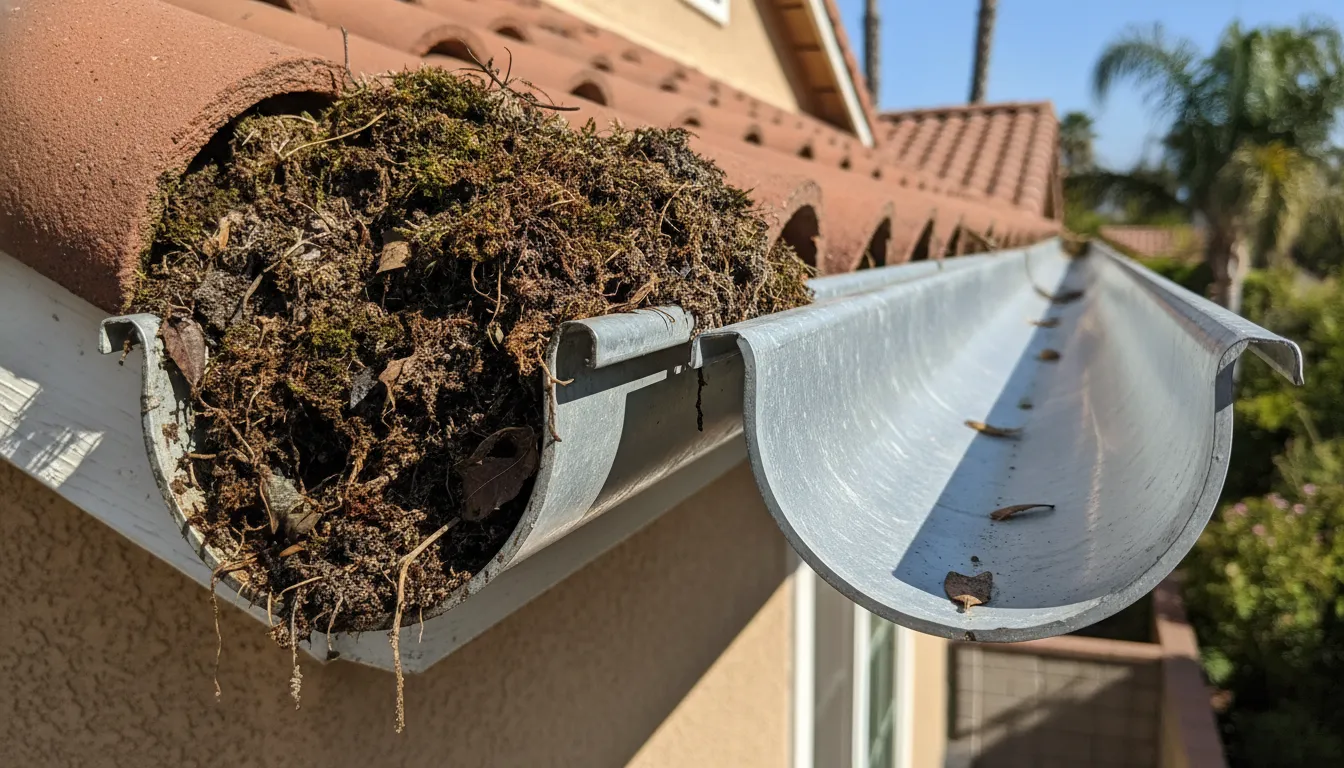
Clogged gutters may seem like a minor household nuisance, but the damage they cause to your roof can run into thousands of dollars. When leaves, twigs, and debris block your gutter system, rainwater backs up under your shingles and rots the wooden deck beneath your roof. That slow, hidden decay is exactly how gutter maintenance roof damage begins — and it catches most Southern California homeowners by surprise.
Schedule a free roof and gutter inspection with Cert-A-Roof today to catch problems before they spread. Call (888) 766-3800 or request your inspection online.
How Clogged Gutters Directly Damage Your Roof Structure
Your gutter system is designed to channel rainwater away from your home. When it works correctly, water flows from the roof into the gutters, through downspouts, and safely away from the foundation. But when debris blocks that path, the entire system fails — and your roof pays the price.
Water Backs Up Under Shingles
The most immediate effect of a clogged gutter is water overflow. Instead of draining through downspouts, rainwater spills over the sides of the gutters and runs back against the roof edge. Gravity pulls that water up under the shingles, where it saturates the underlying felt paper and roof deck. Water intrusion at the roof edge is one of the most common — and most preventable — sources of structural damage in residential buildings.
Over time, that trapped moisture causes the plywood roof deck to rot, soften, and lose structural integrity. A deck that once held your shingles securely can develop soft spots that sag or collapse under weight. Repairing a rotted roof deck often requires removing shingles, replacing sheathing, and re-roofing the affected area — a job that costs several thousand dollars.
Gutter maintenance prevents roof damage by ensuring rainwater flows freely away from the roof edge. When gutters are clear, water never has the chance to back up under shingles, rot the wood deck, or soak the fascia boards. Regular cleaning twice a year is the single most cost-effective step a homeowner can take to protect their roof investment.
Fascia Boards Rot and Weaken
The fascia board is the long, straight wooden board that runs along the lower edge of your roof, directly behind the gutters. When gutters clog and overflow, water spills onto this board repeatedly. Unlike the shingles on top of your roof, the fascia has no waterproof protection. It absorbs water like a sponge.
The Cert-A-Roof team handles roof repair for fascia rot caused by gutter failure throughout Orange County. Rotted fascia boards cannot hold gutter hangers securely, which means the gutters themselves begin to sag and pull away from the house. This creates a cycle: sagging gutters collect more debris, overflow more frequently, and cause even more fascia damage.
| Gutter Condition | Effect on Fascia and Roof | Repair Cost Range |
|---|---|---|
| Clean and properly pitched | Water drains away; fascia stays dry and sound | Routine cleaning only |
| Partially clogged | Occasional overflow; fascia staining, minor paint peeling | $200 – $600 for cleaning and minor fascia touch-up |
| Fully blocked | Water backs up under shingles; fascia starts rotting | $1,000 – $3,000 for fascia repair and selective roof work |
| Sagging or detached | Structural fascia damage; roof deck rot; interior leaks | $3,000 – $8,000+ for fascia replacement and roof deck repair |
Signs Your Gutters Are Already Damaging Your Roof
You do not have to wait for a leak inside your home to know your gutters are causing trouble. These warning signs appear weeks or months before serious interior damage occurs. If you see any of them, schedule a roof inspection promptly.
- Dark water stains on fascia boards behind the gutters — this indicates chronic overflow.
- Peeling paint or exposed bare wood along the roof edge, suggesting moisture saturation.
- Water spilling over gutter sides during rain, even moderate showers.
- Sagging gutter sections that no longer slope toward the downspout.
- Rust or corrosion at gutter seams and joints, a sign that water sits too long.
- Puddles or eroded soil directly below the roofline after rain.
Cert-A-Roof’s comprehensive roof inspection checklist covers gutter condition as part of every roof evaluation. If you own a home in Orange, Anaheim, Irvine, or surrounding Southern California communities, schedule an inspection before the winter rain season arrives.
Why Southern California Homes Face Higher Gutter Risks
Southern California’s unique climate creates specific challenges for gutter and roof health. The long dry season from May through October allows debris to accumulate in gutters without any rain to flush it away. By November, those gutters may be packed with dry leaves, fine dust, seeds, and twigs — a perfect clog waiting for the first winter storm.
Local roofing materials make the problem worse. Clay tile roofs shed water aggressively, sending a heavy sheet of runoff into gutters all at once. Concrete tile roofs produce fine granular debris that accumulates in channels. Flat roofs, common on many Southern California additions and modern homes, rely entirely on internal drains and scuppers that clog easily with windblown debris. Each roof type needs a specific approach to gutter maintenance.
The sudden, intense nature of California winter storms compounds the risk. Most of the state’s annual rainfall arrives in just a few large storm events. When those storms hit, backed-up gutters cannot handle the surge, and water overwhelms the roof edge in minutes.
Cert-A-Roof serves Orange County and Southern California homeowners with gutter and roof maintenance plans designed for this climate. Learn more about our recommended roof maintenance schedule.
A Practical Gutter Cleaning Schedule for SoCal Homeowners
The general rule of thumb — clean gutters twice a year — applies in Southern California, but the timing matters. Clean your gutters in late spring (May or June) after the last winter rain to remove debris that accumulated during storm season. Clean them again in late fall (October or November) before the first big storm arrives.
Homes under certain conditions need more frequent attention:
- Properties near eucalyptus, pine, or pepper trees that shed leaves and needles year-round
- Homes with flat or low-slope roofs where debris collects directly on the roof surface
- Properties with gutter guards that still allow fine dust, seeds, and pine needles through
- Homes in wind-prone canyons or hillside areas where debris blows onto the roof constantly
Between professional cleanings, inspect your gutters after any heavy wind event. A quick visual check from the ground — looking for debris piles visible above the gutter rim — can catch a developing clog before it causes overflow damage.
Downspout and Drainage Maintenance
Downspouts are the most overlooked part of any gutter system. Even if the horizontal channels look clean, a single downspout clog can stop all water flow. Water backs up in the gutter, fills the channel, and overflows along its entire length. Checking downspouts is as important as cleaning the gutters themselves.
Use a garden hose to flush each downspout after cleaning the gutters. If water does not flow freely from the outlet, the downspout has a blockage that needs professional clearing. Ensure downspout extensions carry water at least four to six feet away from the foundation.
The five most common roofing problems Cert-A-Roof encounters include gutter-related water damage as a leading cause of premature roof failure. Addressing drainage issues early keeps your entire roof system functional longer.
Integrating Gutter Care Into Your Roof Health Plan
Your roof and gutters work as one system. A comprehensive roof maintenance plan includes gutter inspection, cleaning, and repair as core components. Ignoring one part weakens the other.
When Cert-A-Roof performs a roof inspection in Orange County, we evaluate gutter condition alongside shingle integrity, flashing condition, and attic ventilation. This holistic approach catches problems that a gutter-only or roof-only inspection would miss. For example. A gutter that overflows because of a misaligned downspout may look like a roof leak — but solving the gutter problem stops the “leak” without any roof work at all.
If you are preparing to buy or sell a home, gutter condition affects your roof certification in California. A roof certification requires that the entire system — including gutters — be in good working order. Failing gutters can prevent certification, delaying or derailing a real estate transaction.
When to Call Cert-A-Roof for a Professional Inspection
DIY gutter cleaning works for routine maintenance, but it cannot identify structural issues that require professional attention. A professional roof and gutter inspection finds hidden problems before they cause expensive damage.
Call Cert-A-Roof if you notice any of these conditions:
- Gutters that sag or pull away from the fascia board
- Visible rot or soft wood on fascia boards
- Water stains on interior ceilings or walls near the roof edge
- Previous gutter repairs that are failing
- Gutters that overflow during any rain, even light showers
Cert-A-Roof’s inspectors use moisture meters and thermal imaging to detect hidden water damage behind fascia boards and in the roof deck. These tools reveal damage that is invisible from a ladder. Early detection saves thousands in repair costs.
Ready to protect your home from gutter-related roof damage? Contact Cert-A-Roof today to schedule your inspection.


Comment (0)