
Wood Deck Rot Prevention Southern California: Complete Guide
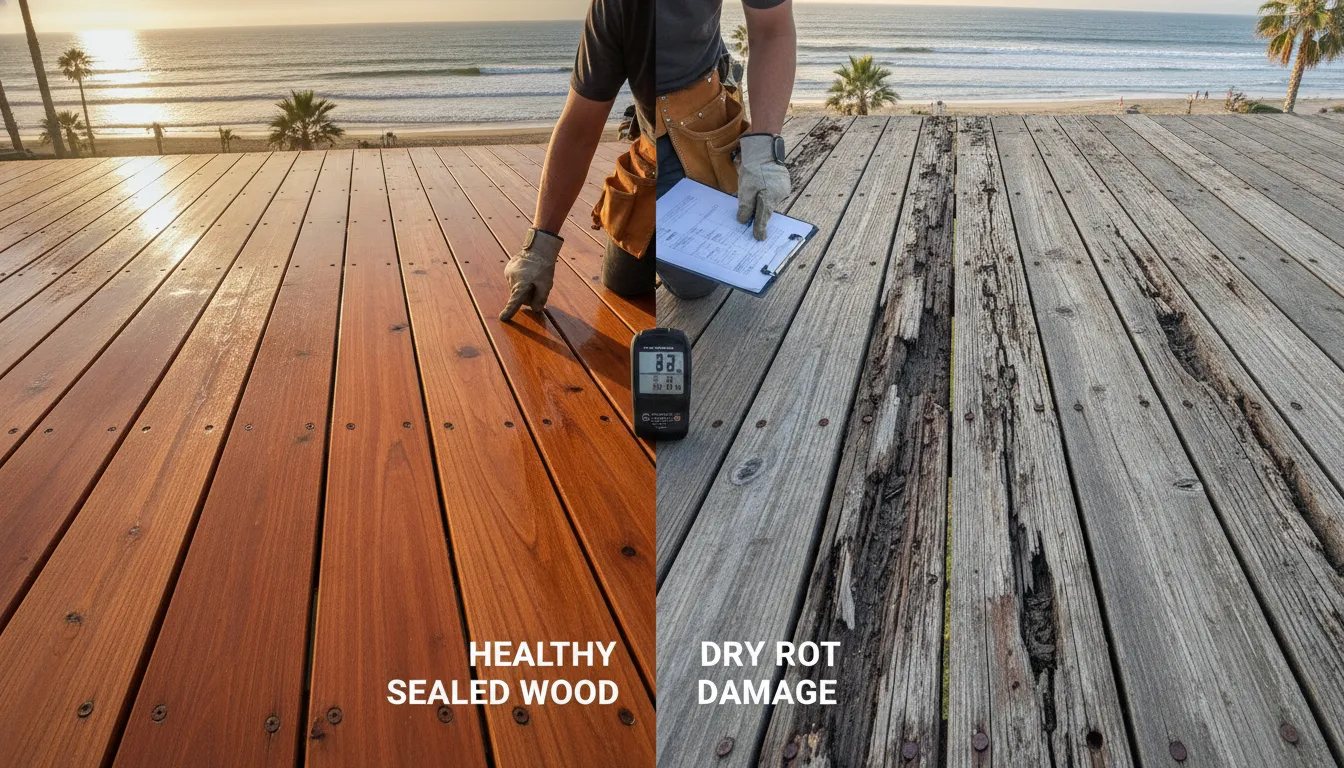
Dry rot can destroy a Southern California wood balcony before the owner notices a single soft spot. The region’s unique cycle of marine layer moisture and intense sun creates the perfect place for wood-eating fungi. Stopping this damage needs a mix of proper sealing and regular expert checks.
Wood deck rot prevention Southern California property owners rely on starts with sealing every exposed end grain to stop rapid water soaking through open wood cells. This deep sealing is vital because even small amounts of trapped water can lead to dry rot in the region’s humid coastal air and year-round sun. Research from the University of California (UCANR) shows that flat wood surfaces soak up water much faster through open cell ends than other parts. Combining high-grade sealants with joist tape and regular expert checks helps stop decay before it hurts the safety of your home’s outdoor living space. These steps protect your investment and ensure your balcony stays safe for your family and guests to enjoy.
Knowing how the local weather affects your deck is the first step toward better care. Many owners do not realize how our unique weather cycle works to break down even the strongest wood frame. The path to better protection begins with Why Southern California Decks Are Prone to Dry Rot.
Wood Deck Rot Prevention Southern California: Why Southern California Decks Are Prone to Dry Rot
Decks in Southern California face unique weather risks. The mix of coastal air and heat creates a tough environment for wood. Many think our dry weather protects wood, but moisture cycles here speed up decay. For property managers and homeowners, knowing how this climate works is the first step in wood deck rot prevention Southern California.
The Coastal Marine Layer and Humidity
Our coastal regions often deal with a thick marine layer. This morning fog brings high humidity that sits on wood for hours. Wood is a porous material that drinks in this moisture. Over time, the shift from damp mornings to hot days makes wood fibers expand and shrink. This cycle leads to small cracks. These cracks allow more water to seep into the deck frame.
The moisture also feeds fungi that cause dry rot. These fungi thrive when wood stays damp. Research from the CDC shows that damp environments in buildings can lead to decay that affects safety. On a deck, this rot can hide inside the wood. You may not see it until the wood becomes weak and unsafe.
Rapid Water Intake Through End Grain
One major risk factor is the exposed end grain of the wood. The ends of wood beams act like a bundle of straws. If you do not protect these areas, they pull in water fast. Facts from UCANR show that end-grain surfaces soak up moisture into the cut ends of the wood cells. This is why rot often starts at the joints where beams meet.
Some builders used to slope the tops of posts to help water run off. However, studies show this does not help much. Sloping the top of a post does not stop water from getting into those open cell ends. Even with a slope, the wood still soaks up moisture through cracks. Regular deck inspections in California can find these wet spots before the rot spreads.
Long Drying Times for Large Wood Beams
Large wood beams are common in Southern California decks. While these big pieces look strong, they stay wet for a long time. The time it takes for wood to dry depends on how thick it is. In fact, drying time is about the square of the thickness of the wood member. This means a thick beam stays wet much longer than a thin board.
When a large beam gets wet, the water stays trapped inside. The outside may feel dry, but the core remains damp. This creates the perfect spot for dry rot to grow from the inside out. For property managers, this is a major safety concern. A beam could look fine on the outside but be hollow with rot inside. Frequent checks are key to safety and asset value.
Essential Waterproofing and Sealing Practices
Southern California weather puts a heavy strain on wood decks. The mix of high heat and coastal moisture creates the perfect place for fungi to grow. For good wood deck rot prevention Southern California owners must use a many-layer plan. This starts with blocking water from entering the most weak parts of the deck frame.
Protect the Wood Substructure
Most deck rot starts where you cannot see it. Water often sits on top of the joists and beams that hold up the deck boards. When moisture stays in these spots, it causes the wood to soften and decay over time. One of the best ways to stop this is by using joist and beam tape during building or repair. The tape acts as a shield between the deck boards and the wood frame below.
This tape creates a tight seal around every screw or nail that enters the frame. Using joist and beam tape can add ten years to a deck’s life. It stops water from seeping into fastener holes and deep into the wood grain. Without this seal, water can pool in the small gaps between the wood and the metal screws. This simple step protects the deck’s base and saves money on future repairs.
Seal Exposed End Grain and Joints
The ends of wood boards are like tiny straws that pull in water. This part of the wood, known as the end grain, can soak up moisture much faster than the flat sides. Some people try to slope the tops of posts to shed water, but research shows this does not stop the wood from soaking in water. If you leave these ends open to the air, rot will start at the joints and move inward. This is why sealing every cut end is a top goal for Cert-A-Roof and other experts.
You should apply a water-repellent sealer to every exposed end joint. Research shows that water-repellent sealants on end joints have a big protective value. This sealer fills the open cells of the wood and blocks water from getting in. For the best results, you should re-seal your deck every two to three years. A steady schedule ensures the wood stays dry and firm even during the damp marine layer months.
Manage Moisture at Connections
Joints between beams and columns are high-risk areas for rot. Water can run down the side of a beam and get trapped in the joint where it sits on a post. Once water is caught in this tight space, it moves upward through a process called capillary action. This keeps the wood wet for long periods and leads to hidden decay that is hard to find with a quick look.
Treating these joints with a wood treatment is needed to prevent failure. This is especially vital for owners who oversee large apartment buildings with many decks. In Southern California, owners must also ensure these raised parts meet safety codes. Finding and fixing these issues early helps you stay in line with state safety laws. You can find more tips on deck care and safety on the Cert-A-Roof blog.
How to Inspect for Early Signs of Deck Rot
Finding wood rot early is the best way to save money on your Southern California deck. Small soft spots can quickly turn into big safety risks if you do not find them. You can perform a simple check yourself to see if your deck needs help from a pro. This helps you stay ahead of wood deck rot prevention Southern California needs.
Check for Visual Changes
Start by looking at the color and surface of the wood. Wood rot often starts with dark stains or black spots on the boards. You may also see paint or stain that is peeling or bubbling up. These signs show that moisture is trapped under the finish. Wood cells soak up water fast if the surface is not sealed well. This is a common issue for many Cert-A-Roof users in coastal areas.
The Probing Test
Use a flat-head screwdriver to test the wood in dark or wet spots. Push the tip of the tool into the wood with firm pressure. Healthy wood will feel hard and the tool should not sink in. If the wood feels soft, spongy, or breaks apart, you have found rot. Be sure to check the end grain of the boards. These areas take in water very fast and are prone to decay according to academic studies on wood moisture. If the tool sinks more than a quarter inch, you need a repair.
Inspect High Moisture Zones
Some parts of your deck stay wet longer than others. Check areas near downspouts, under large plants, or where the deck meets the house. Look closely at the ledger board. This is the beam that holds the deck to your home. Also, check the base of every post that sits on the ground or concrete. Moisture can climb up the wood through a process called capillary action. If these areas stay damp, rot can spread into the main frame of your home.
- Look for fungal growth like mushrooms or white fuzzy mold on the wood.
- Check for loose nails or screws that may show the wood is soft inside.
- Look for cracks or splits that let water deep into the wood cells.
- Clear away leaves and dirt from the gaps between boards to help them dry.
- Check the ledger board for proper metal flashing to keep water out.
- Verify that water is not pooling on any wood surfaces after a rain.
- Call an expert if you find soft wood in the main beams or posts.
When to Call a Professional
A DIY check is great for upkeep, but some signs need an expert eye. If you find rot in the main beams, the deck may not be safe to use. Professional deck inspections in California are also a legal must for many property owners. Under SB 721, apartment buildings with three or more units must have inspections every six years. A pro will use tools to find rot deep inside the wood that you might miss. Finding these issues now can stop high fines and keep your deck safe for years.
Choosing the Best Materials to Resist Rot
Selecting the right wood for your deck is the first step in long-term safety. In Southern California, the mix of hot sun and damp air creates a harsh space for wood. Without the right base, even the best seals cannot fully stop rot. Home owners must weigh the natural strength of some wood types against the cost of treated wood.
Compare deck material performance
When you build or fix a deck in the local area, you have a few common picks. Each type has a different way of handling the heat and wet times. For example, redwood is one of the most popular picks in the state due to its local supply and looks. But the rot resistance varies a lot between old trees and newer ones.
| Material | Rot Resistance | Lifespan | Maintenance | Relative Cost |
|---|---|---|---|---|
| Old-growth Redwood | Highest | 30+ Years | Medium | High |
| Young-growth Redwood | Moderate | 10-15 Years | High | Medium |
| Tropical Hardwoods (Ipe) | Very High | 40+ Years | Low | Highest |
| Pressure-Treated Pine | High | 15-20 Years | Medium | Lowest |
| Thermally Modified Wood | High | 20-25 Years | Low | Medium-High |
| Composite | Extremely High | 25+ Years | Very Low | High |
Natural versus treated wood types
Strong wood types like old-growth redwood were once the standard for local decks. These trees make heartwood that resists rot and bugs in a natural way. Now, young-growth redwood is more common but does not have the same level of rot resistance. If you choose this wood, you will need a regular deck and balcony inspection to find early signs of soft spots.
Pressure-treated wood is another common pick. For many years, firms used a copper and arsenic mix to treat wood. This arsenical preservative was pulled from home use in 2004 due to health fears. Modern types are safe for home use but still give a high level of shield against the mold that causes rot.
Exotic and modern solutions
Tropical hardwoods like Ipe or Cumaru are great for the Southern California heat. These woods are so dense that they often sink in water and resist fire well. They do not soak up water fast, which helps stop the swelling that leads to rot. While the start cost is high, their long life makes them a smart value for many owners.
Newer wood types use heat and steam to change the wood cells. This removes the sugars that mold eats, making the wood much less likely to rot. It stays very stable even when the heat hits 95 degrees. This is key for a long-lasting deck and balcony inspection record that stays within state laws.
Making the right choice for your deck
Your wood choice should match your budget and how much work you want to do. Composite decks give the best rot shield because they use plastic fibers that cannot rot. But some people still like the look and feel of real wood. Keep in mind that damp air will test every joint and board over time.
- Use heartwood for natural rot resistance in redwood or cedar.
- Pick stainless steel bolts to stop rust near the ocean.
- Apply a good seal every two to three years for real wood.
- Ensure your deck has good air flow under it to help it dry out.
- Check the wood for soft spots at least once a year.
- Keep the deck clear of wet leaves and dirt.
Proper wood choice is just the start. You must also care for your deck to stop rot from taking hold. Regular checks from an expert can help you find small bugs or rot before they cost more. For large buildings, these checks are a legal duty that keeps your guests safe and your deck within code.
Using the Right Fasteners and Hardware
Choosing the right parts to hold your deck together is a key part of wood deck rot prevention Southern California. In coastal areas, salt and fog can eat away at metal. When metal rusts, it can damage the wood around it. This creates small gaps where water can hide and cause rot. Using parts made for outdoor use keeps your deck safe and strong for many years. It is a simple way to avoid big bills for repairs in the future.
The best screws for your deck
If you live near the ocean, you need hardware that can stand up to salt. Experts suggest using 304 stainless steel for these jobs. These parts have a high level of rust protection. This is vital in the marine layer where salt air is common. Standard screws may look fine at first, but they will fail over time. High-quality parts help keep moisture from getting into screw holes. This stops decay before it starts on your deck or balcony. Stainless steel parts are more costly at first, but they save you from having to rebuild your deck early.
Many builds use pressure-treated wood. This wood has chemicals that can react with some metals. For these jobs, you should use HCR fasteners. These parts have a high rust protection coating. They are tested for use in wood that touches the ground. This rating is often shown as AWPA UC1 to UC4A. Using the wrong screws can lead to early rot. It can also weaken the frame of your deck. Always check the labels to make sure your parts match the wood type. This ensures that the metal will not break down when it touches the treated wood.
Using joist and beam tape
Hardware is not just about screws. It also includes tools to block water. One of the best ways to stop rot is using joist and beam tape. This tape seals tight around each screw as you drive it in. It prevents water from getting into the wood beams. Using deck tape can add up to ten years to the life of a deck. It blocks water from sitting on top of wood joists. This simple step saves a lot of money on repairs later. The tape acts as a shield for the frame, which is the most vital part of the build.
Spacing for dry wood
Good building also means keeping wood away from flat surfaces. You should keep wood end grain away from metal or concrete. This stops water from being pulled into the wood. Water that sits in joints for a long time is a main cause of wood rot. You can find more about how to check these areas in our guide on deck inspections in California. Proper spacing allows for more air to flow. Dry wood does not rot as fast as wet wood. Expert data shows that keeping end grain apart from metal surfaces is a key way to stop moisture issues. This helps your deck stay dry even after a heavy rain or thick fog.
Staying Compliant with California SB 721
Property owners in Southern California must follow state laws for deck safety. California Senate Bill 721, often called the “balcony law,” sets strict rules for multi-family buildings. If your building has three or more units, you must have your wood decks and balconies checked by a pro. This law helps find safety risks like dry rot before they cause a collapse.
Requirements for multi-family buildings
The law covers all elevated exterior elements, which includes decks, porches, and walkways. These must be checked every six years by a qualified inspector. The goal is to ensure these structures are safe and can support their weight. According to research from the University of California, wood members that are four inches or larger need special care to prevent rot. Regular checks find small cracks where water gets in and starts the decay process.
Failing to follow these rules can be very costly. Local officials can charge up to $500 per day in fines for non-compliance. These penalties can grow quickly, making a balcony compliance inspection a smart investment for any property manager. Beyond the fines, keeping your decks in good shape protects your residents and your property value.
Professional checks and wood deck rot prevention
A routine check is different from a full compliance inspection. While you might look at your deck once a year, a professional deck and balcony inspection uses deeper tools. Experts look for hidden wood rot inside the beams and columns. They check the wood end grain, which absorbs water fast if it is not protected. Finding these issues early is the key to deck inspections in California and long-term safety.
Professional inspectors from Cert-A-Roof use their Cert-A-Deck division to help owners stay safe. They look for signs of wood deck rot prevention Southern California needs, like failing seals or water stains. Protecting the joints where beams meet columns is vital. Water can run down a beam and get stuck in these joints. Without a pro to find these wet spots, the wood will rot from the inside out.
Frequently Asked Questions
How often should I seal or stain my deck to prevent rot?
In Southern California, you should seal or stain your wood deck every two to three years. The strong year-round sun can dry out wood and cause it to crack. These cracks allow water to soak deep into the boards during the rainy season or morning fog. Regular sealing creates a wall that keeps water out. As stated by UCANR, using water sealants on joints helps stop rot from starting.
Does leaving leaves and debris on a deck cause wood rot?
Yes, leaving leaves, dirt, or pine needles on your deck can lead to wood rot. Dirt and leaves trap water against the wood and stop it from drying out after rain or heavy fog. This creates a damp space where fungi grow fast. You should sweep your deck often so air can flow freely between the boards. Keeping the surface clear is a simple way to help your wood stay dry and strong for a long time.
Are borate treatments good for stopping deck rot?
Borate treatments work very well to stop rot in wood decks. These mineral salts act as a killer for the fungi that cause wood to decay. You can put borate on as a liquid or use rods that melt when they get wet. It is a safe and cheap way to protect your deck from the inside out. Since borate dissolves in water, you must seal the wood after you use it.
What role does wood gap spacing play in stopping deck rot?
Correct gap spacing is very key to stop deck rot. Most wood decks need a gap of about one-eighth to one-fourth of an inch between boards. These gaps let water drain away instead of sitting on the surface. They also help air move, which helps the wood dry faster after it gets wet. If the gaps are too tight, dirt can get stuck and hold water, which soon leads to soft spots and decay.
How does water pooling affect deck life?
When water pools on your deck, it stays in contact with the wood for a long time. This gives the wood more time to soak up the water. Constant moisture makes the wood soft and weak, which lets rot start and spread. In Southern California, even small puddles from morning mist can cause big problems if they do not dry fast. You should fix any low spots to keep your deck strong for many years.
Protect your Southern California wood deck from rot and decay
Leaving wood rot on your balcony can lead to very high repair costs and unsafe spaces that put your family and guests at real risk. Rot spreads fast through wood joints once it starts, so acting now is the best way to stop damage before it forces a full replacement. By booking an expert check today, you can find hidden decay and keep your home safe and sturdy for many long years of use.
Ready to act now? Visit our contact page to book a professional deck inspection with Cert-A-Roof. We will ensure your home meets all SB 721 compliance rules and stays safe for your family and guests for a long time.
Comment (0)