
Tile Roof Leak Repair Orange County Guide
. .
A ceiling stain beneath a tile roof points to more than one cracked tile. On clay and concrete roofs, the opening may be hidden above the stain. Flashing, underlayment, and penetrations matter.
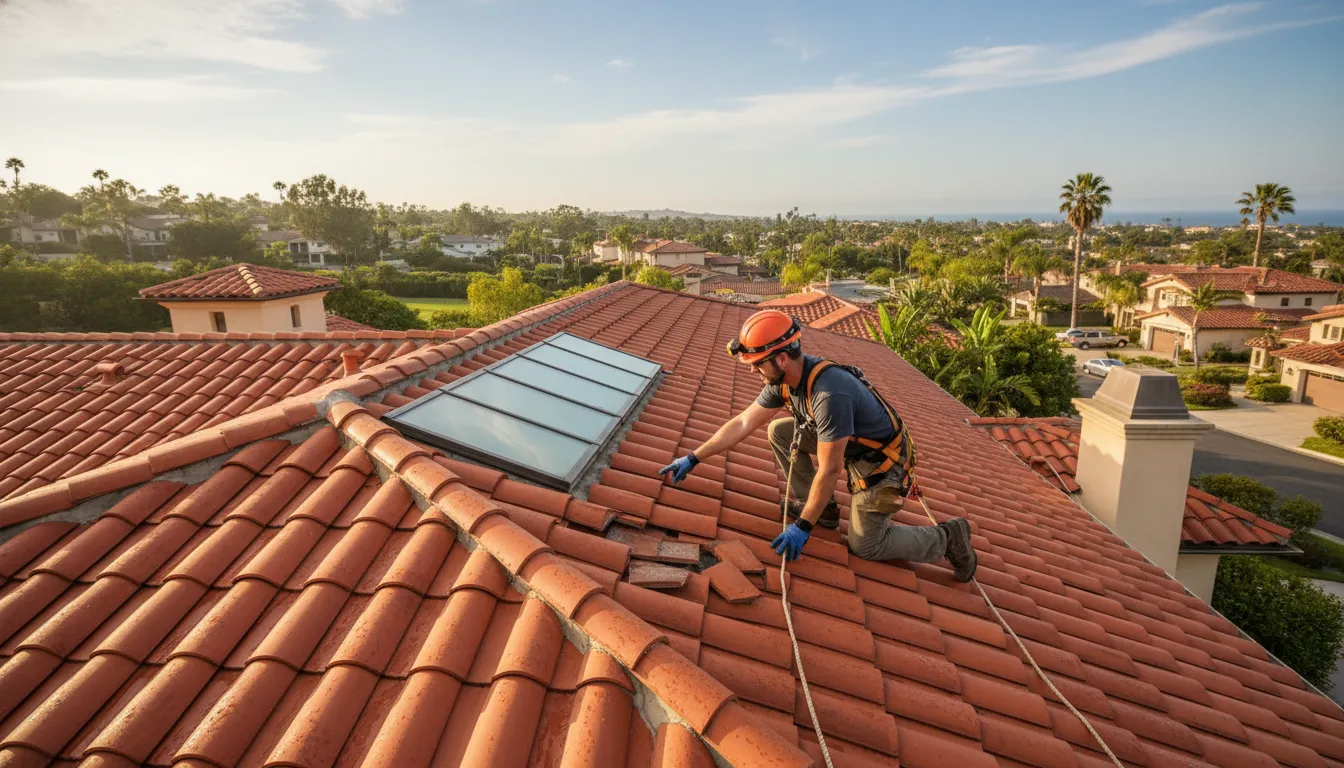
Tile roof leak repair Orange County begins with finding where water entered, not simply replacing the first broken tile visible after a storm. Clay and concrete tiles can crack or slip, while water can pass through worn underlayment, valleys, flashing, vents, chimneys, or skylights. Heavy coastal rain and wind can expose small failures, then send moisture into attic wood, insulation, ceilings, and wall surfaces. The NRCIA identifies penetrations as common leak points and warns that delayed, reactive repairs can cost far more because of secondary damage. A professional inspection identifies the source, repair scope, affected materials, and practical costs before homeowners choose a documented repair step, maintenance plan, or replacement evaluation.
If you have found a water stain, displaced tile, or damp attic wood, the first question is what failed beneath or around the tile surface. Why tile roof leak repair Orange County starts with inspection explains that decision point first. Here is how.
Why tile roof leak repair Orange County starts with inspection
.
The leak source may be hidden
.
When a homeowner searches for tile roof leak repair Orange County, a cracked tile may seem like the full problem. On a tile roof, water may enter near underlayment, flashing, valleys, vents, skylights, or another hidden penetration. It can then travel before a ceiling stain appears.
That is why pricing should start after the source is found, not after a quick look at the visible tile. A repair plan based on the wrong entry point can miss wet materials below the tile surface. It can also leave the path of the leak open for the next rain.
Inspection before a repair scope
A certified inspection separates a symptom from its cause. The inspector can look at broken or slipped tile, then check the water-shedding parts below and around it. This approach helps define what must be repaired and what does not need work.
Cert-A-Roof conducts a roof inspection using NRCIA standards before recommending a repair scope. The company reports more than 75,000 inspections completed. That depth of inspection work matters when an Orange County tile roof has more than one likely leak point.
Why timely diagnosis matters
A roof leak is not limited to a stained ceiling. Moisture that remains indoors can affect building materials and indoor conditions. Research indexed by the National Institutes of Health found links between indoor dampness or mold and asthma development or flare-ups. Readers can review the published moisture and mold evidence.
Inspection also gives a homeowner a sound basis for repair decisions. The scope may call for tile work, flashing repair, underlayment work, or attention at a vent or skylight. It should reflect what the inspector finds, rather than a guess based on the first visible sign.
Once the source is documented, Cert-A-Roof can explain appropriate roof leak repair options for the affected system. For tile roofs in Orange County, that order keeps the focus on stopping water at its entry point.
Common tile roof leak sources in Orange County homes
A tile roof is built as a system. Clay or concrete tiles shed much of the rain, but they are not the only barrier. The underlayment below them and the seals at roof openings help control where water goes. For tile roof leak repair in Orange County, the visible cracked tile may be a clue, not the full cause.
Broken tiles and worn underlayment
A cracked, loose, or slipped tile can expose the layers below to rain and wind-driven water. Damage may start with foot traffic, falling limbs, or movement during strong weather. A missing piece also lets sunlight reach materials that tiles normally shade.
Underlayment is the backup layer beneath the tile field. If it is aged, torn, or poorly sealed, water can travel downslope before appearing indoors. That is why professional tile roof leak repair checks more than the tile seen from the ground.
Flashing, vents, and skylights
Transitions deserve close attention during a leak review. Metal flashing connects tile surfaces to walls, chimneys, plumbing vents, and skylights. Sealants can fail, flashing can lift, and vent boots can crack. These faults may let water enter even when nearby tiles look sound.
The NRCIA notes that common leak points are often roof penetrations, including vents and skylights, rather than roof covering alone. Its roof maintenance guidance supports checking these joints during an inspection. A stain below a skylight may trace to flashing, not broken tile.
Valleys, debris, and drainage paths
Valleys collect water from two roof slopes, so a small defect there can receive a heavy flow. Leaves, needles, and dirt may lodge in tile channels or valleys. The buildup slows drainage and holds moisture against surfaces. During rain, water can back up beneath tile laps.
Debris can also hide a displaced tile or a split flashing edge. Tile cleaning requires care because roof traffic may cause fresh cracks. An inspection can trace drainage, check underlayment where needed, and note moisture signs indoors. Damp indoor conditions matter because research on indoor dampness and mold links them with asthma problems.
Wind and sun exposure
Orange County roofs face long sun exposure and seasonal Santa Ana winds. Wind can shift loose tiles or push rain beneath vulnerable edges. Sun exposure can dry and age exposed roof parts, especially where a tile has moved. Together, these stresses may turn a small gap into a leak route.
After wind or before the rainy season, look for displaced tiles and water marks on ceilings. A professional review can examine valleys, penetrations, flashing, and the layer below the tile. This helps separate a surface repair from a leak below the tile field.
What does tile roof leak repair cost?
There is no single price for a tile roof leak repair. For tile roof leak repair in Orange County, cost depends on the leak source, roof access, and damaged layers. A cracked tile can be a small repair, while failed flashing or wet underlayment can widen the work area.
Repair cost ranges in context
As planning context, Cert-A-Roof guidance places tile leak repair from $20 to $45 per square foot. A simple tile replacement may run from $25 to $45 per tile. These figures are not a quote, because water can travel below the tile before it appears indoors.
The visible break is not always the leak source. An inspector checks tiles, valleys, flashing, underlayment, vents, and nearby transitions before setting the scope. If you see a ceiling mark or displaced tile, a guide to professional tile roof leak repair can explain the next steps.
What changes the scope?
The main price driver is the work needed to stop water entry, not the number of loose tiles alone. Access also matters. A steep pitch, fragile matching tiles, or a leak near a valley can require more careful removal and reset work.
.
| Repair driver. | What the inspection may find. | What it affects. |
|---|---|---|
| Broken or slipped tile. | Limited surface damage. | Replacement tile and labor. |
| Flashing or penetration. | Failed seal at a vent or wall. | Detail work and surrounding tiles. |
| Underlayment damage. | Wet or worn layer below tiles. | Repair area and material scope. |
| Valley or transition leak. | Water entry along a channel. | Tile removal and flashing work. |
| Roof access. | Steep, high, or fragile area. | Setup and safe work time. |
.
In a tile system, surface pieces shed water, but the layer below them also matters. If water has reached that layer, replacing only the cracked tile may not solve the active leak. The inspection records visible damage and related areas that need repair.
A delayed leak may also affect indoor materials. Peer-reviewed research links indoor dampness or mold with asthma development and flare-ups, according to the National Institutes of Health archive. That risk is one reason to find the water path before damage spreads.
Why inspection comes before pricing
A useful repair plan begins with a roof inspection, not a price based on a photo or tile count. The inspection separates a surface repair from work involving underlayment, flashing, or a wider moisture path. It also records which repairs address the leak source.
For an Orange County tile roof, request an inspection when water staining, loose tiles, or recurring dampness appears. A qualified inspection should identify the cause and define the repair scope before pricing.
How to respond when a tile roof leak appears
A tile roof leak calls for a calm response, not a rushed trip onto the roof. Start by reducing indoor water damage and gathering clear details. Indoor dampness or mold is linked with breathing problems, including asthma, according to a review of indoor moisture and health evidence.
Immediate actions inside the home
Keep people away from any sagging ceiling, wet light fixture, or pooled water near power. If water is near electricity, use the breaker only when you can reach it safely. Move furniture and valuables, then place containers under active drips.
Do not try to solve a tile leak by climbing onto a wet or fragile roof. Tiles can shift or break underfoot, and the source may not sit above the ceiling stain. Your first job is to limit harm and collect useful observations.
- Protect the room. Catch drips, cover items that cannot move, and keep children and pets clear of wet areas.
- Mark the leak location. Note the room, the stain edge, the drip point, and whether the leak changes during rain.
- Take photos from safe indoor or ground-level positions. Capture ceiling stains, water paths, slipped tiles visible from below, and debris in accessible gutters.
- Avoid the roof. Do not walk on tile, lift tiles, apply sealant, or set a tarp from a ladder.
- Request a certified inspection. Give the inspector your notes, photos, weather timing, and any past repair records.
- Review the findings before authorizing work. Confirm the cause, repair scope, affected materials, and how repaired areas will be checked.
What to document for the inspector
A stain is useful evidence, but it is not a full diagnosis. Record when the leak started, whether wind accompanied the rain, and which ceilings or walls became wet. Photos taken before cleanup can help an inspector trace the path and plan the next check.
From the ground, note visible cracked or slipped tile, loose debris, or a problem near a vent or skylight. For a planned response, Cert-A-Roof’s roof leak repair information explains the repair service path. Keep your own notes with the report for future maintenance records.
Inspection before repair approval
A professional inspection should explain where water entered, what roof parts are affected, and what repair is advised. It is more useful than a price-only quote because the scope is tied to findings. Ask for photos and a written summary before approving repairs.
If the finding confirms tile damage or a related leak path, review the proposed roof repair scope before work begins. For tile roof leak repair in Orange County, know what will be fixed. Ask how the completed repair will be checked.
Can you repair a tile roof leak yourself?
A homeowner can spot a stain, move belongings, and catch dripping water indoors. The roof repair itself is a different matter. For tile roof leak repair in Orange County, the goal is to find the full water path. Sealing the first visible crack may not stop the leak.
Safety and added tile damage
Roof tile is built to shed rain, not to serve as a walkway. A step in the wrong spot can crack or shift a tile and create another opening. A sloped or wet roof also brings a serious fall risk.
From the ground or attic, you can note stains, damp wood, or displaced tiles without walking on the roof. A guide to warning signs of a roof leak can help you record damage before an inspection.
Inside the home, move items away from wet areas and place a container beneath active drips. Note where water appears and when it starts. These steps limit indoor damage, but they are not a roof repair.
What a visible crack may hide
A broken tile may not be the whole repair. Tiles cover an underlayment layer that helps keep water out when rain reaches below the tile surface. If that layer is torn or worn, replacing one tile may leave the leak active.
Leak tracing also includes areas where the roof changes shape or is pierced. Valleys, vents, skylights, chimneys, and wall joints use flashing to guide water away. Lifting tiles or patching these areas can disturb nearby roof parts.
A surface patch may also hide damage rather than fix it. This can delay the right repair while moisture reaches more materials. An inspection helps separate a loose tile from a leak tied to underlayment or flashing.
Why a complete repair matters
A slow leak can damage ceilings, wood, insulation, and finishes before the repair is complete. Damp indoor spaces and mold are linked with asthma development and flare-ups. This link is documented in a review in Environmental Health Perspectives.
A professional inspection documents the cause, checks hidden layers, and defines a repair for the full roof system. That record matters when you maintain, insure, buy, or sell a home. It also helps avoid repeated patches that leave the source unresolved.
For a tile-specific view of the work, see Cert-A-Roof’s page on professional tile roof leak repair. If water is entering during rain, contain it indoors and avoid climbing onto the roof. Arrange an inspection promptly so damage does not spread.
How long do tile roofs last when leaks are repaired early?
A long service life depends on the full roof system
With proper care and timely repair, tile roofs can last 50 years or more. That figure is not a promise for every roof. Tiles may remain sound while the water-shedding parts below and around them need attention.
On an Orange County home, heat, wind, and seasonal rain can test a roof over time. Early tile roof leak repair protects the underlayment before repeated water entry expands the damaged area. It also helps keep small flashing or tile issues from becoming interior repairs.
Maintenance that protects the expected lifespan
Planned care starts before water reaches a ceiling. A yearly professional roof inspection can check tiles, underlayment signs, flashing, valleys, and drainage paths. It is an investigation of roof condition, not only a price estimate after a leak appears.
Leaves, branches, and other debris should not sit in valleys or block water flow. Roof penetrations also need close review, including vents, skylights, pipes, and chimneys. These areas join different materials, so failed flashing or seals may let water pass beneath otherwise intact tile.
- Have loose, cracked, or slipped tiles assessed before rainy periods.
- Keep valleys and gutters free of debris that can hold moisture or back up water.
- Ask an inspector to check penetrations and the visible signs of underlayment wear.
Early repair versus an active emergency
Maintenance addresses a found defect while damage is limited, such as a shifted tile or worn flashing. An emergency is different: active dripping, spreading ceiling stains, or water entering near wiring needs prompt action. Homeowners can review the warning signs of a roof leak before the next storm.
A delayed repair can expose decking, insulation, ceilings, and indoor spaces to more moisture. Research links indoor dampness or mold with increased asthma development and flare-ups, as summarized by the National Institutes of Health archive. Repairing a leak early supports roof life, but it also helps limit avoidable water damage inside the home.
Choosing the right tile roof leak repair partner
Inspection before an estimate
For tile roof leak repair in Orange County, a low estimate can leave the main question unanswered: where is water getting in? Tile may be cracked, but leaks can also start at flashing, penetrations, or the underlayment below the tile. A careful inspection helps separate the visible symptom from the repair the roof needs.
Choose a company that inspects the roof system before it proposes work. Cert-A-Roof follows inspection protocols developed by the NRCIA, rather than treating each leak as a quick tile swap. Its roof inspection service is designed to document conditions and support a clear repair plan.
Records that explain the repair
A repair report should state what was found, where the leak path appears, and what work is advised. It should also note the condition of related parts, such as flashings and underlayment. That record helps a homeowner compare proposals based on scope, not price alone.
Cert-A-Roof typically delivers roof inspection reports within 24 to 48 hours, based on its company service information. That timing matters when active moisture may affect materials inside the home. Research indexed by the National Institutes of Health links indoor dampness or mold with asthma development and flare-ups in some settings. This indoor dampness and mold review supports prompt attention to a leak and wet interior materials.
Credentials and integrity
Ask who performs the inspection and whether the company works to recognized certification standards. A certified, inspection-driven company should be willing to explain its findings and show why each repair is needed. That approach reduces the chance of paying for work that addresses a broken tile while missing the water entry point.
Integrity also shows in the proposal. Look for photos, clear repair locations, stated limits, and a plan for checking the finished work. Homeowners can use Cert-A-Roof’s roof repair service to move from documented findings to targeted work on a tile roof.
When comparing companies, ask for the inspection process, report format, expected report timing, certification basis, and repair follow-up. The right partner can explain the roof condition in plain language, then recommend work tied to the evidence found on site.
Frequently Asked Questions
How much does it cost to repair a tile roof leak?
Cost depends on the leak source, tile type, access, and whether water reached the underlayment or wood deck. Tile roof leak repair often ranges from $20 to $45 per square foot, according to Cert-A-Roof. Replacing individual broken tiles may cost $25 to $45 per tile. An inspection should identify the actual repair area before pricing is finalized.
How much does it cost to seal a tile roof?
A sealing price cannot be determined from the visible tiles alone. Clay and concrete tile roofs may leak through failed flashing, roof penetrations, valleys, or underlayment rather than the tile surface. The NRCIA identifies vents, chimneys, and skylights as common leak points. A professional inspection can show whether sealing is appropriate or if repairs are needed first.
What are common signs of a tile roof leak?
Common warning signs include ceiling stains, damp attic materials, slipped or broken tiles, and visible damage beneath the tile layer. After rain, check for new stains or musty areas indoors. A roof leak should be inspected promptly because moisture can affect materials beyond the damaged tile. Evidence reviewed by the National Institutes of Health associates indoor dampness or mold with asthma development and worsening symptoms.
How often should I have my tile roof inspected for leaks?
Homeowners should schedule a professional roof inspection at least annually, and sooner after major wind or rain events. This matters in Orange County, where sun exposure and Santa Ana winds can stress roof systems. The NRCIA recommends annual inspections by a licensed roof inspector. Regular review can find displaced tiles, flashing defects, and underlayment concerns before indoor water damage appears.
Can I perform tile roof leak repair myself?
Homeowners can safely document interior stains and view visible damage from the ground, but tile roof repairs are not usually suitable for do-it-yourself work. Walking on clay or concrete tiles may break more tiles and creates fall risks. The waterproofing problem may also be underneath the tiles. A professional inspection should locate the cause, then define repairs to flashing, underlayment, fasteners, or damaged tiles.
Schedule a certified tile roof leak inspection
If you see a ceiling stain, slipped tile, or moisture near a skylight, do not guess at the repair from the ground. Cert-A-Roof can inspect the tile roof system, document the source of the leak, and explain the right next step before repair pricing begins.
Call 888-766-3800 to schedule your certified roof inspection and get clear answers for your Orange County home.
Comment (0)