
Ponding Water on Flat Roof: Causes, Damage, and When to Act
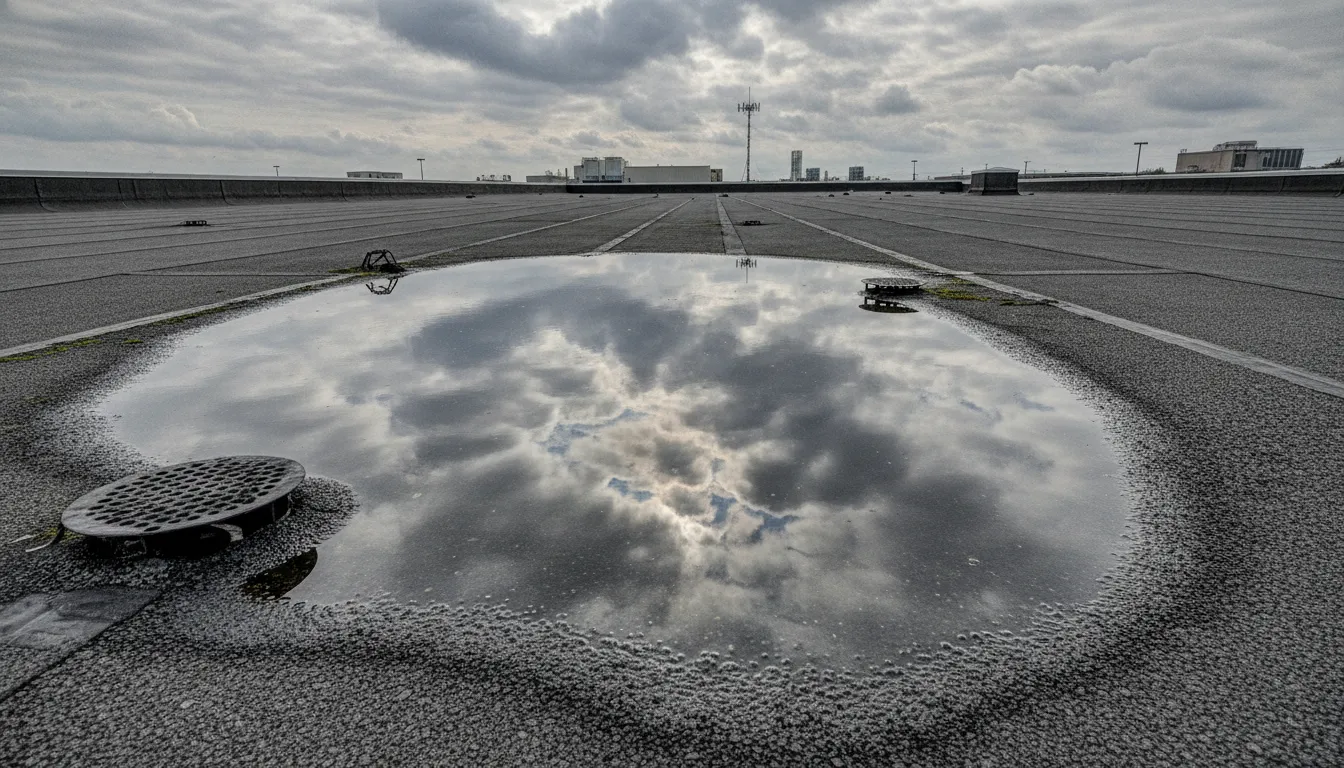
Standing water that lasts for forty-eight hours on your roof can cause major structural damage and expensive leaks. This issue is more than just a nuisance; it is a sign that your drainage system is failing. Ignoring these pools can lead to deep rot and costly repairs.
The National Roofing Contractors Association defines ponding water on flat roof surfaces as water that stays in place for more than forty-eight hours. While some moisture is common after a rain, water that does not drain quickly puts heavy pressure on the frame of the building. Just one inch of standing water can weigh over five pounds per square foot, which can cause the roof to sag or even cave in. This weight creates more low spots where even more water collects, making the problem worse over time. If you see deep pools that last for days, you should act fast to find the cause. Clogged drains, poor slope, or old materials are often the reason why water stays on the roof. Fixing these issues early helps you avoid the cost of a full new roof.
Many people see puddles and wonder if they are a normal part of a flat roof or a sign of a major leak. To keep your home safe, you must know how to spot the difference between a small splash and a dangerous pool. Understanding the answer to What Is Ponding Water on a Flat Roof and Is It Normal? will help you protect your property. We can start by asking
What Is Ponding Water on a Flat Roof and Is It Normal?
Flat roofs are common in Southern California, but they are not truly flat. They need a slight tilt to shed rain. When water stays in one spot for too long, we call it ponding. The National Roofing Contractors Association (NRCA) defines ponding water as water that remains on a roof for 24 to 48 hours. If the sun comes out and the puddles stay, you have a ponding issue.
The 48 hour rule for standing water
Most roof systems can handle a bit of rain. But water is heavy and puts stress on your home or building. The 48-hour rule is the industry standard for safety. If water does not drain or dry up in two days, it can start to soak into the roof layers. This leads to common causes of flat roof ponding like clogged drains or sagging decks. Finding these issues early during a commercial roof inspection helps prevent big leaks later.
Standing water does more than just sit there. It acts like a magnifying glass for the sun, which can cook the roof membrane. It also collects dirt and bird droppings. These things can rot the materials and cause them to fail much sooner than they should. A healthy roof should always move water toward the drains or gutters.
Is ponding water normal on a flat roof
In the past, some roofs were built to be “dead-level.” This was often seen in older buildings made of heavy concrete before 1970. These old designs did not always have a slope. But modern building rules now need a slope of at least 1/4 inch per foot to help water drain. You can see these rules in government building guides for durable roofs.
Today, ponding is not normal or good. If you see deep puddles, your roof might be sagging. Just one inch of ponding water weighs more than five pounds per square foot. This weight can cause the roof to dip even more, which traps even more water. If the water gets deeper than three inches, a pro should check the structure to make sure it is safe. For most property owners, the goal is to keep the roof dry and clear of standing pools.
Common Causes of Ponding Water on Flat Roof Systems
Flat roofs do not have a steep pitch to shed water by gravity alone. Instead, they rely on a precise slope to move rain toward drains and gutters. When this system fails, water sits on the surface. Factors like old age, poor design, and simple debris can all lead to common causes of flat roof ponding issues. Finding the root cause is the first step toward protecting your building from leaks.
Poor Slope and Design
Many people think flat roofs are perfectly level, but they should actually have a slight angle. Most modern building codes require a minimum roof slope of 1/4 inch per foot to keep water moving. You can find more about these standards in the government guide on water-managed roofs. If a roof was built without this slope, or if it is a “dead-level” deck from before 1970, water will naturally pool in the center.
Structural Sagging and Deflection
Over time, the weight of a building or heavy HVAC units can cause a roof to sag. This creates low spots where water collects. Since one inch of ponding water weighs more than 5.2 pounds per square foot, the problem often gets worse as more water adds more weight. For large buildings, repairing flat roofs with ponding water often starts with fixing these structural dips before they cause a collapse. If sagging is already visible, prompt roof repair is needed to prevent further structural damage.
Drainage System Failures
Even a well-built roof will flood if the water has nowhere to go. Blocked drains are the most frequent cause of standing water. Leaves, dirt, and nests can quickly plug up pipes and scuppers. When drains stop working, a small puddle can grow into a deep pool in just a few hours. These steps can help you find why water is sticking around on your roof:
- Check for debris around all roof drains and scuppers. Use a brush to clear away any leaves or trash that might block the flow.
- Look for areas where the roof surface looks compressed or sunken. These low spots often mean the roof deck is sagging and needs a structural fix.
- Measure the slope near your drains. If the area around the drain is higher than the rest of the roof, water will pool around it instead of going down.
- Inspect the flashing and seams near the ponding zones. Standing water can soften the seals on commercial flat roofing systems, leading to fast leaks.
- Verify that your drainage pipes are the right size for your roof area. If the pipes are too small for heavy rain, the roof will flood even if the lines are clear.
The Dangerous Weight and Structural Damage of Standing Water
Ponding water on a flat roof is not just a leak risk. The National Roofing Contractors Association defines ponding as water that stays on a roof for 24 to 48 hours. This standing water adds a massive amount of weight to your building. If it sits for too long, the roof deck can start to sag or fail. You should know how these forces act on your structure to avoid costly repairs.
The heavy cost of ponding water
Even a small amount of water is heavier than most people think. Just one inch of ponding water on a flat roof weighs more than 5.2 pounds for every square foot. This weight can stress the beams and support walls over time. When water collects in one spot, it creates a dip. This dip makes the roof deck bend down. This bending then pulls in even more water from the rest of the roof. Experts call this deflection. This cycle leads to deep pools that can crush a roof deck if you do not fix it soon. You can learn more about common causes of flat roof ponding to stop these issues early. A heavy pool of water acts like a slow hammer that beats down on your building day and night.
Building safety and snow loads
Building rules help ensure a roof can hold up under stress. For instance, some codes say that water depths above three inches need a full check of the building strength. This ensures the roof is strong enough to keep people safe. You can find these rules in rooftop storage design guides from state agencies. Engineers often compare water weight to snow loads. A depth of 5.8 inches of water is about as heavy as 30 pounds per square foot of snow. While most roofs in Southern California do not see much snow, they are still built to handle some load. But a pool of water that never drains can push these limits to the breaking point. If the water gets too deep, the wood or metal frames may warp or crack. This is why a quick drain time is so important for the life of your building.
Rot, mold, and long-term decay
Weight is not the only threat to your roof. Standing water also invites rot and mold. When water sits, it can seep into the roof layers. This moisture feeds fungi that eat away at wood and insulation. A rotted deck is soft and weak. It cannot hold the weight of the roof or the machines on top of it. Over time, the wood beams may turn to pulp and lose their grip on the nails. This makes the whole system loose and unsafe.
Mold can also spread into the air vents. This puts the health of everyone inside at risk. Standing water acts like a pet bowl for pests and germs. Mosquitos often breed in these still pools. Clogged drains or poor slopes are often the main causes for these problems. Keeping your roof clean and level is the best way to prevent this kind of decay. Experts at the Building America Solution Center note that moving water off the roof is the most important part of roof design. Regular checks can find small soft spots before they turn into huge holes in your budget.
How to Detect and Inspect Standing Water on Your Roof
Flat roofs often collect water after a storm. You may see small pools that dry up fast. But some water stays in place for a long time. The National Roofing Contractors Association defines ponding water as liquid that stays on a roof for 24 to 48 hours. If you see water on your roof two days after the rain stops, you likely have a ponding issue. This water can weigh over 5.2 pounds per square foot for every inch of depth. This extra weight can stress the frame of your building.
Check for Visual Signs of Damage
You do not always need to see water to find a problem. Look for dark stains or rings on the roof surface. These marks show where water sat before it dried. You might also see dirt or silt left behind in small low spots. On many flat roofs, you may find common causes of flat roof ponding like plant growth or algae. These signs tell you that the area stays wet for long periods. Watch for cracks or bubbles in the roof skin near these damp spots.
Inspect Your Drainage Points
Bad drainage is the main reason for standing water. Check your roof drains and scuppers for blocks. Leaves, dirt, and trash can clog these paths. When water cannot flow off the roof, it gathers in the low spots. Many older buildings lack the right slope to move water. Most modern codes need a slope of at least 1/4 inch per foot to shed water well. If your roof is dead-level, even a small clog can lead to big pools. Clean your drains often to keep the path clear.
The Value of Certified Forensic Inspections
A simple walk on the roof may not show the full truth. Water can hide under the surface or soak into the insulation. You should not rely on a basic estimate from a sales person. A professional team like Cert-A-Roof uses forensic tools to find leaks and weak points. We focus on identifying standing water during roof inspections with high accuracy. This detailed check finds the root cause of the pool. It helps you fix the issue before it leads to a costly roof failure or a full collapse.
How Do You Fix Ponding Water on a Flat Roof?
Fixing standing water needs a plan that deals with the root cause. Some fixes are quick. Other fixes need a pro to change how the roof sheds water. Managing rainwater is the most important factor for a long-lasting roof. You should follow a clear path to find the best fix for your building.
Clear your drains and gutters
The first step is to check for blocks in your drain system. Leaves or dirt in the gutters often cause small pools of water. You can often solve this by cleaning out trash. If the water flows away after a quick clean, you have fixed the problem. Routine care helps you avoid common causes of flat roof ponding that lead to leaks.
Install roof crickets
Roof crickets are small, sloped parts that move water. They sit behind large items like HVAC units or vents. These units act like dams on a flat roof and trap water. A cricket creates a peak that pushes water toward the drains. This fix is great for spots where water always sits after a storm.
Use tapered insulation
If the roof deck is flat or has low spots, you may need a slope. You can add tapered insulation or tapered sleepers during a roof fix to help water drain. These parts are thicker on one end to create a tilt. This slope guides water to the drains so it does not sit and weigh down the deck. A new roof needs a slope of at least 1/4 inch per foot to meet codes.
Apply roof coatings
For roofs that are in good shape but have small dips, a coating can help. New silicone or special coatings create a shield. These coatings can handle standing water for a long time without a leak. They are a good way to seal the surface while you are repairing flat roofs with ponding water issues. A coating protects the roof from the sun and rain.
Steps to fix ponding water
- Check the roof after a storm to find every low spot where water sits.
- Clean all drains and gutters to make sure water has a path to leave.
- Hire a pro to see if the roof deck has sagged or if the slope is too low.
- Pick if a spot fix like a cricket or a full fix like new insulation is best.
- Apply a high-quality roof coating to protect the area from water damage.
Repair vs. Replacement: When Is It Time to Act?
Choosing to fix or replace a flat roof is a big choice for any owner. The best move depends on how long the water sits and how deep the damage goes. You should check your roof often to catch common causes of flat roof ponding early. Finding small issues now can save you from a full roof loss later.
First steps for small roof flow issues
You can often fix small spots of ponding water on flat roof systems without a full rebuild. If the roof deck is still strong and the leaks are small, a fix might work. Most small issues come from clogged drains or small low spots in the membrane. A quick fix can help your roof shed water as it should.
Proper flow is the most vital part of a long-lasting roof. The rules of water control say you must direct water down and away from the building. If your roof has small blocks, cleaning the drains may solve the ponding. Fixes are best when the issues are in just one or two spots.
Signs you need a new flat roof
A new roof is needed when the system fails across a large area. Widespread ponding shows that the roof slope is no longer right. If water sits in many places, the insulation under the layer may be wet. Wet insulation loses its value and can rot the deck below.
Heavy water can also hurt the roof strength. One inch of water weighs more than five pounds per square foot. Roofs that hold more than three inches of water must be checked for strength by a pro. If your roof is old and leaks in many spots, it is time to replace it.
How a pro helps you choose
You should look at the age and type of your roof before you act. Old roofs from before 1970 often have flat concrete decks that are hard to slope. In these cases, a pro might use sloped insulation to fix the flow. This helps the water flow to the drains without a new concrete deck.
Always get a commercial roof inspection before you pay for big work. A pro can tell if the deck is sound or if the ponding is a sign of a deep flaw. They will check for soft spots and wet insulation that you might miss. Knowing the true state of your roof helps you spend your money well.
| Factor | Signs for Fixes | Signs for New Roof |
|---|---|---|
| Ponding Area | Small, local low spots | Water all across the roof |
| Deck State | Sound and firm deck | Soft spots or rot |
| Leak Rate | One or two minor leaks | Many leaks that keep coming back |
| Insulation | Dry insulation layer | Wet or crushed insulation |
| Drainage | Blocked or dirty drains | Poor overall roof slope |
Frequently Asked Questions
What is the 48-hour rule for flat roof water?
According to the National Roofing Contractors Association, ponding water is any water that stays on a roof for more than 48 hours. After a rain storm, your roof should drain fully within this time. If the water stays longer, it can start to soak into the roof layers or rot the wood underneath. This is a clear sign that your drainage system is not working well and needs a pro to check it.
Is ponding water on a flat roof normal?
While small puddles are common on flat roofs, they are not a good sign. Roofs should have a slight slope to let water flow to the drains. Ponding water can lead to moss growth and leaks. It also attracts birds and bugs that can harm the roof surface. If you see water sitting for days, you should call a certified expert. They can find out why the water is not moving and help you fix it.
How long can water sit on a flat roof before it causes damage?
Water can start to damage a flat roof in just a few days. The weight of the water is a big risk. Just one inch of ponding water weighs more than five pounds per square foot. Over time, this heavy load can cause the roof to sag. Sagging creates deeper pools that get heavier and cause even more harm. Constant wetness also breaks down the roof membrane and leads to leaks in your home.
How do you fix ponding water on a flat roof?
The best way to fix ponding water is to improve the roof slope. You can add tapered insulation to help guide water toward the drains. This is a smart move during a re-roofing project. Another way to help is by adding roof crickets or cleaning out clogged scuppers and gutters. You should get a certified roof inspection to find the best plan. This will help you keep your roof dry and safe.
Ready to stop ponding water from damaging your flat roof?
Ignoring standing water on your flat roof leads to high costs that get worse over time. When water pools for more than two days, it puts stress on the base and eats the seal. These small leaks can turn into deep damage or mold growth that puts your whole building at risk. Taking action today stops the need for a new roof and keeps your bill low. You can protect your property by catching these drain issues before the next big storm hits. Waiting even a few weeks can allow wet spots to soak the roof padding and cause rot. The sooner you act, the more money you save on long term care for your home or business.
Ready to schedule? Contact our team today to schedule a certified roof inspection.

Comment (0)