Questions to Ask a Roofer Before Hiring
Hiring a roofer should not come down to the lowest number on a proposal. A roof protects the structure, the people inside it, and the value of the property. The right conversation before hiring helps you understand whether a contractor is qualified, organized, insured, and willing to document the work.
Need a roof inspected before you hire or approve repairs? Call 888-766-3800 to request a Cert-A-Roof inspection.
The best questions to ask a roofer are practical. They help you verify credentials, compare scopes, spot vague estimates, understand warranties, and decide whether repair or replacement is supported by real findings. Use this checklist before signing any roofing contract, especially for homes, escrow repairs, insurance concerns, or commercial properties in Southern California.
Questions to Ask a Roofer Before Hiring
The right questions to ask a roofer reveal more than price. They show whether the contractor can protect your property, explain the work, and stand behind the result. Use the same core checklist when comparing bids so that each roofer answers on equal terms.
Credentials and local experience
Start by asking for the contractor’s legal business name, license number, and current insurance certificates. California classifies roofing as C-39 work, so verify the license through the Contractors State License Board. Confirm that the name on the license matches the name on the proposal.
- How long have you worked on roofs in Southern California?
- Have you completed projects with my roof material and building type?
- Can you provide recent local references that I may contact?
- Who will supervise the crew at my property each day?
Ask whether the roofer carries general liability insurance and workers’ compensation insurance. Request certificates and check their active dates instead of accepting a verbal answer. California requires workers’ compensation coverage for licensees with employees, according to CSLB insurance guidance.
Inspection and written scope
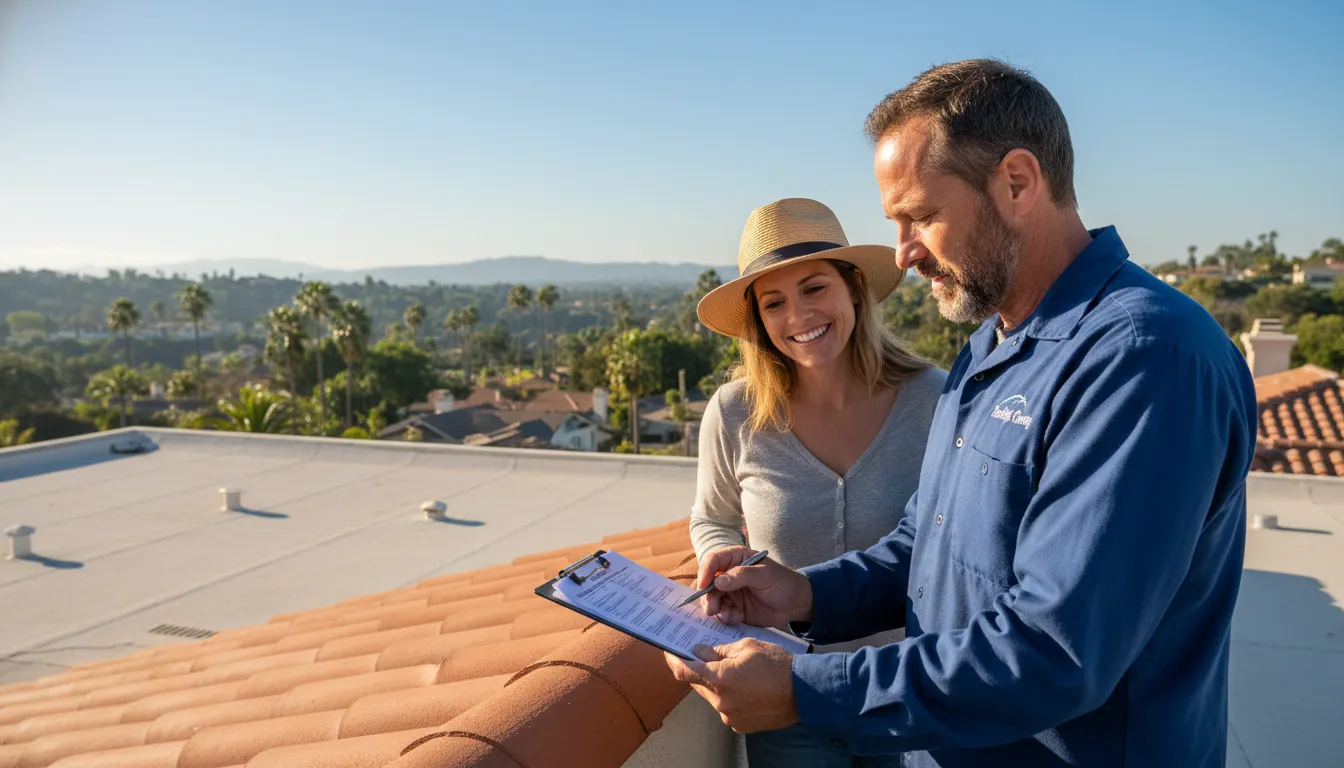
Ask the roofer to explain the inspection process before discussing repairs or replacement. A sound inspection should show the roof’s condition, likely causes of damage, and the reason for each recommended item. It should also help you compare repair options with replacement when both are practical.
- What roof areas, drainage points, flashing, and penetrations will you inspect?
- Will I receive photos and a written report of the findings?
- What labor, materials, quantities, and exclusions will appear in the scope?
- How will you handle hidden damage or a change to the approved scope?
Detailed records matter because a low total can hide missing work. Ask for all promises, exclusions, and change-order terms in writing before signing. Review our guide to questions to ask about your inspection report when checking the findings behind a proposal.
Project controls and protection
Before choosing a roofer, ask who will obtain permits and schedule required city inspections. Southern California rules can differ by city, so the contractor should explain the local process for your address. Ask how permit delays or weather could affect the planned start and finish dates.
Request a payment schedule tied to clear project milestones, not vague dates. The proposal should state deposit terms, progress payments, final payment conditions, and the method for approving added work. Ask when you will receive lien releases and final permit records.
Also compare material warranties with the contractor’s workmanship warranty. Ask what each warranty covers, how long it lasts, and who handles a future claim. Get the terms in writing and confirm whether maintenance or inspection duties could affect coverage.
Finish with practical questions about property protection and cleanup. Ask how the crew will protect landscaping, vehicles, walls, decks, and occupied areas. Confirm daily debris removal, the final nail sweep, disposal plans, and who fixes damage caused during the job.
What credentials should a roofing contractor prove?
Credentials should be easy to check before anyone steps onto your roof. Ask for current documents, then confirm that the business name matches the estimate and contract. A verbal assurance is not proof, even when the contractor seems experienced and trustworthy.
License, bonding, and insurance
In California, start by asking for the contractor’s license number and checking its status. Roofing falls under the C-39 classification described by the Contractors State License Board. Confirm that the listed business name and license holder match the company seeking your work.
Next, request proof of general liability insurance and any bond the roofer says it carries. Review the named insured, issuer, policy or bond number, and active dates. If anything looks unclear, ask the insurer or bond issuer to confirm it.
Also ask for proof of workers’ compensation coverage and learn whether employees or subcontractors will perform the work. The CSLB workers’ compensation guidance says coverage is required for licensees with employees. Ask how coverage applies to every crew member expected at your property.
Training tied to the work
A license shows that the business holds a roofing credential. It does not explain each installer’s training on your chosen roof system. Ask which manufacturer trained or approved the crew, and request proof that applies to the exact material proposed.
Manufacturer credentials can help you judge product knowledge, but they do not replace license or insurance checks. Ask whether the credential affects installation rules or warranty terms. Then have the contractor put those details in the written scope.
For an inspection or certification, ask what roof inspection training the inspector completed. NRCIA training is relevant because it focuses on roof inspection methods and clear reports. These questions to ask a roof inspector can help you compare a specialized roof review with a general home inspection.
A practical document check
Keep a simple file for each bidder. It should include the license number, insurance certificate, workers’ compensation proof, bond details, and training credentials. Add the written estimate, product list, warranties, and the name of the person overseeing the job.
- Do the names match across every document?
- Will each credential remain active through the planned work dates?
- Do the listed crew and subcontractors have the promised coverage and training?
- Can the contractor explain gaps or differences in writing?
This check makes the most useful questions to ask a roofer easier to answer. More important, it gives you a record of what was promised. Compare documents rather than relying on a handshake, a logo, or a sales pitch.
How should a roofer explain the estimate and scope?
A roofer should explain the estimate as a clear plan for the work, not just a total price. Among the key questions to ask a roofer is what the bid includes, excludes, and assumes. A careful explanation lets you compare bids on equal terms and spot gaps before work starts.
What belongs in the line-item scope?
Ask the roofer to separate labor, materials, permits, disposal, and other major costs. The scope should name the roofing system, underlayment, fasteners, flashing, vents, and other parts that will be installed. California’s roofing classification covers many different roofing materials and systems, so a generic material label is not enough.
The estimate should also explain roof access, staging, property protection, cleanup, and disposal. Ask where crews will place materials and how they will protect landscaping, driveways, and nearby walls. If solar panels, skylights, gutters, or air units affect access, the scope should state who handles them.
- Which roof areas and layers will be removed?
- Which products, colors, and grades will be installed?
- Will flashing, vents, and pipe boots be replaced or reused?
- Who handles permits, delivery, cleanup, and final documentation?
How are hidden conditions handled?
Tear-off can uncover damaged decking or framing that was not visible during the first visit. Ask what tear-off assumptions the bid uses and how deck repairs will be priced. The roofer should explain the unit price, approval process, and proof you will receive before added work begins.
Ventilation and flashing also deserve a direct discussion. Ask whether the plan changes intake or exhaust vents and how roof-to-wall joints, valleys, chimneys, and penetrations will be sealed. A prior roof inspection report can help connect known defects to specific repair items.
Do not accept a change-order process based only on a phone call. The written contract should state who may approve changes and how those changes affect price and schedule. California’s Contractors State License Board advises owners to get all promises in writing and define what the contractor will provide.
Payment terms and closeout records
Ask the roofer to connect each payment to a clear project milestone. The schedule should explain deposits, progress payments, final payment, and any conditions tied to each amount. It should also state how delays, failed inspections, or approved changes affect payment timing.
Before signing, ask what records you will receive at closeout. These may include permit sign-offs, inspection results, paid invoices, product details, warranties, and photos of completed work. A clear bid gives you time to review those terms; pressure to sign before questions are answered is a reason to pause.
How do strong and weak roofer answers compare?
The questions to ask a roofer matter, but the answers reveal how the company works. Strong answers include names, documents, clear steps, and limits. Weak answers rely on broad promises or pressure you to decide fast.
Proof before promises
A careful roofer will share a license number and current insurance records for you to check. California defines roofing as licensed C-39 work, and the CSLB explains the roofing classification. The roofer should also explain who handles permits, daily supervision, and safety.
Listen for answers you can verify on your own. A vague claim such as “we are fully covered” is not the same as a valid certificate. California also requires workers’ compensation insurance for licensees with employees.
Strong answers versus weak answers
Use this table to compare the substance of each response. A strong answer shows how the roofer reached a recommendation and what the written contract will include.
| Hiring question | Strong answer | Weak answer |
|---|---|---|
| License and insurance | Provides a license number, insurance certificates, and contact details for verification. | Says the company is covered but avoids sharing records. |
| Inspection and repair versus replacement | Explains the inspection steps, documents damage, and shows why repair or replacement fits. | Recommends replacement after a quick look and offers little proof. |
| Estimate and permits | Lists labor, materials, scope, exclusions, permit duties, schedule, and change-order terms. | Provides one price with no scope or says permits are unnecessary. |
| Warranty and references | Separates material and workmanship coverage, states exclusions, and offers recent local references. | Promises a lifetime warranty but gives no written terms or useful references. |
| Supervision and cleanup | Names the site supervisor and explains daily cleanup, final checks, and property protection. | Cannot name your contact or explain how debris and damage are handled. |
Written details that hold up
Ask the roofer to put each important answer in the estimate or contract. The CSLB advises homeowners to get all promises in writing and state what the contractor will provide. Clear records make bids easier to compare and reduce disputes later.
The repair recommendation should match the inspection findings, not a sales goal. Roofing issues do not always call for full replacement, since many roofs can be repaired. Review the findings closely and prepare questions to ask about your inspection report before choosing a scope.
One weak answer may reflect poor communication. A pattern of vague answers, missing proof, or rushed promises is a stronger warning. Choose the roofer whose records and process remain clear when you ask follow-up questions.
Why ask about certified roof inspections before hiring?
A quick sales estimate answers one main question: what might the proposed roof work cost? A certified roof inspection answers a different question: what does the roof need, based on documented findings? That distinction matters before you compare bids or choose a contractor.
A basic estimate may focus on visible damage and the work a roofer wants to sell. A professional inspection should give you findings that you can review, question, and use when weighing repair against replacement. The California Contractors State License Board notes that roofs can often be repaired rather than replaced.
Questions about the inspection process
Among the questions to ask a roofer, ask whether the company separates inspection findings from its sales proposal. Also ask who performs the inspection, which standard guides the work, and what areas the inspector will examine. Clear answers show whether the roofer follows a repeatable process or relies on a quick visual check.
Cert-A-Roof uses NRCIA-standardized inspection protocols and the proprietary LeakFREE certification program. The process is built to produce detailed records instead of only a free estimate. Homeowners can learn more about the difference through these questions to ask a roof inspector.
- Will the inspector document roof materials, visible defects, drainage concerns, and likely leak points?
- Will the report separate current problems from maintenance items and future risks?
- Can the roofer explain which findings support each recommended repair?
- Does the inspection qualify for a LeakFREE certification, and what conditions must the roof meet?
Documentation you can use
Ask to see a sample report before hiring. Useful documentation should connect each finding to a location and explain what action may be needed. It should also help you compare the proposed scope with the roof’s actual condition.
This record gives homeowners a sound basis for reviewing bids. It also helps real estate agents explain roof concerns during a transaction. Property managers can use the same report to plan repairs, track maintenance, and share clear records with owners or other parties.
Written details matter after hiring, too. The CSLB advises property owners to get all promises in writing and state exactly what the contractor will provide. An inspection report makes it easier to check whether a proposal and later contract address the documented needs.
Timing and certification
Timing can affect escrow, insurance, repair planning, and contractor selection. Cert-A-Roof targets a 24-48 hour report turnaround, giving decision-makers time to review findings without leaving the process open-ended. Ask when the written report will arrive and whether the inspector will answer follow-up questions.
Also ask what certification means in practical terms. A LeakFREE certification is not the same as a sales estimate or a general opinion about roof condition. It follows the inspection process and depends on the roof meeting the program’s requirements.
A certified inspection does not choose a roofer for you. It gives you a clearer basis for that choice. Compare each contractor’s proposed work, written promises, and answers against the same documented roof findings.
What red flags should you watch for before signing?
Red flags often appear before the contract does. Pay attention to missing paperwork, rushed explanations, vague totals, and answers that change when you ask for details. A reliable roofer should welcome questions because clear expectations protect both sides.
Missing proof
Pause if a contractor will not provide a license number, insurance certificate, workers’ compensation information, or recent local references. You should not have to guess who is responsible for the crew or whether coverage is active. Missing proof is especially risky when roof work involves ladders, debris, weather exposure, and people working above occupied areas.
Pressure before clarity
Be cautious when a roofer pushes for an immediate signature before answering your questions. A professional should give you time to review the scope, product choices, warranty terms, payment schedule, and change-order process. High-pressure language often shifts attention away from weak documentation.
Vague repair or replacement logic
A contractor should explain why the roof needs the proposed work. If the answer is only “you need a new roof” without photos, locations, or inspection findings, ask for a clearer basis. The recommendation should connect to roof condition, not just a sales preference.
- No written scope or only a one-line price.
- No explanation of permits, inspections, or closeout records.
- No named site supervisor or daily communication plan.
- No clear warranty language or maintenance requirements.
- No process for hidden damage, deck repairs, or approved changes.
One concern does not always mean a contractor is unqualified. A pattern of missing documents, vague answers, and pressure should move that bid lower on your list.
How to use your answers to choose the right roofer
Once each roofer answers your questions, compare the substance instead of ranking bids by price alone. The strongest proposal usually makes the job easier to understand, easier to verify, and easier to manage if conditions change.
- Gather two or three written estimates. Ask each roofer to address the same roof areas and the same concerns. This makes the comparison fair.
- Compare scope before price. A lower bid may exclude flashing, permits, disposal, ventilation, deck repairs, or closeout records. Mark differences before choosing.
- Verify documents. Check license status, insurance dates, workers’ compensation coverage, warranties, references, and the name of the daily supervisor.
- Ask follow-up questions. If a proposal is unclear, ask the contractor to revise it in writing. Do not rely on a verbal promise for an important term.
- Use an inspection when stakes are high. For escrow, insurance renewal, commercial planning, or uncertain repair versus replacement decisions, a certified roof inspection can give you documented findings before you commit.
This process gives you a practical record of how each contractor communicates. The roofer who provides clear documents, explains limits, and answers follow-up questions usually gives you the best foundation for a successful project.
Frequently Asked Questions
What questions should I ask my roofing contractor?
Ask about license, insurance, workers’ compensation, local experience, references, inspection process, written scope, permits, warranties, payment schedule, supervision, cleanup, and change orders. The goal is to compare documentation, not just price.
How can you tell a good roofer?
A good roofer provides verifiable credentials, explains findings clearly, puts the scope in writing, communicates project controls, and gives realistic answers about repair, replacement, timing, and warranty limits. Strong roofers do not pressure you to sign before you understand the proposal.
What kind of insurance should a roofing company have?
Ask for current general liability insurance and workers’ compensation coverage when employees or crews will work on the property. Review the named insured, active dates, and insurer information. If needed, confirm the certificate directly with the insurance provider.
Do I need a building permit for my roof?
Permit rules vary by city, project type, and scope of work. Ask the roofer whether a permit is required for your address, who obtains it. What inspections are involved, and what closeout records you will receive after the work is complete.
Is the lowest roofing bid a bad choice?
Not always, but the lowest bid needs the same review as every other proposal. Check whether it includes the same materials, labor, permits, disposal, warranty, supervision, hidden-damage terms, and final documentation. A low number can cost more if major items are excluded.
Request a certified roof inspection before you hire
The right questions to ask a roofer can protect your budget, your timeline, and your property. Cert-A-Roof helps Southern California homeowners, agents, and property managers make informed roofing decisions with NRCIA-standardized inspections, detailed reports, and LeakFREE certification options.
Call 888-766-3800 to request a roof inspection appointment before you approve repairs, compare bids, or move forward with a roofing contractor.
Comment (0)