Roof Maintenance Plans Orange County Guide
A leaking commercial roof in Orange County can interrupt tenants, damage finishes, and force decisions under pressure. The better approach is planned roof care that finds small issues early, documents current condition, and gives owners a practical budget path before the next storm.
Schedule a Cert-A-Roof commercial roof inspection before the next rainy season so your team can turn roof condition into a clear maintenance plan.
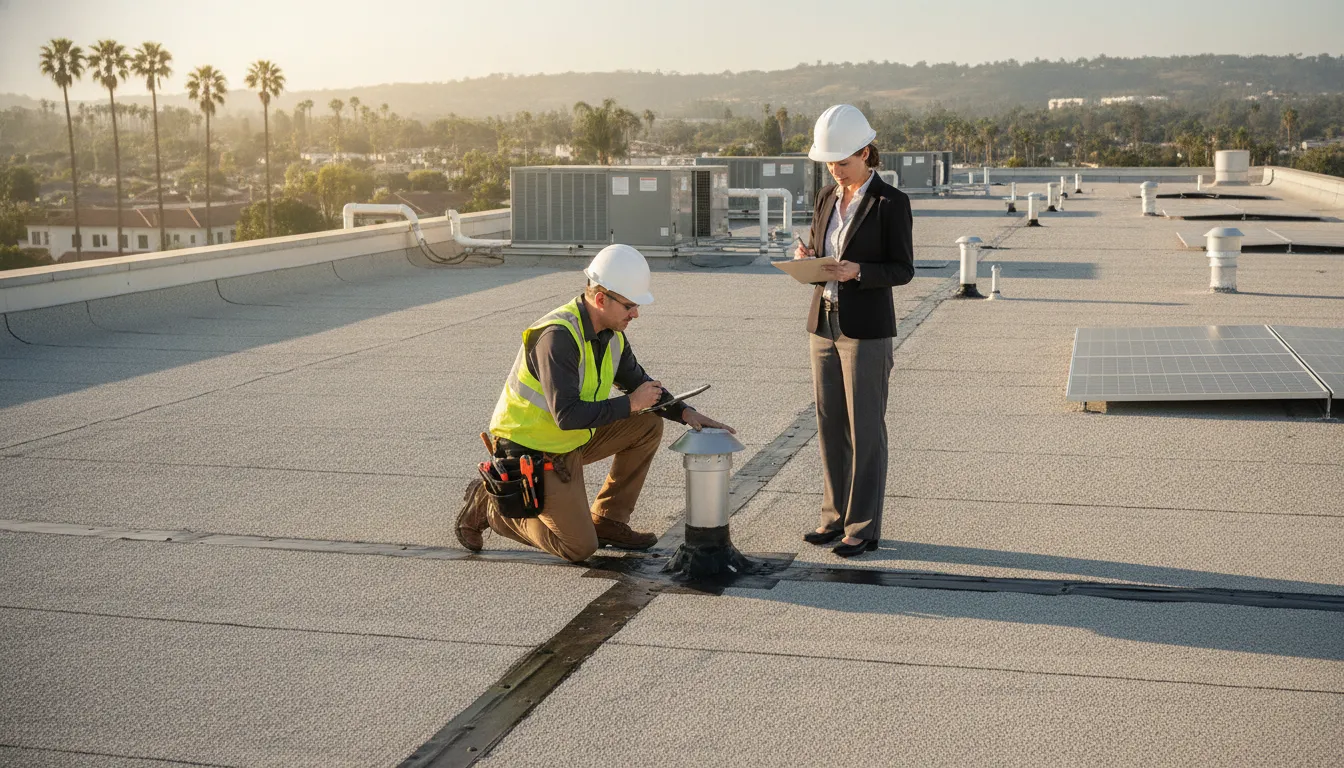
Roof maintenance plans Orange County commercial properties use should include recurring inspections, drainage checks, surface and flashing review, photo documentation, repair priorities, and a clear inspection cadence. For property managers and facility managers, the value is not just fewer surprises. A documented plan helps reduce leak risk, protect the asset, support insurance or compliance conversations, and give ownership a defensible maintenance budget.
Every building has different roof age, access, drainage, tenant risk, and budget pressure. A useful plan should fit those realities instead of treating every low-slope roof the same. The sections below explain what to include, what to track, and how Cert-A-Roof’s certified inspection approach supports commercial owners and managers across Orange County.
{“@context”:”https://schema.org”,”@type”:”Article”,”headline”:”Roof Maintenance Plans Orange County Guide”,”description”:”Schedule roof maintenance plans Orange County properties can use to reduce leak risk, document roof condition, and protect budgets.”,”image”:”https://zleague-public-prod.s3.us-east-2.amazonaws.com/article_images/72165eea-8d6e-46c5-b7de-321be9f691c5/roof-maintenance-plans-orange-county-guide-687393.webp”,”author”:{“@type”:”Person”,”name”:”Paul Watrous”,”jobTitle”:”President, Cert-A-Roof and NRCIA”,”url”:”https://www.linkedin.com/in/paul-watrous/”},”publisher”:{“@type”:”Organization”,”name”:”Cert-A-Roof”,”url”:”https://www.certaroof.com/”,”logo”:{“@type”:”ImageObject”,”url”:”https://www.certaroof.com/wp-content/uploads/2025/11/cropped-logo-dark.2312151009550-1-192×192.png”}},”datePublished”:”2026-06-17″,”dateModified”:”2026-06-17″,”mainEntityOfPage”:{“@type”:”WebPage”,”@id”:”https://www.certaroof.com/roof-maintenance-plans-orange-county/”},”keywords”:”roof maintenance plans Orange County, commercial roof maintenance, roof inspection Orange County”}
What roof maintenance plans Orange County commercial properties should include
Answer capsule: A commercial roof maintenance plan should start with a baseline inspection, then repeat the same review of drainage, membrane condition, flashings, penetrations, rooftop traffic areas, safety concerns, photos, and repair priorities at a planned cadence.
Orange County commercial roofs face a specific mix of risk. Long dry periods can hide roof problems until a storm exposes them. Sun and heat can age membranes, coatings, sealants, and exposed details. When rain finally arrives, clogged drains and low areas can turn a small maintenance item into a tenant disruption.
That is why strong roof maintenance plans Orange County businesses rely on should cover more than a quick walk across the roof. The plan should build a documented roof history, show what changed since the last visit, and give owners a practical next step. Cert-A-Roof has built its reputation around certified roof inspections and documentation, with more than 30 years serving Southern California and Western Montana.
Start with a full baseline condition check
Every plan needs a starting point. A baseline inspection records the roof type, visible defects, prior repairs, drainage layout, rooftop equipment, access points, penetrations, and areas that need monitoring. This first report becomes the reference point for every future decision.
A baseline also makes budget conversations more concrete. Instead of saying a roof is getting old, the report can show where the system is still performing, where repairs are needed, and which areas may require capital planning later. That is valuable for facility managers who need to justify maintenance spend before a leak turns into emergency work.
Review drainage, roof surfaces, and flashings
Water needs a clear path off the roof. A maintenance visit should check drains, scuppers, gutters, downspouts, and low-slope areas for debris, staining, ponding, and overflow patterns. Drainage issues can place extra weight on a roof and accelerate surface wear.
The roof field also needs attention. Inspectors should look for punctures, blisters, cracked coatings, open seams, worn traffic paths, lifted materials, and other visible changes. Flashings around parapet walls, curbs, skylights, vents, pipes, and roof edges deserve special focus because transitions are common leak-risk areas.
Document safety conditions and repair priorities
A commercial roof is also a work area for HVAC technicians, maintenance teams, solar contractors, and other vendors. A plan should note trip hazards, damaged access areas, skylight concerns, unstable materials, and high-traffic zones that need protection.
The most useful reports do not leave managers guessing. They separate immediate leak-risk items from monitor-only conditions and future budget items. Photos, locations, severity notes, and recommendations help ownership understand what needs action now and what can be planned for later.
For service background and company context, start with Cert-A-Roof’s certified roof inspection and roofing services. If your team is comparing related roof inspection topics, the site’s roof inspection resources can help connect maintenance planning to broader roof documentation needs.
Why do recurring inspections reduce leak risk?
Answer capsule: Recurring inspections reduce leak risk by finding blocked drainage, open seams, flashing movement, membrane wear, and rooftop damage before water enters the building. The value comes from repeat checks plus timely action on the findings.
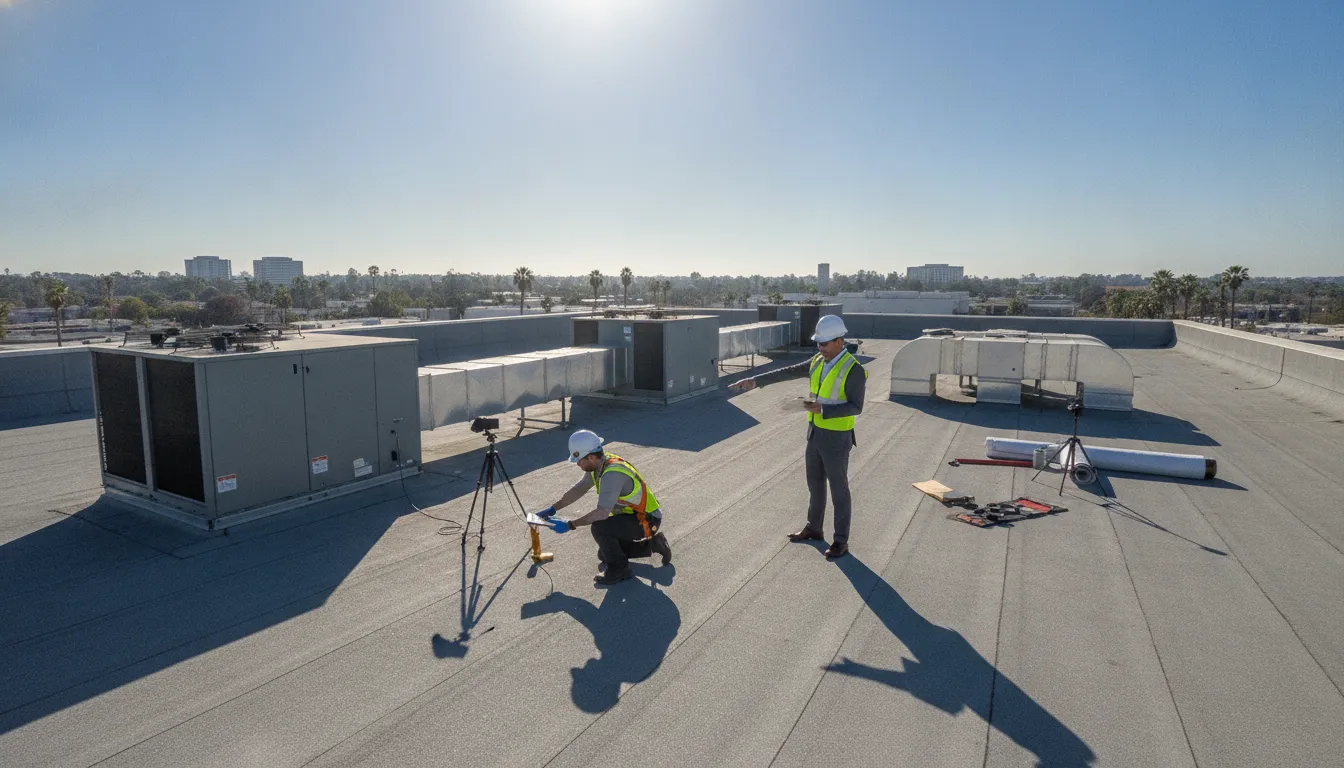
Most commercial roof leaks do not begin as dramatic failures. They often start with a cracked seal, a small puncture, a clogged drain, or a flashing gap that grows worse over time. If no one checks the roof until water appears inside, the building may already have wet insulation, stained finishes, tenant complaints, or damaged inventory.
Recurring inspections give the property team a chance to act sooner. They create a rhythm for finding small problems, documenting them, and deciding whether each item needs repair, monitoring, or future budgeting. That is the practical reason roof maintenance plans Orange County properties use can protect both operations and capital planning.
Common issues inspections catch early
Commercial roofs can develop many small defects that are easy to miss from the ground. Blocked drains can create ponding water. Sealant can dry out and crack. HVAC work can leave punctures or loose materials. Flashing can pull away as buildings move and materials age.
- Blocked scuppers, drains, gutters, or downspouts.
- Open seams, membrane punctures, or worn traffic areas.
- Cracked sealant around vents, skylights, pipes, and curbs.
- Loose flashing at walls, edges, and roof transitions.
- Debris, staining, or ponding that points to drainage trouble.
- Damage caused by rooftop vendors or heavy maintenance traffic.
Each issue is easier to manage when it is found early. A small repair can often be scheduled with less disruption than an emergency leak call during a storm. More important, early action can protect the structure, finishes, tenants, and business activity below the roof.
Forensic inspection focus matters
Cert-A-Roof’s inspection mindset is forensic. The goal is not only to note that a roof looks worn. The goal is to understand where the roof is vulnerable, how water may travel, and what evidence supports the recommended next step.
That level of review supports the company’s promise: Today’s Inspection, Tomorrow’s Protection. It also helps commercial owners and managers move from reactive repairs to evidence-based maintenance. When the roof is checked on a schedule, your team is less likely to be surprised by predictable failures.
Recurring inspections also support safety and documentation. The Occupational Safety and Health Act general duty clause requires employers to provide a workplace free from recognized hazards. A documented roof maintenance process can help show that known roof conditions are being tracked and addressed.
How documentation protects budgets and assets
Answer capsule: Roof documentation protects budgets by turning roof condition into evidence: photos, locations, defect severity, repair priorities, and inspection history. That evidence helps owners plan capital spend, manage risk, and explain roof decisions to stakeholders.
A commercial roof is a major building asset. When its condition is unclear, owners often face two poor choices: defer work and hope the roof holds, or approve spending without enough evidence. Documentation creates a better path.
Clear reports show what was inspected, what was found, and what changed over time. That makes maintenance easier to budget and easier to defend. A property manager can show ownership why a repair is recommended now, why another item can be monitored, and why a replacement or coating discussion may belong in a future capital plan.
Budget planning becomes less reactive
Surprise roof costs can strain operating budgets. A documented plan helps spread decisions across the year. If a report shows early membrane wear, recurring drainage problems, or multiple aging flashings, the team can begin planning before failure forces a rushed decision.
That is especially useful for portfolio managers and facility teams. Comparable reports across multiple buildings make it easier to rank roof needs. The team can identify which property needs immediate attention, which one needs monitoring, and which one may need a larger budget discussion next year.
Records support insurance, tenant, and owner communication
When prioritized issues need attention, Cert-A-Roof’s roof repair services provide the documented work scope property managers rely on.
Documentation also helps when stakeholders ask questions. If a storm causes damage, maintenance history can show the roof was inspected and tracked. If tenants report recurring stains, reports and photos can help connect interior symptoms to roof conditions. If ownership asks why a repair matters, the inspection record gives the answer.
Property managers also benefit from a consistent trail of photos and recommendations. Internal notes, vendor records, and inspection reports reduce confusion when staff changes or when multiple vendors have accessed the roof. The plan becomes a shared record rather than information stored in one person’s memory.
For teams that manage several buildings, review the site’s property manager roof topics and keep a consistent file for every roof. The goal is simple: make the next roof decision easier, faster, and better supported than the last one.
Talk to Cert-A-Roof about documenting your commercial roof condition before budget season begins.
Commercial roof maintenance plan checklist
Answer capsule: A useful checklist should cover baseline condition, roof field review, drainage, penetrations, flashings, rooftop access, photos, severity ratings, repair priorities, and the next inspection date.
A checklist turns roof care into a repeatable operating process. It helps the inspection team cover the same high-risk areas each time and gives managers a consistent report format. Consistency matters because the value of a maintenance plan grows as the record gets longer.
- Establish the roof baseline. Record roof type, age, visible wear, roof access, penetrations, drainage layout, past repairs, and current defects.
- Inspect the roof field. Check the main surface for blisters, punctures, open seams, loose materials, cracked coatings, worn traffic areas, and surface changes.
- Check drainage. Review drains, scuppers, gutters, downspouts, and low areas for debris, ponding, staining, or overflow patterns.
- Review penetrations and flashings. Inspect HVAC curbs, vents, skylights, parapet walls, edges, and transitions where different materials meet.
- Track rooftop access. Note vendor activity, equipment service, traffic paths, misplaced pads, fasteners, or debris left behind after work.
- Document every finding. Include photos, roof area, severity, recommended next step, and whether the item is urgent, monitor-only, or budget-related.
- Prioritize the work. Separate active leak risks from lower-priority maintenance items so owners can act in the right order.
- Set the next cadence. Identify the next planned inspection and the events that should trigger another check, such as storms or rooftop construction.
This structure also improves vendor accountability. When every visit follows the same framework, property managers can compare reports, confirm whether prior recommendations were completed, and explain roof decisions with confidence.
What should property managers track between inspections?
Answer capsule: Between inspections, property managers should track tenant leak reports, rooftop access, drain cleaning, storm events, repair invoices, photos, and recurring interior stains. Those notes give inspectors context during the next visit.
Professional inspections are the foundation of a maintenance plan, but property managers see the day-to-day signals that can reveal roof problems early. A simple tracking process helps connect tenant reports, maintenance activity, and roof condition before the next scheduled inspection.
Start with leak reports. Record the date, suite or room, weather conditions, ceiling location, photos, and whether the issue appeared during wind-driven rain, steady rain, or after mechanical work. Patterns matter. A single stained ceiling tile may look minor, but repeated reports from the same area can point to a transition, drain, or penetration that needs attention.
Track rooftop access as well. HVAC technicians, solar contractors, cable providers, and maintenance staff can unintentionally damage membranes, move pads, leave fasteners behind, or disturb flashing. A roof access log gives the inspection team context when a new puncture, scuff, or open seam appears near equipment.
Drainage notes are also valuable. If a team clears debris from drains or gutters, record when it happened and what was found. In Orange County, dry periods can allow leaves, dirt, and rooftop debris to collect. When rain returns, blocked drainage can create ponding and added stress in low areas.
Finally, save photos in a consistent folder by date and roof area. Clear photos help Cert-A-Roof compare current conditions against past documentation, prioritize repairs, and explain findings to ownership. That record can become the difference between a rushed emergency decision and a planned maintenance response.
When should Orange County buildings schedule roof maintenance?
Answer capsule: Many commercial roofs should be reviewed before rainy season, after major storms, after rooftop contractor work, during annual budgeting, and whenever tenants report leaks or stains. The exact cadence should reflect roof age, condition, and building risk.
There is no single schedule that fits every commercial roof. A newer roof with limited rooftop traffic may need a different cadence than an older low-slope roof with multiple HVAC units, prior leak history, and heavy contractor access. The best schedule reflects roof condition, building use, and risk tolerance.
| Maintenance trigger | Why it matters |
|---|---|
| Before rainy season | Gives managers time to address drainage, flashing, and surface defects before water intrusion risk increases. |
| After major storms | Identifies wind, debris, ponding, or impact damage while the event is still fresh in the maintenance record. |
| After rooftop contractor work | Checks for punctures, displaced materials, open panels, or disturbed flashing near equipment and access paths. |
| During annual budgeting | Turns roof condition into planned capital and operating decisions instead of surprise expenses. |
| When tenants report leaks or stains | Connects interior evidence to roof conditions before a small issue spreads across finishes, inventory, or occupied space. |
For many commercial buildings, the right approach is a scheduled inspection plan plus event-based checks. That gives ownership a predictable maintenance rhythm while still responding to the events that can change roof condition quickly.
Documented inspections are especially useful during budgeting season. Instead of guessing whether a roof needs repair, coating, monitoring, or replacement planning, owners can review condition notes, photos, and recommendations. That makes roof maintenance easier to defend as part of asset protection, not just another repair line item.
How Cert-A-Roof supports commercial roof maintenance planning
Answer capsule: Cert-A-Roof supports maintenance planning with certified roof inspections, professional documentation, repair and replacement experience, and a roof assurance mindset focused on integrity, condition evidence, and practical next steps.
Cert-A-Roof brings a certified inspection mindset to commercial roof maintenance planning. The company serves Orange County and Southern California with roofing, inspection, certification, and documentation services for owners and managers who need clear roof information before they make repair or budget decisions.
The difference is the focus on condition, evidence, and next steps. A maintenance plan should not leave a facility manager wondering which findings are urgent, which can be monitored, and which belong in a future budget. Cert-A-Roof’s inspection process helps organize roof conditions into practical recommendations that support asset protection.
The company has served the region for more than 30 years and has completed more than 75,000 inspections and certifications. Paul Watrous, President of Cert-A-Roof and NRCIA, brings additional authority to the company’s inspection and certification standards.
For commercial properties, that documentation can support several teams at once. Ownership can use it for capital planning. Property managers can use it to communicate with tenants and vendors. Facility teams can use it to track recurring issues. Insurance or regulatory stakeholders may also need a clear record of roof condition and maintenance activity.
Businesses that need broader roof maintenance resources can use inspections as the starting point for smarter maintenance decisions. Buildings that need a formal condition review can begin with Cert-A-Roof’s roof inspection and certification team. In both cases, the objective is the same: Today’s Inspection, Tomorrow’s Protection.
Frequently asked questions
What should roof maintenance plans Orange County commercial buildings include?
They should include a baseline inspection, drainage review, roof surface assessment, flashing and penetration checks, photo documentation, repair priorities, and a schedule for future inspections. Commercial plans should also track rooftop access and tenant leak reports.
How often should a commercial roof be inspected?
The right cadence depends on roof age, condition, building use, and risk tolerance. Many properties benefit from planned inspections before rainy season, after major storms, after rooftop contractor work, and during budget planning.
Can recurring inspections reduce roof leak risk?
Yes. Recurring inspections can find blocked drains, open seams, flashing movement, membrane wear, and other defects before they become active leaks. The key is documenting findings and acting on priority items.
Why does roof documentation matter for property managers?
Documentation gives property managers a record of roof condition, past repairs, photos, and recommendations. That record supports budgeting, vendor coordination, tenant communication, ownership reporting, and asset protection decisions.
{“@context”:”https://schema.org”,”@type”:”FAQPage”,”mainEntity”:[{“@type”:”Question”,”name”:”What should roof maintenance plans Orange County commercial buildings include?”,”acceptedAnswer”:{“@type”:”Answer”,”text”:”They should include a baseline inspection, drainage review, roof surface assessment, flashing and penetration checks, photo documentation, repair priorities, and a schedule for future inspections. Commercial plans should also track rooftop access and tenant leak reports.”}},{“@type”:”Question”,”name”:”How often should a commercial roof be inspected?”,”acceptedAnswer”:{“@type”:”Answer”,”text”:”The right cadence depends on roof age, condition, building use, and risk tolerance. Many properties benefit from planned inspections before rainy season, after major storms, after rooftop contractor work, and during budget planning.”}},{“@type”:”Question”,”name”:”Can recurring inspections reduce roof leak risk?”,”acceptedAnswer”:{“@type”:”Answer”,”text”:”Yes. Recurring inspections can find blocked drains, open seams, flashing movement, membrane wear, and other defects before they become active leaks. The key is documenting findings and acting on priority items.”}},{“@type”:”Question”,”name”:”Why does roof documentation matter for property managers?”,”acceptedAnswer”:{“@type”:”Answer”,”text”:”Documentation gives property managers a record of roof condition, past repairs, photos, and recommendations. That record supports budgeting, vendor coordination, tenant communication, ownership reporting, and asset protection decisions.”}}]}
Schedule a certified commercial roof inspection
If your building needs a clearer maintenance plan, Cert-A-Roof can help document current roof condition, identify priority concerns, and support better budgeting for Orange County commercial properties. A professional inspection gives your team the information it needs before small issues become disruptive leaks or unplanned expenses.
Schedule a certified roof inspection with Cert-A-Roof and put Today’s Inspection, Tomorrow’s Protection to work for your property.
Comment (0)