SB 721 Inspection Deadline Checklist for Owners
January 1, 2026 is the line California apartment owners cannot afford to approach unprepared. An inspection booked too late leaves little room for repairs, records, or local follow-up.
The SB 721 inspection deadline checklist helps owners of California apartment buildings with three or more units prepare for the January 1, 2026 initial inspection deadline. Start by inventorying exterior elevated elements more than six feet above ground, including balconies, decks, porches, stairs, walkways, entry structures, supports, railings, and waterproofing components. Then hire a qualified inspector, plan for access, retain the report, and leave time for any required repairs and a second inspection when needed. Under California Health and Safety Code section 17973, covered elements are designed for human use and rely substantially on wood or wood-based structural support. Treat the deadline as the finish line for a complete compliance process, not the day to begin scheduling.
The practical question is how to move from a legal deadline to an inspection-ready property without missing a required step. Use this checklist as your working sequence, then turn each item into a dated task for your management team.
SB 721 inspection deadline checklist for 2026 compliance
California apartment owners should treat SB 721 as a deadline project, not a last-minute inspection request. Use this checklist to confirm the property, inspection scope, report path, and repair plan before scheduling.
Property and scope check
Start with the January 1, 2026 initial inspection deadline. The deadline applies to residential buildings with three or more units when covered exterior elevated elements are present. A local government California balcony laws FAQ explains the updated deadline and building scope.
- Confirm whether the property has three or more residential or sleeping units.
- List balconies, decks, porches, stairs, walkways, entry structures, supports, and railings.
- Flag weather-exposed elements more than six feet above ground.
- Note which elements rely on wood or wood-based structural support.
- Include flashings, membranes, coatings, and sealants that protect load-bearing parts.
This inventory is a working scope, not a substitute for a qualified inspector’s review. For a broader explanation of the law, review the comprehensive SB 721 compliance requirements.
Inspector and report plan
The owner hires the inspector. The inspector must be a licensed architect, civil engineer, structural engineer, or an eligible contractor with the required experience. California’s Health and Safety Code also states that the inspector cannot work for the local jurisdiction during the inspection.
- Verify the inspector’s license type and experience before booking.
- Ask how the inspector will select at least 15% of each elevated-element type.
- Set a firm date for the site visit and confirm the report delivery date.
- Confirm report submission timing with the local jurisdiction and add the date to the calendar.
- Route the final report to the owner, property manager, and repair lead.
Do not assume one balcony stands for the whole site. The sample must cover each type of elevated element. Keep the report handoff clear so repair decisions do not stall after inspection.
Repair and record follow-up
Build a follow-up file as soon as the report arrives. Separate urgent safety items from planned corrective work, then assign each item to an owner. Corrective work must be completed within 120 days after permit approval. A second inspection confirms completion.
- Track findings, permits, repair dates, invoices, photos, and the second inspection.
- Keep each safety inspection report for two inspection cycles, or 12 years.
- Store the next inspection due date with the property record.
A complete file makes the checklist useful after the 2026 deadline. It also gives the next property manager a clear record of what was inspected, repaired, and verified.
Which properties and exterior elevated elements need inspection?
Properties covered by SB 721
Start the SB 721 inspection deadline checklist by confirming the property type. SB 721 applies to apartment buildings with three or more dwelling units when the site has exterior elevated elements. The owner hires the inspector. Cert-A-Roof’s guide to comprehensive SB 721 compliance requirements provides a broader overview of the mandate.
Do not assume that the word “apartment” resolves every case. A city FAQ says the requirement covers residential buildings with three or more sleeping or residential units. Its examples include apartment houses, live/work units, dormitories, hotels, motels, and vacation timeshare properties. Property owners should confirm unusual uses with the local building department.
Exterior elevated element criteria
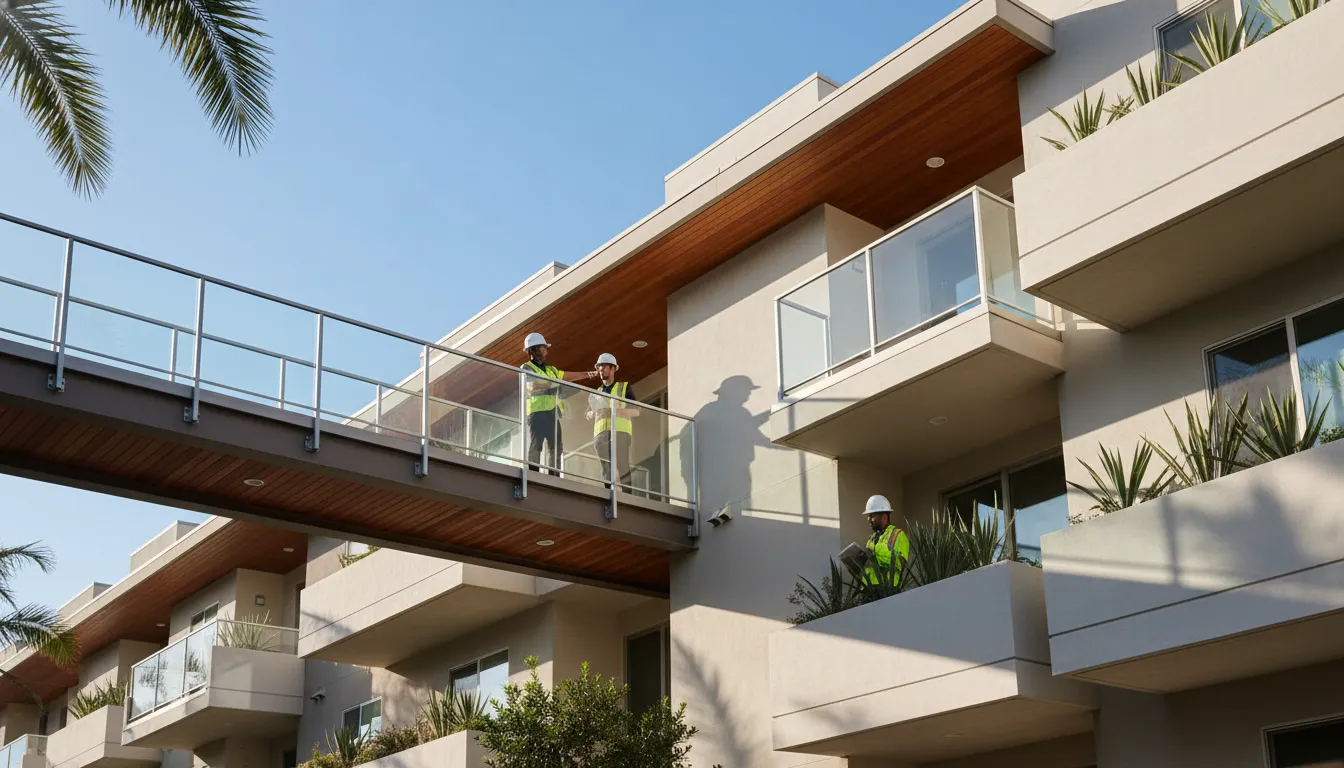
An exterior elevated element is more than a balcony. Under the California Health and Safety Code, the structure must be more than six feet above ground level. It must be built for human occupancy or use. Its structural support or stability must rely wholly or in substantial part on wood or wood-based products.
The structure is also weather-exposed. In practical terms, it sits outside the building envelope and can take on water or weather. A property walk should record each type separately, rather than group every feature under “balcony.” Include these items in the first inventory:
- Balconies, decks, and porches.
- Exterior stairways, walkways, and landings.
- Entry structures used by occupants.
- Supports and railings tied to each elevated element.
Waterproofing and condo distinctions
The checklist should not stop at framing. Associated waterproofing elements protect load-bearing parts from water and weather exposure. These elements include flashings, membranes, coatings, and sealants. Their condition matters because the inspection looks for hazards caused by fungus, decay, deterioration, or improper alteration.
Before scheduling an inspection, build a site inventory. Note each element’s location, type, height, visible support material, and connection to the building. Add the related railings and waterproofing parts to the same record. This first pass helps the inspector set a complete scope.
Condominiums and other common interest developments follow a related but separate path. The city balcony laws FAQ distinguishes SB 326 inspections for those properties from SB 721 inspections for multifamily rental properties. Confirm the ownership structure before choosing the checklist, inspector scope, and next steps.
What records should owners gather before scheduling?
A useful SB 721 inspection deadline checklist starts before the inspector arrives. Property managers should gather one clear packet for each building or complex. This reduces back-and-forth during scheduling and gives the inspector a cleaner starting point for the report.
Property and element inventory
Begin with a property list, site addresses, building names, and unit counts. Then list exterior elevated elements by building and location. Include balconies, decks, porches, stairways, landings, entry structures, and walkways where present.
The California Health and Safety Code defines covered exterior elevated elements by use, height, exposure, and structural support. Note the level, unit, or nearest access point for each element. Add railings and visible waterproofing details when known.
- Property address, building label, and unit count.
- Element type, quantity, floor, and nearby unit.
- Known wood or wood-based structural support.
- Photos or drawings that help locate each area.
Condition and repair history
Gather prior inspection reports, repair invoices, permits, and closed permit records. Include maintenance logs for balconies, decks, stairs, and walkways. If drawings, plans, or waterproofing details are available, place them in the same packet.
Make a separate list of leaks, stains, drainage issues, soft spots, and water intrusion reports. Add resident complaints and past work orders, even if maintenance closed them. The law includes associated waterproofing elements, such as flashings, membranes, coatings, and sealants.
- Prior repairs, permits, invoices, and inspection reports.
- Leak history, resident complaints, and maintenance logs.
- Plans, drawings, photos, and warranty records.
- Open work orders or areas already under review.
Access and communication plan
Document how the inspector can reach each area. Note locked gates, roof access, parking limits, occupied units, pets, and any notice needs. Add a simple site map when the complex has several buildings or repeated unit numbers.
Choose one internal point of contact who can answer questions and confirm access. Share that person’s name, phone number, email, and backup contact. Owners can also review the broader SB 721 inspection process before scheduling.
A complete packet helps the inspection team plan the visit with fewer gaps. It also helps keep locations, past concerns, and follow-up items clear in the final report.
How should you schedule inspections and repairs before the deadline?
Use your SB 721 inspection deadline checklist as a backward plan, not a last-minute reminder. The first inspection deadline for most covered properties is January 1, 2026, so leave room for repairs and final records.
A backward-planning window
Start with the deadline, then reserve time for each task that may follow the site visit. An inspection is the first milestone. It is not the whole process.
- Book the first available inspection slot. Do not wait for a quiet week. Ask whether the provider can handle your property size and expected access needs.
- Confirm the inspector’s qualifications. Check the license, relevant experience, report timing, and repair coordination process. Save the details with your property file.
- Plan resident and site access. Map balconies, decks, stairs, walkways, and entry areas before the visit. Send notices and arrange access for locked or occupied spaces.
- Review the report promptly. Set aside time for questions, bids, and repair choices. If work is needed, ask which findings require permits or urgent action.
- Schedule permits, repairs, and follow-up. Keep room for permit review, contractor scheduling, material lead times, and a second inspection when corrective work is complete.
- Close the file before the deadline. Store the report, photos, repair records, permit documents, and follow-up confirmation together. Give your property manager a clear copy.
Inspector and access checks
Early booking helps you spot practical issues while there is still time to fix them. Confirm who will open gates, provide keys, escort the inspector, and notify residents. Review your SB 721 inspection responsibilities before the appointment.
If you have not reserved a site visit, book a Cert-A-Deck inspection early in the planning process. A firm inspection date makes the rest of the schedule easier to manage.
Reports, repairs, and records
Do not treat the report as the finish line. Read the findings, route them to the right people, and track each open item. If corrective work is required, plan for permit steps, repair work, and a second inspection.
Keep one compliance folder for the building. Include the original report, photos, notices, permits, invoices, repair notes, and follow-up records. This simple file gives owners and managers a shared view of the remaining work.
SB 721 vs. SB 326 deadline requirements
California apartment owners can lose time by treating SB 721 and SB 326 as the same checklist. The laws address different property settings and deadline tracks. A city balcony laws FAQ states that most SB 721 properties have a January 1, 2026 inspection deadline.
Two deadline tracks
SB 721 is the key track for apartment owners with covered exterior elevated elements. SB 326 is the separate track for condominiums and other common interest developments. The same FAQ lists January 1, 2025 for the SB 326 initial inspection deadline.
| Checklist item. | SB 721. | SB 326. |
|---|---|---|
| Property type. | Multifamily rental buildings with covered elements. | Condominiums and other common interest developments. |
| Responsible party. | Building owner hires the inspector. | Confirm the association’s duty and records. |
| Initial deadline. | January 1, 2026 for most covered properties. | January 1, 2025. |
| Inspection cycle. | Every six years after the initial inspection. | Confirm the association’s recorded schedule. |
| Inspection scope. | Covered exterior elevated elements and related waterproofing. | Confirm the common area scope before scheduling. |
| Practical next step. | Book a qualified inspector and gather property records. | Review association records and confirm the current status. |
The apartment-owner checklist
For an SB 721 inspection deadline checklist, start with the building owner. California law states that the owner hires the inspector. The covered scope includes balconies, decks, porches, stairs, walkways, entry structures, supports, railings, and related waterproofing parts.
These elements must meet the law’s conditions, including height and structural support rules. Review the full SB 721 inspection responsibilities before the site visit. This helps the owner gather records and flag likely inspection areas.
The scheduling priority
Do not delay an apartment inspection while checking an HOA deadline that does not fit the property. Confirm the property type first, then schedule around the SB 721 track. Owners who need an on-site review can request deck inspection services for the covered exterior elements.
The deadline is only the first milestone. If the inspection finds a repair issue, the owner needs time to plan the next steps. An early booking leaves more room to review the report and respond to findings.
How do inspection reports and repair documentation protect you?
A usable inspection record
An inspection is not complete when the site visit ends. Owners should expect a written record that explains the condition of each reviewed exterior elevated element. Photo documentation helps connect each finding to a balcony, deck, stairway, or walkway. This matters because the law focuses on safe condition, working order, and hazards linked to decay or improper changes.
The report should separate observed conditions from the next steps. It should also note maintenance items and repair recommendations in plain language. Flashings, membranes, coatings, and sealants belong in the review because they protect load-bearing parts from weather exposure. The California Health and Safety Code defines these associated waterproofing elements as part of the inspection scope.
Repair timelines and proof of completion
Not every finding follows the same path. An emergency condition calls for prompt action and clear communication. A non-emergency repair may require planning, a permit, and scheduled work. Owners should confirm the required path with the local enforcement agency rather than treat every correction as routine maintenance.
Keep the permit, repair scope, contractor records, completion photos, and follow-up inspection result together. The local agency can explain the correction timeline for the finding and whether a permit is needed. Ask what proof closes the item. This makes the repair file easier to review.
Cert-A-Deck provides inspection, certification, and repair solutions through Cert-A-Roof. Its documented process includes a 24-hour report turnaround, which helps owners start sorting findings without delay. A clear report also reduces handoff gaps between an inspection finding and the repair file.
A record file for future cycles
Your SB 721 inspection deadline checklist should include a storage step. Save the original report, photos, repair recommendations, permits, invoices, completion proof, and second-inspection record in one property file. Keep a backup copy that a property manager can find after staff changes. Use clear file names with the property address and inspection date.
Safety inspection reports must be kept for two inspection cycles, totaling 12 years. That makes record storage part of the compliance workflow, not an afterthought. Review the file before closing the project. Good records help the next inspector understand the property’s history and verify completed work.
What happens if you miss the SB 721 deadline?
Missing the deadline can put a covered property out of compliance. An industry overview of SB 721 reports potential penalties of $100 to $500 per day for non-compliant facilities. The final response may depend on local enforcement. Do not treat that uncertainty as extra time.
Daily penalties are only one risk
A late inspection can leave safety issues unknown for longer. Balconies, decks, stairs, walkways, supports, and railings may need review. If an inspection finds decay, water damage, or unsafe conditions, repairs still take time. The property owner must then coordinate the work and any needed follow-up review.
There is also a liability concern. An owner may need to answer why a required inspection was not complete after the deadline. That question becomes more serious if a resident, visitor, or worker is hurt near an elevated element. A completed inspection report gives the owner a clearer record of what was checked and what needs repair.
Late scheduling creates a narrow repair window
A city FAQ states that the January 1, 2026 inspection deadline applies to most properties subject to SB 721. Owners who waited until late 2025 left little room for scheduling, site access, report review, and repairs. A last-minute inspection may find work that cannot be planned or finished at once.
Repair delays can grow when several parties must coordinate. The inspector may need access to tenant areas. Property managers may need to notify residents. Contractors may need to review the findings, plan the scope, and schedule crews. If permits or a second inspection are needed, the timeline can tighten again.
What to do after a missed deadline
If the deadline passed before your inspection was complete, act promptly. Use an SB 721 inspection deadline checklist to document what is still open. Review the comprehensive SB 721 compliance requirements before you schedule the next steps.
- Confirm whether the property is covered and list each exterior elevated element.
- Schedule a qualified inspector and gather prior reports, repair records, and access details.
- Ask the local building department what documents it expects after a late inspection.
- Prioritize any safety findings and track repair steps in writing.
- Keep residents informed when access, restricted areas, or repair work affects them.
Do not wait for a notice before acting. A clear paper trail can show the inspection date, findings, repair plan, and follow-up steps. It also helps the owner respond if local officials request proof of progress.
Frequently Asked Questions
What is the initial inspection deadline for SB 721?
Most covered properties must complete their initial SB 721 inspection by January 1, 2026. The City of South San Francisco explains that AB 2579 extended the deadline. Apartment owners should schedule early enough to review the report, plan corrective work, and complete any required follow-up steps.
Is SB 721 inspection mandatory for apartment buildings?
SB 721 inspection is mandatory when a multifamily rental building has three or more units and covered exterior elevated elements. Under the California Health and Safety Code, covered elements are generally more than six feet above ground. They must rely wholly or substantially on wood or wood-based structural support.
How much does an SB 721 inspection cost?
SB 721 inspection pricing varies by property. The number and type of exterior elevated elements, building access, site complexity, and testing needs can affect the quote. Owners should request a written scope that separates inspection work from any corrective repairs. Comparing scopes helps avoid choosing a proposal that omits required element types or follow-up documentation.
What elements must be included in an SB 721 inspection checklist?
An SB 721 checklist should inventory balconies, decks, porches, stairways, walkways, entry structures, supports, and railings that meet the law’s definition. The California Health and Safety Code also includes associated waterproofing elements. Those can include flashings, membranes, coatings, and sealants that protect load-bearing components from water and weather exposure.
What happens if a property owner misses the SB 721 inspection deadline?
Missing the SB 721 deadline can expose an owner to enforcement action and daily penalties. The American Apartment Owners Association reports penalties of $100 to $500 per day for noncompliant facilities. Owners who are behind schedule should contact a qualified inspector and the local enforcement agency promptly to document next steps.
Ready to Book Your Cert-A-Deck Inspection?
Waiting until the deadline is close can compress the time available to review inspection findings, coordinate responsibilities, and plan any needed repairs. That pressure can make it harder for apartment owners and managers to organize practical next steps for each affected property. Starting now gives your team more room to schedule the inspection, understand the report, and prepare a clear path toward compliance.
Ready to protect your timeline? Book a Cert-A-Deck inspection to schedule your review and prepare your apartment property for the January 1, 2026 deadline. A scheduled review gives your team a defined first step and a practical point of reference. Request your inspection now so your team can address decisions in a planned order instead of reacting late.
Comment (0)