Commercial Roof Certification: Property Owner Guide
Maintaining the structural integrity of a commercial building is one of the most critical responsibilities of property owners and facility managers. Among all the components of a commercial property, the roof is the first line of defense against the elements, yet it is often the most neglected until a major leak occurs. A commercial roof certification provides a formal, warranty-backed guarantee that a roof is functional and will remain leak-free for a specified duration, usually two years. In Southern California, from Orange County to San Diego and Los Angeles, weather extremes like heavy winter rain and intense summer heat place immense stress on flat and low-slope roofs. Property owners cannot afford to rely on guesswork when it comes to their roofs. Whether you are managing a real estate transaction, renewing an insurance policy, or protecting an asset, understanding how commercial roof certification works is key to safeguarding your investment.
Need a commercial roof certification? Contact Cert-A-Roof today to schedule an NRCIA-certified inspection.
What is a Commercial Roof Certification?
A commercial roof certification is not the same as a standard roofing estimate or a basic roof inspection. While a typical roofer might look at a roof and provide a bid for repairs or replacement, a certified roof certification is an official, institutional-grade document. It is a legal and financial instrument that certifies the roof is free of active leaks and is expected to remain leak-free for a designated period, typically two years. This certification is backed by a proprietary warranty program, such as the LeakFREE program pioneered by Cert-A-Roof.
The standards for roof certifications are set nationally by the National Roof Certification and Inspection Association (NRCIA). Under these protocols, an inspector does not merely check for obvious holes. They conduct a comprehensive, multi-point evaluation of the entire roofing system. This includes assessing the membrane material, flashing, drainage systems, and all roof penetrations such as skylights, vents, and HVAC units. If the roof is found to be in sound condition, or if necessary repairs are completed to bring it up to standard, the certification is issued. This document is widely accepted by mortgage lenders, insurance carriers, and real estate professionals, providing a level of assurance that standard contractor bids simply cannot match.
Who Needs a Commercial Roof Certification?
There are several scenarios where a commercial roof certification becomes an essential requirement rather than an optional service. Commercial property transactions, refinancing, and insurance renewals are the most common drivers for this type of certification.
- Buyers and Sellers in Real Estate Transactions: During a commercial property sale, buyers want to ensure they are not inheriting a failing roof that will require a costly replacement. A roof certification provides peace of mind and can be a powerful negotiation tool. For sellers, having a pre-certified roof can accelerate the transaction and prevent buyers from requesting steep price reductions based on roof age. Learn more about how certifications assist homebuyers and commercial property buyers.
- Mortgage Lenders and Financial Institutions: Many commercial lenders require a certified roof inspection and subsequent certification before finalizing a loan. This is especially true for FHA, VA, or SBA-backed commercial loans. Lenders want to protect their collateral, and a certified roof ensures the building’s interior and structure are protected from water damage.
- Insurance Carriers: Insurance companies are increasingly risk-aversive. Many carriers now require commercial building owners to provide a roof certification before they will issue or renew a property insurance policy, particularly for roofs that are more than 15 years old. Without a certification, owners may face sky-high premiums or outright coverage denials.
- Property Managers and Associations: Property management firms and condominium Homeowners Associations (HOAs) use certifications to manage long-term liability and integrate roof health into their reserve studies. In California, multifamily property managers must also stay compliant with exterior elevated elements inspections like SB 721. Understanding compliance helps protect residents and assets.
The Key Benefits of Commercial Roof Certification
Investing in a commercial roof certification delivers substantial financial and operational benefits that go far beyond a simple repair estimate.
Financial Risk Transfer
The primary benefit of a LeakFREE commercial roof certification is the inclusion of a warranty. If a leak occurs within the certified period, the repair costs are covered under the warranty guidelines. This transfers the financial risk from the property owner to the certifying company, protecting your operating budget from unexpected capital expenditures.
Asset Protection and Extended Lifespan
The process of obtaining a certification requires identifying and addressing minor issues before they escalate. By performing routine maintenance and minor repairs as part of the certification protocol, you prevent moisture from penetrating the roof deck and insulation. This proactive approach can extend the service life of a commercial roof by several years, postponing the high cost of a complete replacement. Discover the benefits of annual roof maintenance to keep your commercial property protected.
Enhanced Property Valuation
A certified roof adds tangible value to a commercial property. It demonstrates to tenants, appraisers, and future buyers that the building has been meticulously maintained. A certified roof can help justify higher lease rates and make the property more competitive in the Southern California commercial real estate market.
Protect your property from costly roof failures. Get an estimate for a commercial roof certification from Cert-A-Roof’s NRCIA-certified experts.
The 2-Year Certification Process Explained
Obtaining a commercial roof certification involves a structured, step-by-step process designed to ensure absolute thoroughness and compliance with NRCIA standards.
Step 1: The Initial Visual and Forensic Inspection
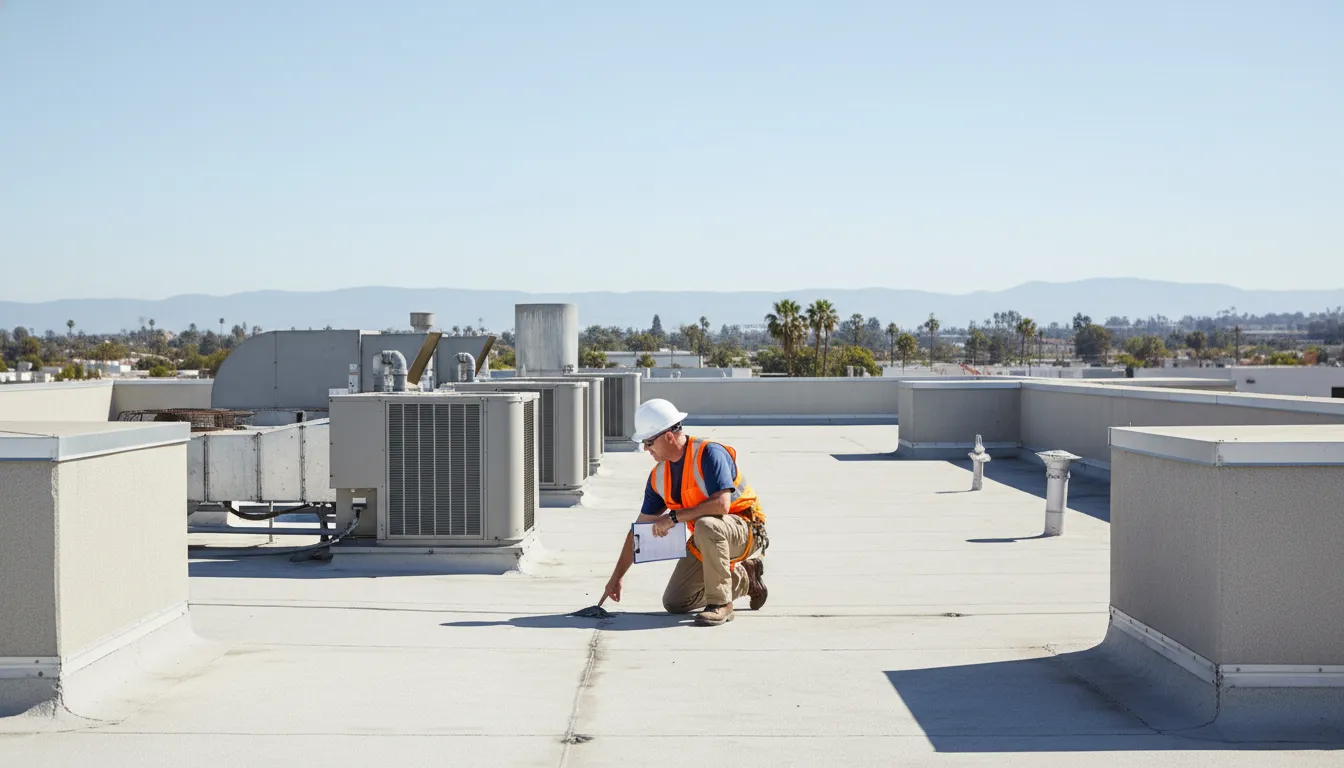
The process begins with a highly detailed physical inspection. An NRCIA-certified inspector from Cert-A-Roof will walk the entire roof surface, evaluating the condition of the roofing membrane, whether it is TPO, EPDM, built-up roofing, or modified bitumen. They will inspect all flashings, drains, scuppers, and perimeter edges. The inspector also evaluates the interior ceilings and attic spaces for any existing signs of moisture intrusion. For hard-to-access roofs or fragile materials like clay tile, FAA-registered drone inspections are utilized to capture high-definition imagery without risking damage to the roof. Review our complete guide to how often to inspect your roof.
Step 2: Diagnosis and Reporting
Once the inspection is complete, a comprehensive report is generated within 24 to 48 hours. This report outlines the current condition of the roof, documents any defects with photographs, and provides clear recommendations. If the roof is in excellent condition and free of defects, it is immediately approved for certification. If defects are found, the report will include a detailed proposal for the repairs required to qualify the roof for certification.
Step 3: Corrective Repairs and Maintenance
If repairs are necessary, licensed professionals must execute them. These repairs typically focus on sealing flashings, clearing drains, repairing punctures in the membrane, or replacing damaged materials. Once these corrective actions are completed, the roof is re-inspected to confirm that all standards have been met. It is highly recommended to combine this with commercial roofing maintenance plans to ensure ongoing roof health.
Step 4: Issuance of the 2-Year Certification
Upon final approval, Cert-A-Roof issues the official commercial roof certification. This document specifies the certification period (typically two years) and details the warranty coverage. The certification is transferable, meaning if you sell the property during the two-year window, the new owner inherits the peace of mind and warranty protection, adding significant appeal to your property listing.
How to Prepare Your Property for a Commercial Roof Inspection
To ensure a smooth, efficient, and thorough inspection process, commercial property owners and managers should take several preparatory steps before the inspector arrives.
First, clear any heavy debris, such as fallen branches, leaves, or discarded equipment, from the roof surface. While inspectors will evaluate the roof as-is, excessive debris can obscure defects and slow down the physical assessment. Second, ensure that the inspector has safe and unobstructed access to both the roof and the interior of the building. This includes securing roof hatch keys, setting up ladders if permanent access is unavailable, and notifying tenants or staff of the inspection schedule. Third, compile any historical records of the roof, including previous repair invoices, maintenance logs, and original installation warranties. Having this documentation available allows the inspector to perform a more accurate assessment, particularly when conducting forensic investigations for insurance or litigation purposes.
Common Commercial Roof Issues Identified During Inspections
Commercial roofs are prone to unique wear patterns due to their flat or low-slope designs and the heavy equipment often installed on them. During an NRCIA-certified inspection, several common issues frequently arise that must be addressed before a certification can be issued.
Ponding water is one of the most prevalent issues on flat roofs. Standing water that remains on a roof for more than 48 hours can accelerate the degradation of the roofing membrane, leading to premature leaks. Drains, scuppers, and gutters must be clear and properly sloped to ensure efficient water runoff. Another common defect is membrane damage, such as blistering, cracking, or punctures. On TPO or EPDM roofs, seams can pull apart over time due to thermal expansion and contraction. Punctures can also occur from foot traffic or service technicians working on HVAC units. Flashings around parapet walls, pipes, and skylights are also highly vulnerable points. If flashing has pulled away or the sealant has cracked, water can easily bypass the primary roof system and cause extensive damage. Understanding the average cost of commercial roof replacement highlights why addressing these minor membrane and flashing issues early is so crucial.
Why Partner with Cert-A-Roof as Your Certified Contractor
Choosing the right partner for your commercial roof certification is critical to ensuring your document has the credibility and legal standing required by lenders and insurers. Cert-A-Roof stands out as the premier choice in Southern California and Western Montana for several key reasons.
With over 30 years of experience, Cert-A-Roof has completed more than 75,000 roof inspections and certifications. The company was founded in 1993 by Les Watrous, a third-generation builder and insurance claims expert who pioneered the roof certification industry. Today, the company is led by Paul Watrous, who serves as the President of the NRCIA, ensuring that Cert-A-Roof’s protocols are always at the cutting edge of national industry standards. Furthermore, Cert-A-Roof is not just an inspection firm; we are a fully licensed general contractor with the capabilities to perform both the initial inspection and any necessary repairs under a single, unified workflow. This dual capability saves property owners time and money, eliminating the friction of coordinating between separate inspection and repair companies. For property owners managing multi-family complexes, our Cert-A-Deck division also provides specialized balcony and deck inspections to ensure compliance with California’s SB 721 and SB 326 regulations, making us a comprehensive compliance partner for your entire real estate portfolio.
Don’t wait for a leak to disrupt your business operations. Schedule your commercial roof certification today.
FAQ on Commercial Roof Certifications
How much does a commercial roof certification cost?
The cost of a commercial roof certification varies depending on the size of the building, the complexity of the roofing system, and the number of stories. A standard certification package includes both the comprehensive physical inspection and the 2-year LeakFREE warranty. For a detailed breakdown of pricing, refer to our roof certification cost California guide.
What is the difference between a roof inspection and a roof certification?
A roof inspection is a diagnostic service that assesses the current condition of the roof and reports any defects. It does not provide any ongoing warranty or guarantee. A roof certification, on the other hand, is a formal document that guarantees the roof will remain leak-free for a set period (usually two years). It includes a warranty that covers the cost of repairs if a leak does occur, transferring financial risk away from the property owner.
How long does a commercial roof certification last?
A standard commercial roof certification is valid for two years. This period is the industry standard accepted by most mortgage lenders, buyers, and insurance carriers during real estate transactions. After the two-year period expires, the roof can be re-inspected and re-certified to maintain continuous warranty-backed protection.
Does a roof certification cover active leaks?
No, a roof certification cannot be issued on a roof with active leaks or unresolved defects. If active leaks or structural vulnerabilities are found during the initial inspection, those issues must be professionally repaired with qualified roof repair services first. Once the repairs are completed and verified, the roof certification can be issued, and the LeakFREE warranty will go into effect to cover any future leaks during the certification period.
For a complete overview of inspection scope, pricing factors, and what certification means for escrow, read our roof certification cost California guide.
Comment (0)