Commercial Roof Inspection: Complete Guide
Commercial Roof Inspection: Complete Guide for Property Owners
A commercial roof inspection is one of the most practical ways to protect a building, control maintenance costs, and reduce surprise disruptions for tenants or operations. Whether you manage an office, retail center, warehouse, multifamily property, or mixed-use building, the roof is not just a covering. It is a drainage system, weather barrier, energy performance factor, insurance risk, and capital planning item all at once.
Need a documented commercial roof inspection in Southern California? Schedule a commercial roof inspection with Cert-A-Roof and get findings from NRCIA-certified inspectors.
Commercial roofs deserve a different inspection process than residential roofs. Many use low-slope or flat roofing systems, larger drainage areas, rooftop equipment, penetrations, coatings, access points, parapet walls, and membrane details that can hide early-stage problems. A quick visual glance or a free repair estimate is not enough when the building represents a major asset.
This guide explains what commercial roof inspectors check, when inspections make sense, how often to schedule them, what affects cost, and how a professional inspection fits into a smart commercial roof maintenance plan.
What Is a Commercial Roof Inspection?
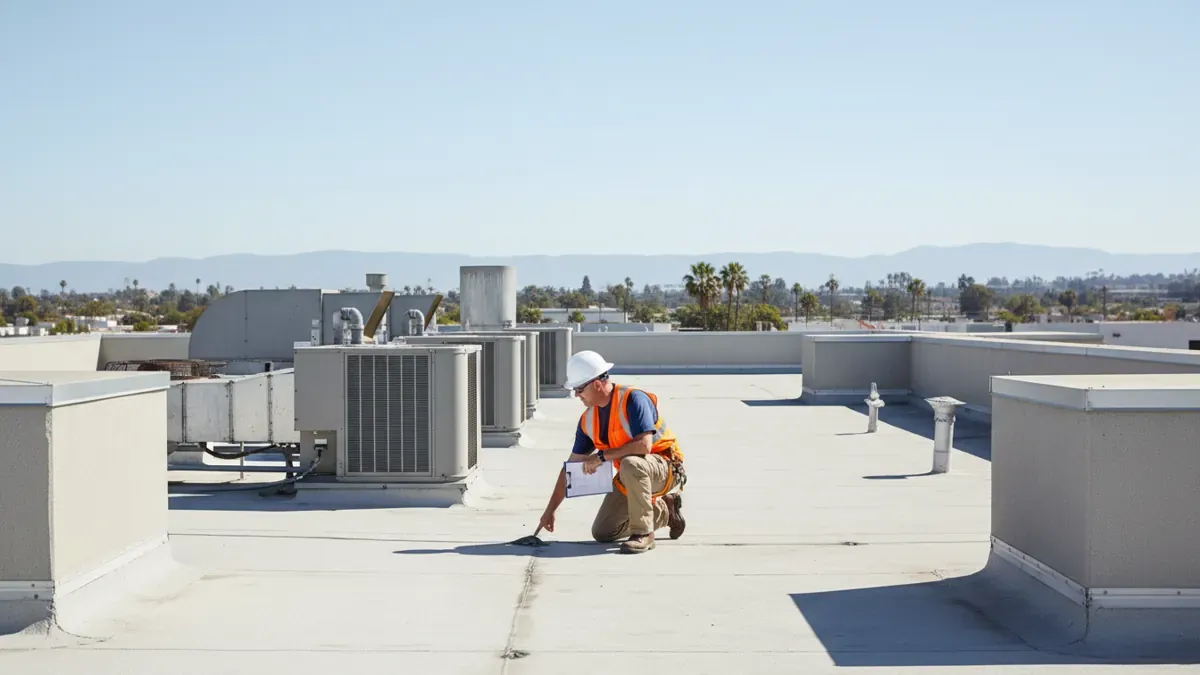
A commercial roof inspection is a documented evaluation of a commercial roofing system, its drainage, flashings, penetrations, surfaces, edge details, and visible interior indicators. The goal is to identify current conditions, active leaks, developing weaknesses, maintenance needs, and larger repair or replacement risks before they become expensive emergencies.
For property owners and managers, the inspection should answer practical questions:
- Is the roof currently performing as intended?
- Are there signs of water intrusion or trapped moisture?
- Which items need immediate repair?
- Which issues can be monitored or scheduled into maintenance?
- Is the roof likely to support a sale, refinance, insurance review, or warranty requirement?
- What documentation should be kept for future claims, maintenance, or capital planning?
Cert-A-Roof has completed more than 75,000 inspections and certifications across residential and commercial properties. The company’s inspection work follows NRCIA-standardized protocols and focuses on clear documentation rather than guesswork. That matters because lenders, insurers, buyers, property managers, and owners often need more than an opinion. They need a credible record of roof condition.
Why Commercial Roof Inspections Matter
Commercial roof problems rarely stay isolated. A small open seam can become a tenant complaint. Poor drainage can shorten membrane life. A leak near rooftop equipment can affect operations. A roof that looks serviceable from the ground can still have ponding, punctures, failed flashings, or interior staining that signals a larger concern.
Regular commercial roof inspections help property owners:
- Reduce emergency repairs: Small maintenance items can often be corrected before a storm exposes them.
- Protect occupants and operations: Leaks can affect inventory, equipment, tenant spaces, records, and customer-facing areas.
- Support insurance documentation: Inspection photos and reports create a condition baseline before storm, wind, or leak events.
- Plan capital expenses: Owners can budget for coating, repair, restoration, or replacement instead of reacting under pressure.
- Preserve warranty options: Many manufacturers and maintenance programs require documented roof care.
- Improve transaction confidence: Buyers, sellers, lenders, and commercial real estate professionals can make decisions with better information.
Commercial property owners are often balancing maintenance budgets against net operating income. A documented inspection gives decision-makers a prioritized view of risk, not just a list of defects.
Types of Commercial Roof Inspections
Not every inspection has the same purpose. The right scope depends on the reason for the inspection, the roof system, the building type, and the decision that needs to be made.
Routine Condition Inspection
A routine condition inspection checks the roof’s visible condition and identifies maintenance or repair needs. This is the foundation of proactive commercial roof maintenance. It is especially important before summer heat, before the rainy season, and after extended periods of heavy use by rooftop service trades.
Pre-Purchase or Transaction Inspection
A pre-purchase inspection helps buyers understand roof risk before closing. It can also help sellers prepare for negotiations by identifying issues before a buyer’s due diligence period. For commercial properties, this information can affect valuation, repair credits, lender requirements, or closing timelines.
Post-Storm or Leak Investigation
After wind, hail, heavy rain, or a reported leak, an inspection documents visible damage and helps determine likely sources of water intrusion. Cert-A-Roof’s forensic roof inspection background can be especially useful when insurance documentation or cause-of-loss questions are involved.
Warranty or Certification Inspection
Some owners need an inspection to support warranty, lender, insurance, or roof certification needs. Cert-A-Roof is known for LeakFREE roof certification and NRCIA-certified inspection standards, which helps separate a documented inspection from a basic contractor walkthrough.
Maintenance Planning Inspection
A maintenance planning inspection looks beyond today’s leak. It helps property owners decide what should be cleaned, sealed, repaired, monitored, or budgeted. For related maintenance guidance, see Cert-A-Roof’s guide to commercial roof preventative maintenance.
What Do Commercial Roof Inspectors Check?
A professional commercial roof inspector looks at the roof as a system. The exact checklist depends on roof type, access, safety conditions, and building configuration, but a thorough inspection commonly includes the following areas.
| Inspection Area | What the Inspector Looks For | Why It Matters |
|---|---|---|
| Roof membrane or surface | Cracks, punctures, blistering, open laps, worn coatings, exposed reinforcement, or material deterioration | The main roof surface is the building’s primary weather barrier |
| Drainage | Ponding water, clogged drains, blocked scuppers, poor slope, debris buildup, and overflow conditions | Standing water accelerates deterioration and increases leak risk |
| Flashings | Loose, split, missing, deteriorated, or poorly sealed flashing around walls and transitions | Flashings are common leak points on commercial roofs |
| Penetrations | Pipe boots, vents, curbs, skylights, conduits, and equipment supports | Every penetration is a potential water entry point |
| Rooftop equipment | HVAC curbs, service traffic, loose panels, condensation discharge, and damage around equipment | Commercial roofs often fail around equipment and service zones |
| Parapet walls and edges | Coping, wall cracks, sealant failure, termination details, and edge metal | Edges and walls are exposed to wind, movement, and water entry |
| Interior indicators | Ceiling stains, odors, moisture marks, wall staining, and tenant leak reports | Interior symptoms can help trace roof problems |
| Safety and access | Access ladders, roof hatches, walking paths, trip hazards, and fragile surfaces | Safe access protects inspectors, owners, and service providers |
On certain roofs, drone inspection can help document fragile, steep, unsafe, or difficult-to-access areas. Cert-A-Roof uses FAA-registered drone capability when appropriate, while still keeping the inspection focused on useful findings and practical next steps.
Planning work on a commercial building? Start with the main commercial roofing services page to understand inspection, repair, maintenance, and replacement options.
How Often Should You Schedule a Commercial Roof Inspection?
As a practical rule, commercial properties should be inspected at least twice per year, commonly before the hottest season and before the rainy season. This timing gives owners a chance to address drainage, membrane, flashing, and debris issues before weather stress increases.
Additional inspections may be wise when:
- A major storm, wind event, hail event, or heavy rain has occurred
- Tenants report staining, active leaks, or musty odors
- HVAC, solar, sign, or other trades have recently worked on the roof
- The building is being purchased, sold, refinanced, or insured
- The roof is nearing the end of its expected service life
- You are preparing a repair, coating, restoration, or replacement budget
- The property has a history of ponding water or recurring leaks
Southern California adds its own considerations. Long dry periods can hide roof defects until the first serious rain. Heat and UV exposure can age membranes, coatings, sealants, and flashings. Coastal areas may add moisture and corrosion concerns. Inland properties may experience stronger heat cycles. A local inspector who understands these conditions can give more useful recommendations than a generic checklist.
Commercial Roof Inspection Cost: What Affects Pricing?
Commercial roof inspection cost is usually driven by scope, roof size, access, system complexity, documentation requirements, and whether specialized investigation is needed. A small single-tenant building with safe roof access is different from a large multi-building property with multiple roof sections, heavy equipment, interior leak tracing, and insurance documentation needs.
Common cost factors include:
- Building size and number of roof sections: More square footage and more roof areas require more time.
- Roof type: TPO, PVC, EPDM, modified bitumen, built-up roofing, coatings, metal, tile, and other systems have different inspection considerations.
- Access and safety: Roof hatch access, ladder access, height, slope, and fragile surfaces affect inspection planning.
- Documentation level: A basic condition report is different from a detailed photo report prepared for a lender, insurer, claim, or transaction.
- Leak investigation: Active leak tracing may require more time than a routine visual condition inspection.
- Drone use or specialized review: Aerial documentation, forensic review, or additional testing can change the scope.
Because commercial projects vary, Cert-A-Roof uses consultation-based pricing for many commercial services. The company also offers specialized forensic inspection services when a deeper insurance, litigation, or cause-of-loss investigation is needed. If you need a number for budgeting, the best next step is to request an inspection scope based on the building rather than relying on a generic online average.
Common Commercial Roofing Problems Found During Inspections
Commercial roof inspections often uncover issues that are easier to correct early than after water intrusion spreads. Some of the most common findings include:
- Ponding water: Water that remains on the roof can accelerate membrane aging and reveal drainage problems.
- Clogged drains and scuppers: Leaves, debris, and roof sediment can block water flow.
- Open seams or laps: Separation in membrane seams can create direct water entry paths.
- Punctures and surface damage: Foot traffic, dropped tools, HVAC service, and debris can damage roof surfaces.
- Failed sealants: Sealants around penetrations and details age faster than many roof materials.
- Flashing deterioration: Wall transitions, curbs, parapets, and edge details are frequent leak sources.
- Blistering or bubbling: Trapped moisture, heat, or adhesion problems can show up as raised areas.
- Coating wear: Reflective coatings can thin, crack, or lose effectiveness over time.
- Rooftop equipment damage: HVAC work can leave open penetrations, displaced panels, or damaged walk paths.
- Interior stains: Ceiling marks may indicate current or past water intrusion that needs tracing.
Some of these issues are maintenance items. Others may signal the need for repair, restoration, or replacement. For owners comparing long-term options, Cert-A-Roof’s article on the average cost of a commercial roof can help frame larger budget conversations.
Inspection vs. Maintenance: What Is the Difference?
A commercial roof inspection identifies and documents roof conditions. Commercial roof maintenance addresses approved work, such as clearing debris, resealing details, correcting drainage issues, repairing minor defects, or preserving the roof system. The two services work together, but they are not the same.
Think of inspection as diagnosis and maintenance as treatment. Without inspection, maintenance can become reactive and incomplete. Without maintenance, inspection findings may sit unresolved until the next leak or storm.
A strong commercial roof maintenance program usually includes:
- Scheduled inspections at least twice per year
- Photo documentation and condition reports
- Drain and debris management
- Repair of small defects before they spread
- Monitoring of roof traffic and rooftop equipment areas
- Budget planning for coating, restoration, or replacement
Roof type also matters. A flat roof, metal roof, tile roof, or coated system will not age in the same way. If you are still evaluating roof systems, review Cert-A-Roof’s guide to types of commercial roofing systems.
How to Choose a Commercial Roof Inspector
The right commercial roof inspector should provide more than a sales opinion. Look for a company with roofing knowledge, inspection training, documentation standards, insurance awareness, and the ability to explain findings in a way owners can act on.
Before scheduling, ask these questions:
- Are the inspectors trained and certified for roof inspections?
- Do they understand commercial roof systems, not just residential shingles?
- Will the report include photos and clear recommendations?
- Can they distinguish maintenance needs from repair or replacement needs?
- Do they have experience with lenders, insurers, property managers, and commercial owners?
- Can they inspect related details such as drainage, flashings, penetrations, rooftop equipment, and interior evidence?
- Do they provide repair or maintenance options if defects are found?
Cert-A-Roof is an NRCIA-certified inspection and roofing company with more than 30 years in business. President Paul Watrous serves as President of the National Roof Certification and Inspection Association, and the company has built its reputation around standardized roof inspection, documentation, certification, and practical roofing solutions.
That combination is important. A general contractor may offer a free estimate, but an estimate is not the same as a professional roof inspection. Property owners who need lender, insurance, transaction, maintenance, or asset-planning documentation should choose an inspector who treats the roof as a system and the report as a decision tool.
What Happens After the Inspection?
After a commercial roof inspection, the next steps depend on the findings. A roof in good condition may only need routine maintenance and periodic monitoring. A roof with isolated defects may need targeted repair. A roof with widespread deterioration, recurring leaks, or major drainage issues may require restoration planning or replacement budgeting.
A useful inspection report should help you prioritize action:
- Immediate concerns: Active leaks, unsafe conditions, open water entry points, or urgent drainage problems.
- Short-term maintenance: Items that should be corrected soon to prevent damage.
- Monitoring items: Conditions that are not urgent but should be checked during the next inspection.
- Capital planning: Larger repairs, coating, restoration, or replacement considerations.
If repairs or maintenance are recommended, ask for a clear scope and fixed proposal. If a roof may need replacement, compare findings against remaining service life, tenant impact, energy goals, and budget timing. For owners comparing service providers, Cert-A-Roof’s guide to the best commercial roofing companies in California can help with selection criteria.
Ready to understand the condition of your building’s roof? Request a commercial roof inspection from Cert-A-Roof or call 888-766-3800.
Commercial Roof Inspection FAQ
How long does a commercial roof inspection take?
The time required depends on roof size, access, number of roof sections, system type, and documentation needs. A small building may be inspected more quickly, while a large property with multiple roof areas, active leaks, or detailed reporting requirements may take longer.
Can a commercial roof inspection find the source of a leak?
Often, yes. Inspectors look for likely water entry points, drainage issues, flashing failures, membrane defects, rooftop equipment concerns, and interior evidence. Some leaks are complex and may require additional investigation, especially if water travels before showing up inside.
Do flat commercial roofs need inspections?
Yes. Flat and low-slope roofs should be inspected regularly because drainage, seams, flashings, penetrations, and rooftop equipment can create hidden leak risks. Ponding water is especially important to document and correct.
Should I get an inspection before buying a commercial property?
Yes. A pre-purchase inspection can help identify repair needs, maintenance history concerns, and future capital expenses before closing. It can also support negotiations, lender discussions, and post-closing maintenance plans.
Is a free roofing estimate the same as a commercial roof inspection?
No. A free estimate is usually focused on selling a repair or replacement. A commercial roof inspection should evaluate the condition of the roof system, document findings, and help the owner make informed decisions about risk, maintenance, repair, or replacement.
Schedule a Commercial Roof Inspection With Cert-A-Roof
A commercial roof inspection gives property owners the information they need to protect buildings, control costs, and plan with confidence. The best time to inspect is before a leak, transaction deadline, insurance issue, or rainy season forces a rushed decision.
Cert-A-Roof serves commercial property owners, property managers, real estate professionals, and building stakeholders across Southern California with NRCIA-certified inspection expertise, 30+ years of experience, and more than 75,000 inspections and certifications completed.
To get started, visit Cert-A-Roof’s commercial roof inspection service page or call 888-766-3800 to request an appointment.
Comment (0)