
Roof Repair vs. Replacement: How to Make the Right Decision
Key Takeaways
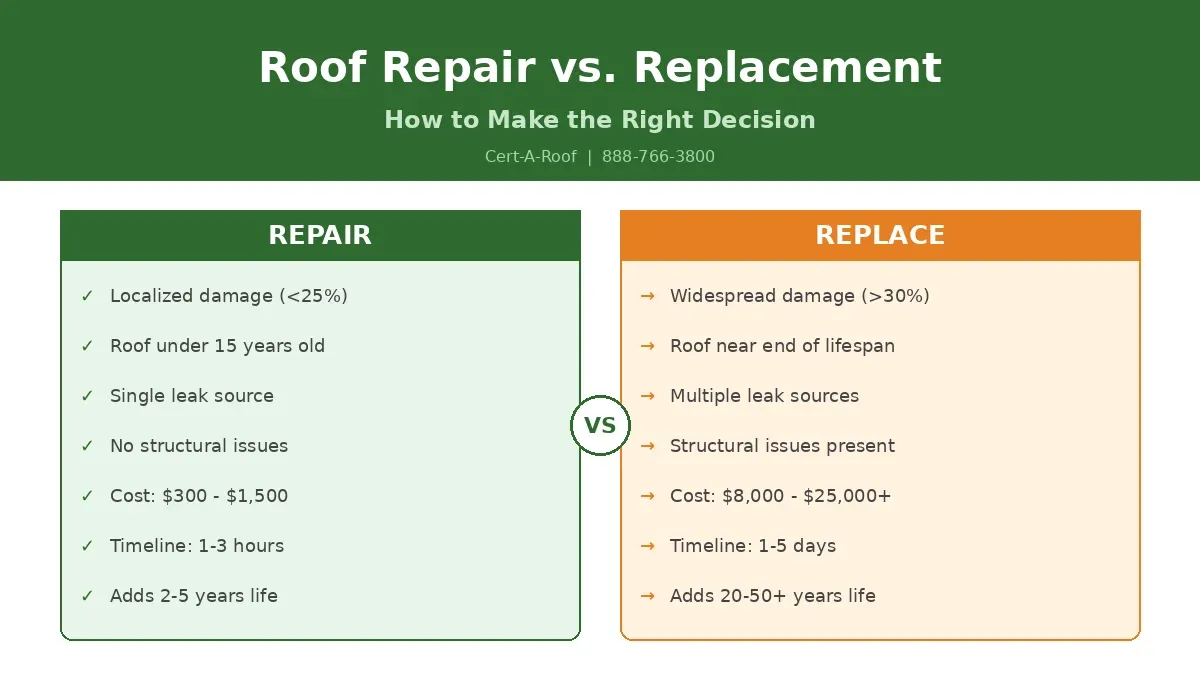
- Roof repair makes sense for localized damage on roofs under 15 years old, typically costing $300 to $1,500.
- Full roof replacement is necessary when damage exceeds 30% of the roof area, the roof is past its expected lifespan, or structural issues exist.
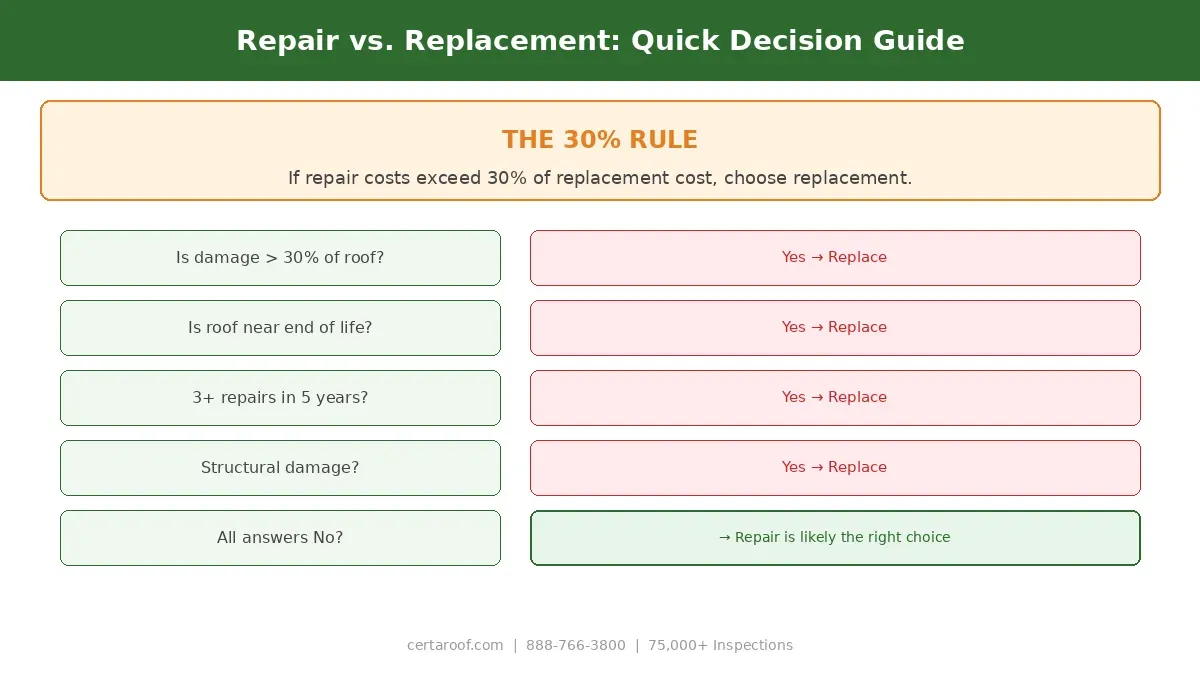
- The “30% Rule” is a reliable threshold: if repair costs exceed 30% of replacement cost, replacement is the better investment.
- A professional roof inspection is the critical first step, because the right decision depends on factors only a trained inspector can evaluate.
- Cert-A-Roof’s NRCIA-certified inspectors have completed over 75,000 inspections and provide honest, data-backed recommendations on repair vs. replacement.
When your roof shows signs of damage, the first question most homeowners ask is: Should I repair it or replace the whole thing?
It is a decision that affects your home’s safety, your budget, and your property value for years to come. The wrong choice can cost thousands in repeated repairs or leave you paying for a full replacement you did not actually need.
At Cert-A-Roof, we have guided homeowners through this exact decision for over 30 years and across more than 75,000 roof inspections. This guide breaks down when repair makes sense, when replacement is the right call, and how to know which path fits your situation.
The Quick Decision Framework
Before diving into details, here is a simple framework to point you in the right direction:
| Factor | Lean Toward Repair | Lean Toward Replacement |
|---|---|---|
| Roof Age | Under 15 years | Within 5 years of expected lifespan end |
| Damage Extent | Localized (one area, <25% of roof) | Widespread (multiple areas, >30% of roof) |
| Number of Repairs | First or second repair | Third or more repair in 5 years |
| Leak Source | Single, identifiable point | Multiple leaks or unknown origin |
| Structural Issues | None (surface damage only) | Sagging, rotted decking, compromised framing |
| Future Plans | Staying in home 3+ years | Selling soon (replacement adds resale value) |
This table is a starting point. The real answer depends on a professional assessment of your specific roof.
When Roof Repair Makes Sense
Repair is the right choice when damage is limited, the roof still has significant life remaining, and the underlying structure is sound.
Good Candidates for Repair
- Localized storm damage. A few missing or cracked shingles from a windstorm can be patched without replacing the entire roof. If the damage covers less than 25% of the roof surface, roof repair is typically sufficient.
- Minor leaks with a clear source. A leak around a skylight, vent pipe, or flashing joint is usually a repair, not a replacement issue.
- Newer roofs (under 15 years). If your roof was installed within the last 15 years and the damage is isolated, repair preserves your remaining warranty coverage and avoids unnecessary cost.
- Small areas of wear. Granule loss on a few shingles, minor flashing separation, or a single damaged tile can be fixed individually.
Typical Repair Costs
Most residential roof repairs in Southern California cost between $300 and $1,500, depending on the material and scope. Common repairs include:
- Shingle replacement: $150 to $400
- Flashing repair: $200 to $500
- Minor leak repair: $300 to $1,000
- Vent or pipe boot replacement: $150 to $300
When Roof Replacement Is Necessary
Sometimes repair is just delaying the inevitable. Replacement is the smarter long-term investment when:
Signs You Need a Full Replacement
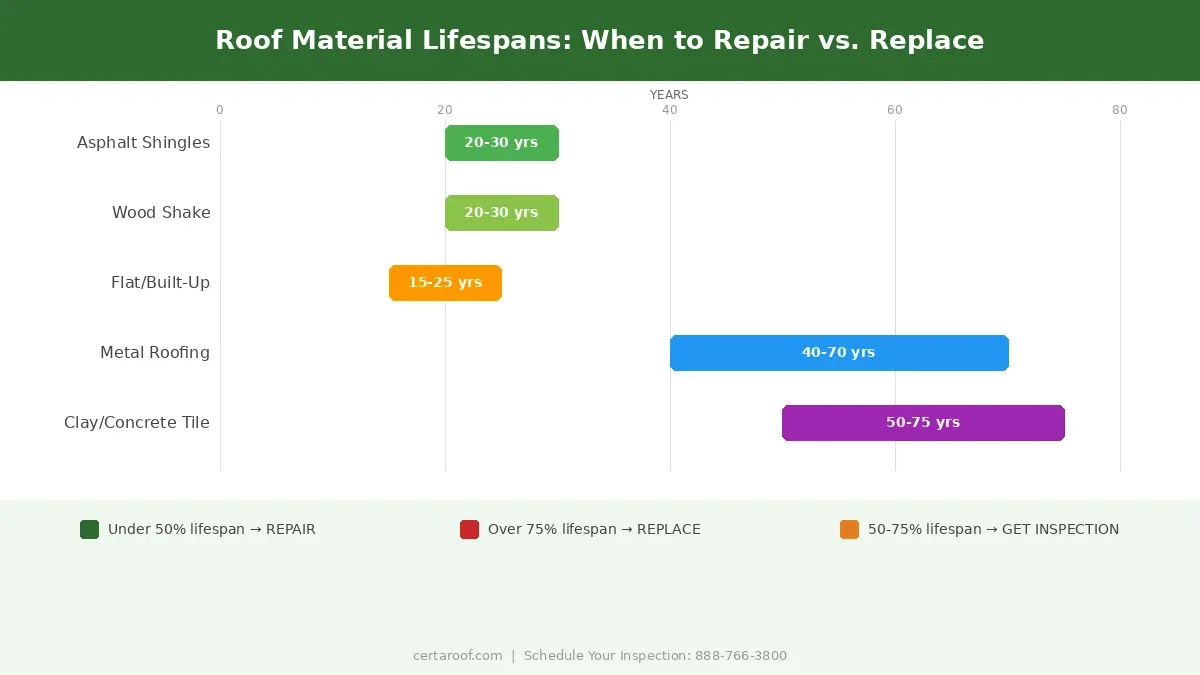
- Your roof has reached its expected lifespan. Asphalt shingles last 20 to 30 years, clay tile 50+ years, and metal roofing 40 to 70 years. If your roof is nearing the end of its expected life, a full re-roofing makes more financial sense than ongoing repairs.
- Damage covers more than 30% of the roof. When storm damage, wear, or deterioration affects a large portion of the roof, the cost of multiple repairs adds up quickly. At this point, replacement is more cost-effective.
- You have had three or more repairs in five years. Repeated repairs signal systemic failure, not isolated problems.
- Structural damage is present. Sagging roof decking, rotted rafters, or compromised framing cannot be fixed with surface repairs. These require full replacement with structural remediation.
- Water damage has reached the interior. Stained ceilings, mold growth, or wet insulation suggest the damage has progressed beyond what a patch can solve.
- You are selling your home. A new roof adds significant resale value and eliminates a major inspection concern for buyers.
Cost Comparison: Repair vs. Replacement
Understanding the cost difference helps frame the decision:
| Item | Roof Repair | Roof Replacement |
|---|---|---|
| Average Cost | $300 to $1,500 | $8,000 to $25,000+ |
| Timeline | 1 to 3 hours | 1 to 5 days |
| Lifespan Added | 2 to 5 years (repaired area) | 20 to 50+ years (full roof) |
| Warranty | Limited (workmanship only) | Full manufacturer + workmanship |
| Resale Value | Minimal impact | Recoups 60-70% of cost |
| Disruption | Low | Moderate (noise, debris) |
| Insurance Impact | May not affect premiums | Can reduce premiums |
For a detailed breakdown of replacement pricing by material, see our Roof Replacement Cost Guide.
The 30% Rule: When Repair Costs Cross the Line
A reliable rule of thumb in the roofing industry: if the cost of repairs exceeds 30% of what a full replacement would cost, replacement is the better investment.
Here is how it works in practice:
- Full replacement estimate: $15,000
- 30% threshold: $4,500
- If your repair quote exceeds $4,500, replacement gives you a brand-new roof with full warranty coverage for only $10,500 more
This calculation becomes even more compelling when you factor in the remaining lifespan. A $4,000 repair on a 22-year-old asphalt shingle roof (with 5 to 8 years left) costs about $570 per remaining year. A $15,000 replacement lasting 25+ years costs about $600 per year, but with zero maintenance headaches and full warranty protection.
Factors That Affect Your Decision
Every roof is different. Here are the key variables that shift the repair-vs.-replacement equation:
1. Roof Age and Material
Different materials have different lifespans. Where your roof falls on that timeline changes the math:
| Material | Expected Lifespan | Repair Makes Sense If | Replace If |
|---|---|---|---|
| Asphalt Shingles | 20-30 years | Under 15 years old | Over 20 years old |
| Clay/Concrete Tile | 50+ years | Under 30 years old | Over 40 years old |
| Metal Roofing | 40-70 years | Under 25 years old | Over 40 years old |
| Flat/Built-Up | 15-25 years | Under 10 years old | Over 15 years old |
| Wood Shake | 20-30 years | Under 12 years old | Over 20 years old |
2. Damage Extent and Location
Damage confined to one slope or area is repairable. Damage across multiple slopes, at structural connection points, or on more than 30% of the surface usually means replacement.
3. Your Budget and Timeline
Repair is the quick, affordable fix. But if you are planning multiple repairs over the next few years, the total cost may exceed a single replacement. Think about your 5-year budget, not just today’s bill.
4. Home Plans
- Staying long-term: Replacement pays for itself over time through eliminated repairs, lower insurance premiums, and energy efficiency.
- Selling within 2 years: A new roof can increase your home’s sale price and eliminate a major negotiation point during buyer inspections.
5. Southern California Climate Considerations
Homeowners in Orange County and across Southern California face unique roof stressors:
- Santa Ana winds can lift and crack shingles, tiles, and flashing
- UV exposure accelerates aging on south- and west-facing slopes
- Occasional heavy rain after dry periods tests weatherproofing integrity
These factors can shorten the effective lifespan of roofing materials by 10 to 20%, making regular roof inspections essential for catching problems early.
How a Professional Inspection Determines the Right Path
The repair-vs.-replacement question is impossible to answer accurately without a thorough inspection. Here is what a professional inspector evaluates:
- Surface condition: Shingle granule loss, tile cracks, metal corrosion, flashing integrity
- Underlayment status: The waterproof barrier beneath the surface material
- Decking condition: Plywood or OSB sheathing for rot, sagging, or delamination
- Ventilation: Proper attic ventilation prevents premature aging
- Flashing and penetrations: Every roof penetration (vents, chimneys, skylights) is a potential failure point
- Previous repairs: Quality and quantity of past patches
- Overall remaining life: A data-based estimate of how many years the roof has left
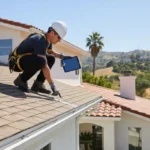
At Cert-A-Roof, our NRCIA-certified roof inspectors provide a detailed written report with photos, findings, and an honest recommendation, whether that is a simple repair, a strategic restoration, or a full replacement.
After your inspection, you may also qualify for our LeakFREE Roof Certification, which provides warranty-backed protection and documentation of your roof’s condition.
Common Scenarios and Recommended Actions
Scenario 1: A few missing shingles after a windstorm
Roof age: 8 years. Damage: 10-15 shingles on one slope.
Recommendation: Repair. Localized wind damage on a relatively new roof. Replace the affected shingles and inspect the rest for hidden damage.
Scenario 2: Multiple leaks appearing during heavy rain
Roof age: 24 years. Damage: Leaks in 3 rooms, stained ceilings.
Recommendation: Replace. Multiple leaks on an aging asphalt shingle roof indicate systemic failure. The roof is near the end of its lifespan.
Scenario 3: Cracked tiles found during a routine inspection
Roof age: 18 years. Damage: 6 cracked concrete tiles, no leaks yet.
Recommendation: Repair. Concrete tile roofs last 50+ years. Replacing individual tiles now prevents leaks and extends the roof’s life.
Scenario 4: Sagging visible from the ground
Roof age: Any. Damage: Visible sag in the roofline.
Recommendation: Immediate inspection and likely replacement. Sagging indicates structural compromise. This needs professional evaluation as soon as possible. Call us at 888-766-3800 for an emergency assessment.
Scenario 5: Preparing to sell your home
Roof age: 19 years. Damage: General wear, no active leaks.
Recommendation: Get an inspection first. If the roof passes inspection, a LeakFREE Certification gives buyers confidence. If it does not pass, replacement before listing eliminates a major negotiation hurdle.
Make the Right Call: Start with an Inspection
Whether you end up needing a minor repair or a full replacement, the process starts in the same place: a professional roof inspection.
At Cert-A-Roof, our NRCIA-certified inspectors have completed over 75,000 inspections across Southern California and Montana. We do not push unnecessary replacements, and we do not band-aid roofs that need real solutions. We give you the facts, so you can make the decision that is right for your home and budget.
Ready to find out where your roof stands? Request an appointment online or call us today at 888-766-3800.
Frequently Asked Questions
How do I know if my roof needs repair or replacement?
The best way to determine whether you need repair or replacement is a professional roof inspection. Generally, if damage is localized (less than 25% of the roof), the roof is under 15 years old, and no structural issues exist, repair is sufficient. If damage is widespread, the roof is nearing end-of-life, or you have had multiple repairs recently, replacement is the better investment.
Is it worth repairing a 20-year-old roof?
It depends on the material and condition. A 20-year-old asphalt shingle roof is nearing end-of-life (20 to 30 year lifespan), so major repairs may not be cost-effective. However, a 20-year-old clay tile roof (50+ year lifespan) still has decades of life remaining, making repair a smart choice.
How much does a roof repair cost compared to replacement?
Typical roof repairs cost $300 to $1,500, while full replacement ranges from $8,000 to $25,000+ depending on size and material. The “30% Rule” helps decide: if repair costs exceed 30% of replacement cost, replacement is the better value.
Can I just repair part of my roof instead of replacing it all?
Yes, partial repairs are common and appropriate when damage is confined to one area. However, patching materials on an aging roof can create mismatched appearance and uneven weathering. Your inspector will advise whether a partial repair will hold up or if it is better to address the full roof.
Does a new roof increase home value?
Yes. According to industry data, a new roof recoups 60 to 70% of its cost in increased home value. It also eliminates a major concern during buyer inspections and can reduce homeowners insurance premiums.
How long does a roof replacement take?
Most residential roof replacements in Southern California take 1 to 3 days for standard asphalt shingle roofs and 3 to 5 days for tile or specialty materials. The exact timeline depends on roof size, material, weather, and any structural repairs needed.
Comment (0)